Books Reviewed
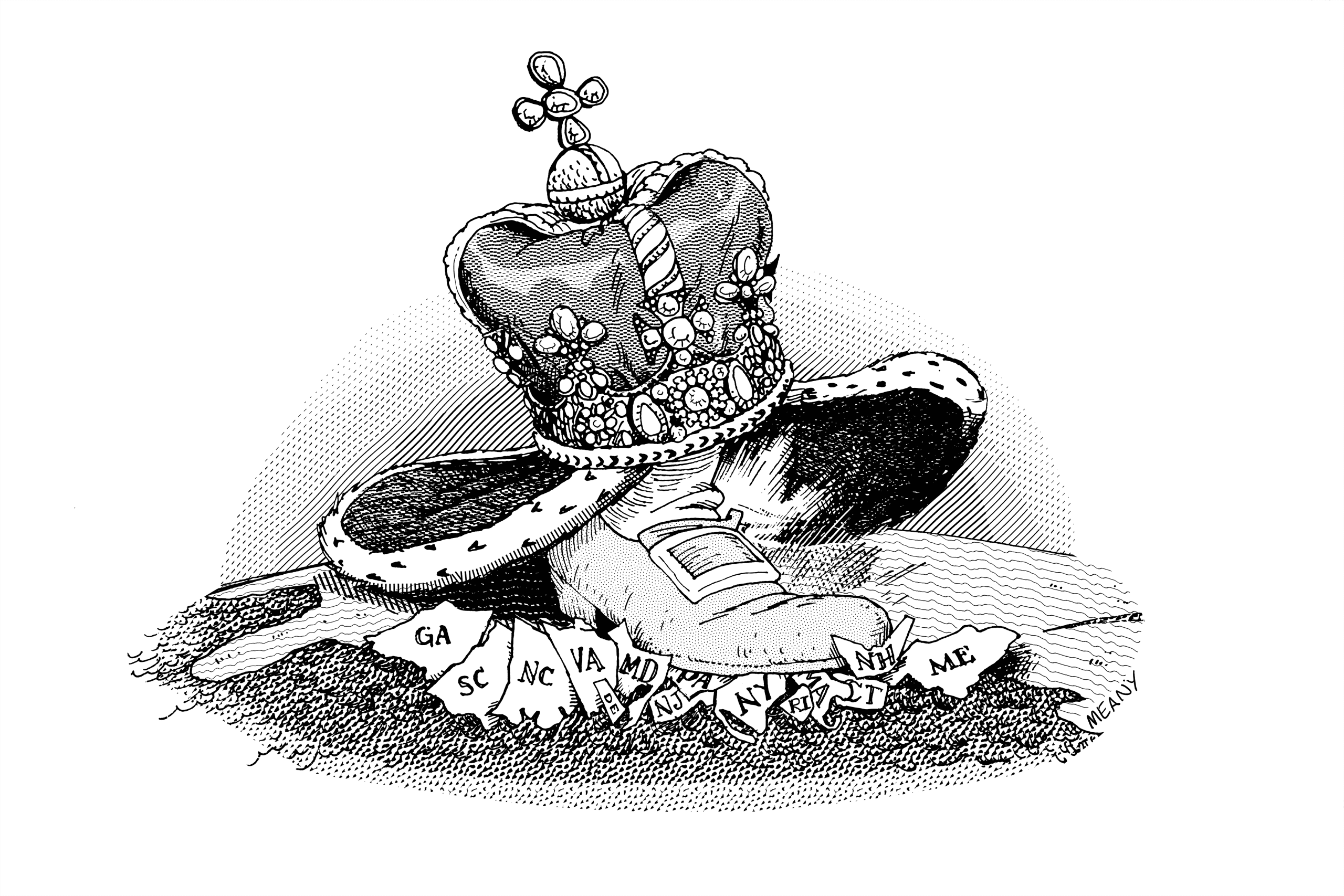
Modern democratic politics began with three great revolutions, with the English, American, and French Revolution each marked, though in very different ways, by a memorable public Declaration justifying and explaining the political changes. Americans’ impending commemoration of the 250th anniversary of our Revolution—and our Declaration of Independence—invites at least a brief comparison with these other revolutions’ declarations, followed by a more sustained interpretation of our own illuminated by its differences with them.
The English Bill of Rights
First came the English Declaration of Rights, proffered on February 13, 1689 by the same irregularly elected convention that offered the crown of England to Prince William of Orange and his wife, Princess Mary, a Protestant daughter of the deposed Catholic former king of Great Britain, James II, now “abdicated,” and fled to France. (The previous November, answering the informal invitation of a small group of Whig and Tory grandees, William had landed in Britain with some 10,000 Dutch troops—as Harvey Mansfield has said, “not enough for an invasion, too many for a visit.”) To solemnize the Declaration of Rights, it was enacted by a formal parliamentary vote and assented to by the new king as “an act declaring the rights and liberties of the subject and settling the succession of the crown” on December 16, 1689. Hence “the English Bill of Rights,” which helped to complete or “settle” the Glorious Revolution, the final act of the English Revolution that had begun in Civil War almost 50 years before.
The English Bill of Rights is not addressed to the world as such. It is addressed by Englishmen to Englishmen. By contrast both the Declaration of Independence and the French Declaration of the Rights of Man and of the Citizen are rhetorical shots heard—and meant to be heard—around the world. They are emphatically documents of natural right. The English Bill of Rights makes no appeal to the idea of nature at all. On the contrary, its whole point might be said to be to blur the distinction between natural and prescriptive (or historical) right. This prudent confusion, which Edmund Burke would later develop into a whole account of politics, enabled the supporters of the Bill of Rights to disguise the Revolution as a succession crisis, thus avoiding the principled debate between parliamentary and prerogative power that had launched the English Civil War, and permitting them to settle the religious question without resolving the kind of sectarian disputes over revealed truths that had roiled Tudor and Stuart England. Through artful indirection, the peculiar legitimacy of the English monarchy, which rested on the king’s position as head of the church, was preserved and transformed into a new regime of toleration. That it was a new regime, based on a new but unarticulated argument for toleration, can be seen in the complete absence of any language of divine right. God is invoked to witness the new oaths of allegiance and is thanked for making the prince of Orange “the glorious instrument for delivering this kingdom from popery and arbitrary power” and for protecting the “royal persons.”
Accordingly, it is not the natural rights of man but the “ancient rights and liberties” of the “Lords Spiritual and Temporal and Commons” that are asserted and vindicated in the English Bill of Rights. The “religion, laws, and liberties” of the kingdom are secured by the Protestant succession and by Parliament’s own vigilance in declaring “the true, ancient, and indubitable rights and liberties of the people of this kingdom.” Sealing the whole arrangement is a new oath, really two oaths, of allegiance to William and Mary and of renunciation of the pope’s influence over English affairs. The latter is not a rejection of the speculative dogmas of Catholicism, but only of “this damnable doctrine and position, that princes excommunicated or deprived by the Pope…may be deposed or murdered by their subjects or by any other whatsoever.” Again, the explicit ground of the new oaths was not theoretical so much as practical, though their practicality had something to do with the new theory of toleration’s distinction between man’s civil interests (life, liberty, property) and his private interest in the salvation of his soul. “It has been found by experience,” the act declares in a bit of Lockean understatement, “that it is inconsistent with the safety and welfare of this Protestant kingdom to be governed by a popish prince, or by any king or queen marrying a papist.”
The French Declaration of the Rights of Man and Citizen
Although both refer, as noted, to natural rights, the French and American declarations take their stands on two very different versions of natural right or rights. This enormous difference has neither been well noted nor well understood in recent scholarly and popular discussions. Mixing with what one might call the internal differences in the two documents’ arguments, stands at the threshold an external difference in their respective purposes. The French Declaration, as its title suggests, was meant to proclaim not the independence of one people from another, but the meaning and significance of natural rights and civil rights—both kinds at once. The American Declaration expounds famously and from the top concerning natural law and natural rights; and from the catalogue of abuses and usurpations it charges against King George III, the reader could infer an account of what civil rights should be and how government should respect them. But it leaves advice about civil rights and constructing a government capable of protecting them to another forum—to the American states who, once independent, will quickly have to replace their colonial or royal governments; and to a different committee of the Second Continental Congress, the committee charged with drafting the Articles of Confederation. A few years later, by 1787, when the government established by the Articles was itself on the verge of failing, the whole subject of how to construct a viable republican government would have to be rethought and reconsidered in the debates over the proposed Constitution, the debates immortalized in The Federalist. The French Declaration tries to elide the distinction between these two kinds of tasks, and to yoke natural and civil rights together as aspects of the same problem or phenomenon.
For our purposes, the French Declaration may be distinguished from the American one by the former’s implicit depreciation of three things: prudence, constitutionalism, and honor. The very first sentence of the French Declaration announces “that ignorance, forgetfulness, or contempt of the rights of man are the sole causes of public misfortunes and the corruption of governments.” This is a fantastic premise, amounting to virtually a categorical rejection of the possibility that partisans of the “rights of man” could make a mistake, or suffer misfortune, or that governments, not to mention peoples, could be corrupted by too much of a good thing. In this view, the art of government is as straightforward as seeing to it that the “demands of the citizens” be based on the Declaration’s “simple and incontestable principles.” If their motives are pure, in short, then there need be no limits on the citizens’ demands. The legitimate principles are “simple and incontestable,” after all. There are no dilemmas, trade-offs, or difficulties internal to the republican cause that should give citizens pause, or persuade them to seek the advice of other regimes or statesmen. A society that does not live up to these principles “has no constitution at all,” and therefore it is appropriate that the French Declaration says nothing at all about France’s old regime.
Outside the little catechism of the “rights of man” lurk untold enemies. There is nothing comparable to the American Declaration’s long indictment of George III’s abuses and usurpations, nor to the distinction between monarchy and tyranny which the Americans hold over his head. The only legitimate form of government is republican. That was Jean-Jacques Rousseau’s teaching, as it is the French Declaration’s. “The source of all sovereignty resides essentially in the nation,” and therefore “law is the expression of the general will.” As such, the distinction between constitutional law and statute law, implicit in the American Declaration and fundamental to our constitutionalism, cannot be sustained. The general will is the basis of all law, and by definition the general will cannot err. Consequently, there is no need for the French revolutionaries to distinguish, as Publius does in Federalist No. 49, between the “reason of the public” that can be permanently embodied in the Constitution, and the “passions of the public” that need to be controlled by the government. Whereas our Declaration carefully specifies that only the “just powers” of government derive from “the consent of the governed,” the French insist bluntly that “all sovereignty” resides in “the nation.”
It follows, then, that “no group, no individual may exercise authority not emanating expressly therefrom,” that is, expressly from the nation. The informal authority of prudent men, such as the signers of the Declaration of Independence, is thus called into question and rendered indelibly suspicious. The multiplicity of views and interests that arise naturally in a free society along American lines are dismissed as manifestations of false consciousness, at best, or more likely of immoral egoism in the French or Rousseauean version of the social contract. The prepolitical “nation,” based on common ancestry, language, religion, and culture, is a far cry from the American Declaration’s “people,” formed by the political act of many individuals, consenting to join in order to realize together their “safety and happiness.” In the actual French Revolution, of course, this idyllic national community created and sustained by the “general will” soon gave way to the desperate, often enraged, pursuit of a new, purified nation, born of revolutionary terror deployed over and over against the enemies of the republic. There is no mention of happiness or even the pursuit of happiness in the Declaration of the Rights of Man and of the Citizen. There is no telos for human and political life, and, lacking such an end, it cannot support a constitutional form designed to help educate and elevate the popular will to the point of genuine self-government.
For all of its radicalism, the French Declaration lacks any vivid sense of political life or freedom. It’s written entirely in the third person, and lurches from one ominous or at least authoritative contrast to another. For example: “Whoever solicit, expedite, or execute arbitrary orders, or have them executed, must be punished; but every citizen summoned or apprehended in pursuance of the law must obey immediately; he renders himself culpable by resistance.” The citizens addressed here are “members of the social body,” whose every social distinction must be based upon “public utility.” This is the real meaning of “the nation,” that everyone must become part of “the social body,” and all self-government or human distinctiveness, inequality, and pride are rendered questionable. Accordingly, the limitations of freedom—the omnipresence of authority—must be constantly emphasized because citizens really cannot be trusted to govern themselves.
In contrast, the signers of the American Declaration appeal to “the good people of these colonies” and pledge to one another “our Lives, our Fortunes, and our Sacred Honor.” There is no need for honor, much less sacred honor, in the French Declaration, because there is always the general will. Although writing “in the presence and under the auspices of the Supreme Being,” the members of the French National Assembly never appeal to Him as the American signers appeal to the “Supreme Judge of the world” for “the rectitude of our intentions.” The rectitude of the French assemblymen’s intentions is guaranteed by their subscribing to the right theory. They do not have to subscribe to the French Declaration itself, and indeed they do not. It is not signed. It is a proclamation of the National Assembly, of the nation, minus the aristocrats and clerics and all the others who obviously could never belong to the French nation.
When in the Course of Human Events
Let us turn now to the Declaration of Independence. In its outward form, the Declaration is an announcement of the separation of the American people from the British, together with the moral and legal justification for this demarche, which justification necessarily extends to the waging of a just war against our would-be oppressors. It begins with a statement of the relevant law (namely, the “laws of Nature and of Nature’s God”), followed by the explanation of a people’s rights under that law; then the lengthy indictment of King George III and a remonstrance with the British people, amounting to a statement of the facts of the case; and finally the conclusion of the argument—the injunctive relief sought, i.e., the verdict in the case—that “these United Colonies are, and of Right ought to be Free and Independent States.” In short, the Declaration has the form of a legal brief under the laws of nature. It presents the case for “one people” who now face the necessity to “dissolve the political bands which have connected them with another, and to assume among the Powers of the earth, the separate and equal station to which the Laws of Nature and of Nature’s God entitle them.”
The “station” that the American people are struggling to assume is not guaranteed to them as a right, exactly, but as an entitlement under the laws of nature; that is to say, nature furnishes or bestows the title to independence, but it is up to a people to claim and justify their right to the title. They must “assume” it, which could mean either that they choose or undertake it as an office or duty, or that they arrogate it to themselves on pretended or feigned grounds. Is the “station” the Americans assume understood in the sense of a standing-place or position assigned to a person on duty, or as simply a kind of sinecure that carries with it no obligations? The issue between these two meanings is readily resolved by the fact that the Declaration of Independence is also a declaration of the “causes” of independence; the American people show “a decent respect to the opinions of mankind,” which “requires” that the assumption of their station among “the Powers of the Earth” be justified with public reasons. That is to say, their title to independence is something assumed when “it becomes necessary,” but not before. And in this case, necessity does not mean something ineluctable or unreasoning, but rather “what ought to and (therefore) will be done.” Far from overriding prudence or morality, necessity here denotes the moral imperative that is the product of prudence or practical reasoning. The voice of necessity in the Declaration is the voice of duty.
This could hardly justify a departure from “a decent respect to the opinions of mankind,” however, and accordingly we may say that a people cannot assume their station in the world until it is both necessary and decent to do so. The American people base their claim to independence upon the laws of nature’s God and later in the document their representatives invoke “the Supreme Judge of the world” and “Divine Providence”; but if they therefore make an appeal to heaven, the rhetorical purpose of the Declaration is not to press their appeal before God but to influence a lower court. They direct their case to the “opinions of mankind”—not to mankind’s passions or interests, so that, by the famous definition of Federalist No. 10, the Declaration cannot be accused of stirring up a popular faction against the British government or against government in general. Since opinions differ, and not all can be equally worthy of consideration, the Americans’ appeal implies that reason can distinguish between better and worse opinions, and that “the opinions of mankind” are at once amenable to reason and therefore not wholly unreasonable even in their ordinary state.
This requires a brief explanation. Where there was no authority on earth to decide between contending individuals, departments of the government, the people and their government, or independent states, John Locke in his Second Treatise had argued that the only recourse was an appeal to heaven, where God is judge. But his solution presumed that where there was “no Judicature on Earth, to decide Controversies, amongst Men,” the result had to be that “every Man is Judge for himself…whether he should appeal to the Supreme Judge, as Jephtha did.” But that alternative arises only when reason itself, when the mind of the prudent man, is ruled out as the proper judge by nature of moral and political controversies.
In the Declaration, prudence is not ruled out, so that the American people are not forced simply to appeal to heaven in the hope that God will favor them; they also show “a decent respect to the opinions of mankind,” in the knowledge that there is sufficient justice or right reason in mankind’s opinions to justify a “decent” respect, while only prudence itself is worthy of complete respect. Of course, that prudence is naturally capable of guiding human action does not guarantee that prudence will be efficacious, that the prudent person will always find listeners, or even be available when needed. But it does establish in theory a middle ground between the mysterious dispensations of divine justice, which must to the human mind often appear as acts of divine will; and the all too human execution of justice in the state of nature (and in civil society, when the use of “force without right,” as Locke writes, re-opens the state of war) where “every Man is Judge for himself,” and is apt to rule willfully in his own favor.
In the Declaration, then, the natural law appears first as a kind of international law governing “the Powers of the earth,” requiring them to accept the “separate and equal station” of peoples who claim the title to their independence when it is necessary and proper to do so. At the same time, however, the law would seem to require of a people that they obey it by remaining at the “station” to which it assigns them, and by assuming their station in answer to the voice of duty as well as of right. The natural law’s character is not that of a rule primarily for self-preservation, not even of a rule calling for dutiful aid to others when one’s “own Preservation comes not into competition.” Locke had argued that the law of nature had precisely this character, secondarily binding man to “preserve the rest of mankind”—but primarily binding him “to preserve himself, and not to quit his Station willfully,” i.e., to commit suicide.
To the Americans of 1776, the laws of nature rather prevent one from willfully assuming one’s station until one is decently prepared for it and the occasion necessitates it; and from abandoning one’s station merely because it risks one’s life and fortune. Although we see that the divergences between the French and the American Declarations have something to do with the relative influence of Rousseau on the former and Locke on the latter, we begin to see the importance of a second set of questions: how to weigh Locke’s arguments in light of the Declaration of Independence’s own sentiments and arguments, in light of what Jefferson (in his letter to Henry Lee, May 8, 1825) called “the common sense of the subject” as grasped by “the American mind.”
The High and the Low
The famous second paragraph of the Declaration begins: “We hold these truths to be self-evident, that all men are created equal, that they are endowed by their Creator with certain unalienable Rights, that among these are Life, Liberty, and the pursuit of Happiness.” These truths are held to be self-evident; the Declaration does not derive them from the desire for self-preservation or from any anterior passions, a derivation that is frequently attempted as part of a more or less Lockean or “modern” interpretation of the document. But in the text of the Declaration itself there is a conscious turning away from such an account—a refusal to ask for any further proof of equality, or to deduce equal rights from equal passions. Perhaps the founders are paying “a decent respect to the opinions of mankind,” not merely to preserve a healthy mass of prejudice but to show that human beings can be their own first cause—or, rather, to show that they are their own first cause after their “Creator,” who did not create them radically free or wholly slavish. Instead, He created individuals equal to one another with regard to their endowment, an endowment of rights and of reason (hence the self-evidence of the truths). The Creator God takes the place that seems to be occupied in Locke’s account of human equality by the indefeasible passions as the source of the human freedom that is the corollary of human equality.
In the Declaration, equality is seen in light of the high rather than the low. Humans are not given only a set of imperious needs nor are they given the capacity to re-create themselves in whatever direction chance or their own whims may carry them. On the contrary, they are endowed with certain unalienable rights. An endowment is neither a free gift nor a stipulated grant but a permanent provision meant to be used for the essential or characteristic functions of the recipient. Unalienable rights, which cannot be justly transferred, used up, or renounced, are therefore meant to be used or exercised to meet the essential human needs. The Declaration does not immediately state what these ends are, but it does remark that “to secure these rights, Governments are instituted among men, deriving their just powers from the consent of the governed.” It does not say that governments are in the first place instituted by men, that is, by a free people exercising its consent, only that they are instituted among men. Nor does it state that the “just powers of government” are granted by the governed—only that they may be “derived” from “the consent of the governed.” Perhaps government must at least originally be understood as “created,” too, by nature or by God, or by human beings acting in the name of nature or of God, to “secure” but not necessarily to exercise these rights.
To this point in the exposition, all “Governments” seem equal or alike, but the question of the “Form of Government” comes to the fore the moment that these rights are seen as “ends”: “That whenever any Form of Government becomes destructive of these ends, it is the Right of the People to alter or to abolish it, and to institute new Government, laying its foundation on such principles and organizing its powers in such form, as to them shall seem most likely to effect their Safety and Happiness.”
Whereas the rights of individuals seemed to be able to be secured by government as such, the “Right of the People” is intimately and explicitly tied to the selection of a “Form of Government.” A people is the result of a political choice, of a decision to assume for themselves “among the Powers of the earth” a “separate and equal station” by choosing to have their own “Form of Government.” In one sense every people thus pre-exists itself; its act of choosing converts what had been only a potential or latent right into an active one, transforming the unanimous consent of individuals into the consent of the governed, and governing, people. Thus when government becomes destructive of the “ends” for which it was instituted—the securing of rights—it ceases to be regarded as simply “Government” and becomes a particular “Form of Government,” which can now be rejected in favor of another form. In making this choice “to alter or to abolish” their old form, the people do not have the right to abolish government as such. The “Right of the People” requires, in fact, that they “institute new Government, laying its foundation on such principles and organizing its powers in such form, as to them shall seem most likely to effect their Safety and Happiness.” As colonists, the Americans were content to live under a “Government” that secured their rights but whose imperial and monarchical form was not their choice. Even within the colonies, the forms of government were not always and explicitly the people’s choice, and over every colony’s laws the king possessed the executive power of veto and assent.
As a people exercising its rights to alter or abolish its old “Form of Government,” however, the Americans are obligated to institute a new form for themselves. Indeed, the Declaration never speaks of the dissolution of government without immediately speaking of the re-establishment of government. Exercising “the Right of the People” is therefore not simply a means to assuming a “separate and equal station” among “the Powers of the earth.” For when the people exercise their right they choose a regime, and the “principles” and “powers” of a regime extend farther than to the securing of rights. Whereas all decent “Government” exists to secure rights, the people here institute a form of government that will also “effect their Safety and Happiness.” Individuals have rights to “Life, Liberty, and the pursuit of Happiness.” And though the “pursuit of Happiness” is not necessarily the same thing as happiness, the capitalization in the original would seem to indicate that in this new form of government the emphasis is on “Happiness” rather than its pursuit.
In the Declaration, the movement from natural (or unalienable) rights to political rights shows the consequences of the Declaration’s initial understanding of natural rights not in terms of indefeasible passions but of the Creator’s dispensations. That is to say, in the course of the argument in the second paragraph, natural rights become expressions of distributive justice, i.e., political justice not pre-political justice. They become regime principles. Human endowment is put to use in politics, in the act of forming a people and choosing a form of government. In fact, the two activities really become one, inasmuch as a government that effects the people’s “Safety and Happiness” must reflect the people’s idea of happiness as well as affect their future pursuit of it.
To recapitulate, when government becomes destructive of rights understood as “ends,” those rights cannot be secured for the people except through a choice of and by the people to “alter or to abolish” their old form and to institute one anew. Yet the very choice of a regime or form of government requires that these rights be understood as “ends” in a different way: rather than as ends that are neutral as to forms of government, they become goals of a particular form of government that tries to put these rights into “effect,” as the regime’s opinion of what constitutes “Safety and Happiness.” The people’s assumption of their “Station” in the world thus does not involve “the Right of the People” only as a means but also as a constituent end.
What this means for the relation between natural law and natural rights in the Declaration may now be seen. If this interpretation is correct, then the “Laws of Nature and of Nature’s God” that regulate “the Powers of the earth” must also have dominion over “the Right of the People,” and ultimately over individual “unalienable Rights.” Perhaps this is not a startling conclusion, if the origin of these rights in the “Creator” is taken with full seriousness. Still, it does imply that the “Rights of Man” are not simply the rights of man, but that they derive their meaning from Man’s place or participation in the hierarchy of all creation or of all nature. “Man” appears as an intermediate creature between the divine nature and sub-human nature. Reason distinguishes him from the lower animals, and the consummation of reason in perfect wisdom and justice distinguishes God from imperfect man. Man’s rights are therefore proper to his station in the universe and must conform somehow to the laws of the whole. Indeed, in the Declaration the authority of the natural law is invoked before any treatment of rights is ventured.
Thomas Jefferson, in the pamphlet addressed to the king that was his immediate political and philosophical preparation for writing the Declaration (“A Summary View of the Rights of British America,” 1774), justified his boldness of language as befitting a free people “claiming their rights, as derived from the law of nature, and not as the gift of their chief magistrate.” If the modern doctrine of natural law, beginning, say, with Thomas Hobbes, attempted to subordinate natural law to natural rights—to give human rights priority over human duties, and to make the natural law merely a series of deductions from natural rights—then we must admit to the gravest of doubts that the Declaration of Independence belongs simply to that tradition, or can adequately be understood in terms of that tradition alone.
Furthermore, “the Right of the People” may not be exercised on a whim. The Declaration confines it, in fact, to a specific case, “whenever any Form of Government becomes destructive of these ends,” and admonishes that “Prudence, indeed, will dictate that Governments long established should not be changed for light and transient causes.” Experience confirms that men do not regularly abuse this right, for “mankind are more disposed to suffer, while evils are sufferable, than to right themselves by abolishing the forms to which they are accustomed.” Human conservatism is therefore prudent, doubly so because every decision to “alter or to abolish” a government would involve a choice of “principles” and “powers” to be arranged in a new government. A decision of such long-lasting importance would require considerable deliberation, and prudence is the virtue of deliberating well in such lofty matters—but it is prudent not to rely too much upon the presumption of prudence in great political changes. Nevertheless, when it is necessary, aggrieved peoples must “right themselves” by “abolishing” their former government. Since they must “right themselves,” it appears that the law of nature requires human beings to execute it; but this is in keeping with the Creator’s intention, who gave human beings an endowment for such things. Nor is it inconsistent with the “firm reliance on the Protection of Divine Providence,” which the Declaration later affirms. In any case, when it is prudent to dissolve the existing form of government—“when a long train of abuses and usurpations, pursuing invariably the same Object evinces a design to reduce them under absolute Despotism,” says the Declaration firmly, “it is their right, it is their duty, to throw off such government.”
Right and Duty
At the moment of maximum crisis, when “the Right of the People” is actually to be exercised, that right becomes a duty; or, more precisely, right and duty become indistinguishable, for they converge in the imperative to do what is by nature right. To discover what is by nature right one must listen to the dictates of prudence. Prudence speaks, it dictates, even as the signers of the Declaration “declare” the causes that “impel them to the separation.” According to their own argument justifying revolution, the voice of the representatives in the Declaration must therefore be understood as the voice of prudence. Their argument establishes the authority of prudence even in—especially in—a great popular upheaval; but they do not claim explicitly to speak in the name of prudence. They speak “in the Name, and by Authority of the good people of these Colonies.” Why? It would seem to be imprudent to speak politically in the name of prudence, because the result would be to deflect attention to the source, and away from the worth, of their dictates. It is better to declare their reasons for deciding upon independence and allow them to be judged on their merits. These reasons constitute “the causes which impel them to the separation,” in the sense of the general or universal causes of revolution (stated in the second paragraph) and the particular causes in the American case (the “Facts” that are “submitted to a candid world”). Besides, although most people exhibit sufficient prudence to “suffer, while evils are sufferable,” it is unclear whether they could independently and simultaneously recognize the moment when evils becomes insufferable—without, that is, the guidance of a few prudent leaders. It would therefore be absurd to ask those lacking (to whatever degree) prudence to judge of prudence in others, unless that prudence were sufficiently anchored in morality so as to allow it to be subsumed under judgments not of wisdom as such, but of character.
The role of character in the Declaration of Independence has been insufficiently remarked. Not only is it essential to the Declaration’s argument against George III, which culminates remarkably in their thrice pronouncing him a tyrant. But considerations of character are involved in the signers’ whole activity on behalf of the American people. In the first place, freely obeying the dictates of prudence is a mark of character; and it is the American people’s hearkening to their representatives in the Declaration that allows their rights as individuals to be connected honorably to the assumption of their rights as a whole people. Consequently, their desire to have their rights secured reaches fruition in the idea of founding a regime that will realize their “Safety and Happiness” as goods in themselves, not simply as conditions for the pursuit of other goods. Hence their indictment of King George issues in a condemnation of him as a prince who “is unfit to be the ruler of a free people” because his “character is thus marked by every act which may define a Tyrant.” But a tyrant is “unfit” to rule a “free people” because that “free people” is also the “good People of these Colonies,” in whose name the signers of the Declaration act. Prudence teaches the necessity of considering political “causes,” of inferring motives based on repeated human acts—of reading human intentions. But prudence teaches this not only concerning rulers but also peoples. If a ruler may be “unfit” for a people, a people must also be capable of being unfit for a ruler. The Declaration charges George III with commanding actions “totally unworthy the Head of a civilized nation,” and “scarcely paralleled in the most barbarous ages,” reaching even to the attempt “to bring on the inhabitants of our frontiers, the merciless Indian Savages, whose known rule of warfare, is an undistinguished destruction of all ages, sexes, and conditions.” In short, the distinction between good rulers and tyrants cannot be preserved unless the distinction between “civilized” peoples and barbarians, between those who make war honorably and those who do not, is preserved.
Americans do not deserve a tyrannical ruler because they are a “free people,” but in the final analysis they are a free people only because they are a “good People.” “Our British brethren,” on the other hand, are “deaf to the voice of justice and of consanguinity” and refuse “to disavow these usurpations.” The Americans have appealed to the “native justice and magnanimity” of “our British brethren,” but these appeals have not been answered—perhaps because George III is more fit to be a British ruler than “our ties of common kindred” will allow us to admit. Regardless, the fact of the Americans’ appeal implies that a “good People” is deaf neither to the voice of justice and consanguinity, nor to the dictates of prudence; and Americans possess a “justice and magnanimity” all their own. These virtues are demonstrated in the “manly firmness” with which the king’s encroachments on the colonial assemblies have been met; in public support for laws “the most wholesome and necessary for the public good”; above all, in the refusal to “relinquish the right of Representation in the Legislature, a right inestimable to them and formidable to tyrants only.” A right that is “inestimable” is one whose worth cannot be calculated, whose value is surpassingly excellent, and so it is appropriate that in his pamphlet “A Summary View,” Jefferson terms this “the glorious right of representation.” In their dedication to this “glorious” right, the American people show that they believe not merely that their rights are insecure under the British king, but that their character is “unfit” to be ruled by or to suffer the rule of a tyrant.
The “good People of these Colonies” will therefore not quit the “Station” they have assumed under the laws of nature. Instead, they will do their duty not only to “right themselves” but to vindicate the honor of mankind by upholding the laws of nature. They will be, to use the language of Jefferson’s Rough Draft of the Declaration, “a free and a great people” by climbing “the road to happiness and to glory” apart from the British people. But the glory they seek is not directed against the lawful rights of the British people. In fact it will be earned by the American people on behalf of the true rights of the British and of every other people. In the words of Federalist No. 11: “It belongs to us to vindicate the honor of the human race, and to teach that assuming brother moderation.” The “assuming brother” is, of course, the British, who assume more than they are entitled to under the laws of nature, and therefore may be said not properly to “assume” their separate and equal “Station” at all. The glory of the United States is therefore not incompatible with the equal rights of other civilized peoples; nor is the honor of the human race incompatible with the honor of the signers of the Declaration of Independence, the leaders of the American Revolution. There is a high-mindedness throughout the Declaration, beginning with the “decent respect” paid to mankind’s opinions, that is representative of the character of the American people. That high-mindedness reaches its peak in the document’s concluding paragraph, when the signers of the Declaration finally speak in their own name as “Representatives of the united States of America, in General Congress, Assembled.” After pronouncing that “these United Colonies are, and of Right ought to be Free and Independent States,” they conclude: “And for the support of this Declaration, with a firm reliance on the Protection of Divine Providence, we mutually pledge to each other our Lives, our Fortunes and our sacred Honor.”
Lives, Fortunes, Honor
Honor, which according to Aristotle is the concern and the inadequate reward of the high-minded, is the closing thought, but also a guiding thought, of the Declaration. As we have seen, human beings are not the sole executors of the law of nature. “Divine Providence” also extends its “Protection” to all people. The concern for honor means that a noble failure is preferable to a base success; but even the “firm reliance” on “Divine Providence” does not guarantee that a noble success will be forthcoming. The assumption of a people’s “Station” is difficult, even heroic, and though nature entitles a people to their independence, it leaves them free to win or lose it largely on their own merits. The only thing that can be guaranteed, to paraphrase Winston Churchill, is not that the American people will win their independence, but that they deserve to. Hence “the Representatives of the united States of America” appeal “to the Supreme Judge of the world for the rectitude of our intentions,” before they invoke the name and authority “of the good People of these Colonies.”
The character of the American people can be known, and is visible to all; the “intentions” of their representatives do honor to that character, though it is “the Supreme Judge” alone who can see into souls. But the American people can judge of their representatives’ intentions by attending to their words in the Declaration, to their actions leading up to July 4, 1776, in short, to that congruence of word and deed that is character. And the hallmark of the signers’ character is their “sacred Honor,” which leads them to risk their own preservation and prosperity for the sake of their people’s happiness and glory.
In the Declaration of Independence, honor is emphatically a political concern. It is explicitly mentioned in the pledge that the signers make to one another, whereas the “laws of nature” are mentioned in connection with peoples, and the unalienable rights of nature pertain to individuals. We might say that honor belongs in the middle, connecting the rights of individuals with their assertion in a form of government that takes its place “among the Powers of the earth.” Honor is the idea which lifts rights out of the circumscribed realm of individual security and convenience and points them toward a broader understanding of “Safety and Happiness” that can provide the ends for a res publica, with a distinctive way of life. That is why the free and good people of the American colonies, in launching their great Revolution, look to those who are honorable as their representatives: for human freedom is untrue to itself if not aware of how it is crowned by “sacred Honor.”
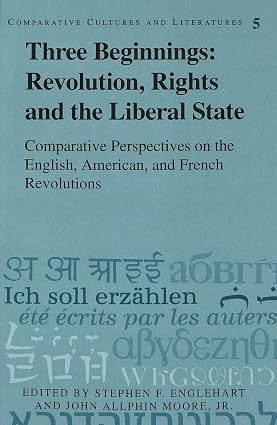
A version of this essay appeared as “Natural Right in the American Revolution” in Three Beginnings: Revolution, Rights, and the Liberal State: Comparative Perspectives on the English, American, and French Revolutions, edited by Stephen F. Englehart and John Allphin Moore, Jr. (Peter Lang).
Next in the summer 2026 Issue
Pedro Sánchez’s Kingdom

Wine Lunacy