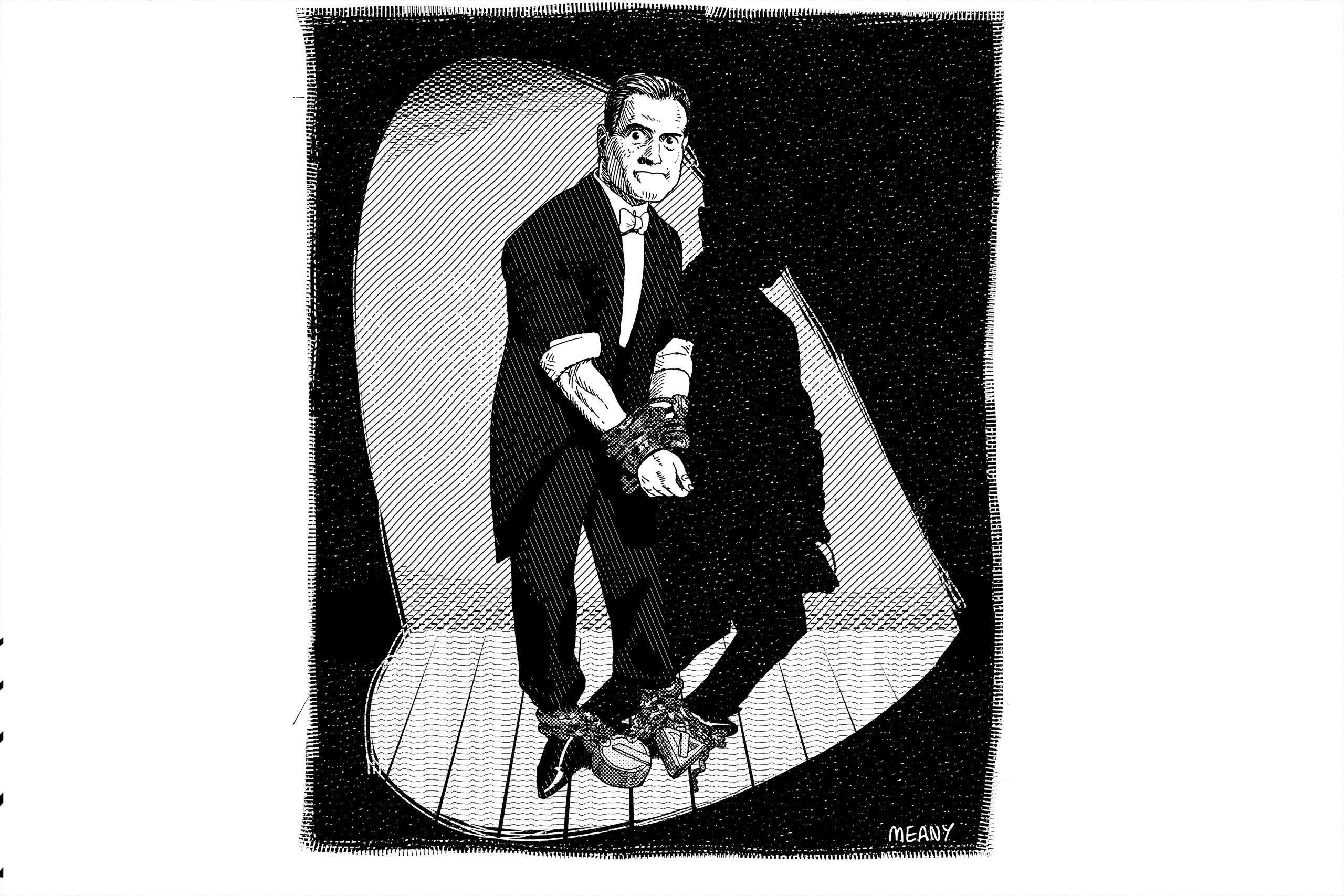
In the middle of April, Spanish prime minister Pedro Sánchez summoned the world’s leftist statesmen to Barcelona for what he called a Global Progressive Mobilization. There are not many leftist statesmen to choose from these days. But Claudia Sheinbaum of Mexico and Lula of Brazil rallied round Sánchez, and so did the representatives of activist philanthropies—Bill Gates’s people and George Soros’s, too. Various agitators came for environmental and sexual causes, with their earrings and keffiyehs and polyglot t-shirts.
It was a coronation of sorts. Through an assiduous campaign of policy-shaping, speech-making, China-courting, and Trump-trolling, Sánchez has managed to identify himself to many non-Spaniards as the leader of the global opposition. What Trump explores, Sánchez deplores. Boss of the Socialist Workers’ Party of Spain (PSOE) with only a brief interruption since 2014, prime minister since 2018, and president of the Socialist International since 2022, Sánchez was accusing Israel of committing genocide in Gaza within weeks of the 2023 Hamas attacks. In 2025 he repudiated the promise of other NATO leaders to increase their defense spending to 5% of GDP. This past January, as the Trump Administration’s ICE arrests in Minnesota brought global opprobrium, Sánchez publicized a plan to give amnesty to half a million migrants. And he has been prominent among the critics of Trump’s Iranian misadventure, even refusing the United States the use of Spanish air bases at Rota and Morón for refueling and repairs. Much of the Spanish establishment has been urging Sánchez to conduct his foreign policy in a more bipartisan way, but as the former foreign minister Alfonso Dastis recently told the Madrid daily El Mundo, “the problem is that he views everything through the lens of heightening the contrast with Trump.”
In most foreign capitals, Sánchez’s strategy has been a smashing success. The Berliner Zeitung calls Sánchez the “leader of the global left”; for the French business magazine Challenges, he is the “champion of the anti-Trump resistance.” The revelation by Reuters in late April that one Pentagon official had proposed suspending Spain from NATO was another feather in Sánchez’s cap. Global public opinion is increasingly inclined to judge Sánchez against Trump, and the verdict has favored Sánchez.
Except, perhaps, in Spain itself. There, the international hero is viewed by a large part of his electorate as a disgrace. He is jeered when he appears in public. People throw mud at him, and three of his longtime advisors have been sent to jail. His PSOE keeps losing regional elections by historic margins—in Extremadura last December, in Aragon in February, and in its historic stronghold of Andalucía in mid-May. He is not term-limited, but he must call an election by August 2027, and his prospects of being re-elected appear vanishingly small. Sánchez, who for a decade now has shown a Houdini-like ability to escape from political disaster, is counting on Trump’s reputational toxicity to rescue him from this one. But for the moment it doesn’t look like that is going to happen—in fact, nationalists are surging in Spain, and new criminal investigations involving socialist influence peddling and slander of judges have left Sánchez fighting for his political life.
Sánchez’s Bag of Tricks
A politician who stays in power when he is at odds with the times must have a gift. Sánchez knows Spanish society well—its generations-old resentments, its class anxieties, its vanities—and deploys that knowledge with agility. He was president of the PSOE in 2016 when a disappointing election left it facing an unpalatable choice. After four months of deadlocked negotiations, Sánchez’s socialist colleagues were pressuring him to enter a coalition with the conservative People’s Party (PP), which, under its lackluster premier Mariano Rajoy, had fallen just short of a majority.
Why do that? Why compromise with the party’s arch-rivals? Because not doing it was likely to produce elections in which the socialists would do even worse. The public had been clamoring for a more radical politics ever since the finance crisis of 2008-09 and the currency crisis that followed. Spain had a new party called Podemos, which is Spanish for “Yes, We Can.” (It was the Obama era.) Podemos wanted even bolder economic redistribution than the socialists did, along with new kinds of identity politics. Now it was breathing down the PSOE’s neck, running just two points behind them in the polls and with nearly as large a parliamentary delegation. If the PSOE did not join with the PP, new elections might have to be called, risking a defeat that would sweep them into the dustbin of progressive history. Pablo Iglesias, Podemos’s leader, described what was going on as a passing of the torch. Rather than fend off Podemos by pretending to be a centrist, Sánchez resigned. With three advisors, he drove around Spain for several months, putting 20,000 miles on their battered Peugeot. That trip is now the stuff of socialist legend. While their colleagues back in Madrid bore the responsibility for having compromised, Sánchez and his team went directly to Podemos’s base and made it their own. In the process, they built a new political machine with the help of the hardball political activists of Spain’s small cities. Within a decade, several of Sánchez’s traveling companions would be in jail.
The gamble paid off. Sánchez regained his party chairmanship in 2017 and toppled Rajoy with a skillfully planned legislative corruption inquiry. Once he was prime minister himself, Sánchez assembled a charismatic and unconventional cabinet—with an astronaut as his science minister, a crusading prosecutor as his justice minister, a gay interior minister, and a bestselling author as his culture minister. It was unanimously “feminist” and two-thirds female. Its countercultural makeup was enough to begin undermining Podemos’s claim to the hearts of Spain’s progressive youth. But it was not enough to win Sánchez an electoral majority when he ran for re-election at the end of his first full term in 2023. He fell just short.
Or so it seemed. Sánchez’s political inventiveness came once again to the fore. Catalonia, the eastern region centering on Barcelona, has a separate language and history from Spain and has long enjoyed a certain autonomy from Madrid. The region’s nationalist leaders had staged a referendum on independence in 2017, before Sánchez came back to power. The conservative government in Madrid, along with most Spaniards, considered the referendum illegal and even treasonous. Now, years later, several Catalan leaders were abroad, under threat of arrest should they return to Spain.
Sánchez the campaigner had vowed to bring the Catalans to justice. But Sánchez the coalition-builder considered the matter in a different light. He promised an amnesty for the referendum leaders in exchange for the votes of a conservative bloc of secessionists to invest him for a second term. It was a losing deal for everyone. Courts blocked the promised amnesty for Carles Puigdemont, leader of the referendum movement, and Sánchez reneged on much of the agreement’s fine print concerning devolved control over immigration and regional finances. The Catalans found themselves trapped in an unsympathetic coalition with no new national prerogatives to show for it. Sánchez, meanwhile, wound up dependent on a fiscally conservative party that would not vote for his profligate budgets, and now he has not passed one in four years. In a Spanish context this is a catastrophe. Western citizens don’t always realize it, but setting government priorities through an orderly budget is the basic work of democracy. As surely as a country without a border is not really a country, a government that cannot pass a budget is not really a government.
Now Sánchez was running out of tricks. His demagogic provocations followed ever more closely on his political setbacks. In regional elections in Galicia in February 2024 the PSOE suffered their worst-ever loss. With a string of upcoming regional elections in the Basque country, Catalonia, and the European Union, Sánchez launched his campaign against Israel, recognizing a Palestinian state in March of that year.
From Minnesota to Madrid
Sánchez’s reinvention as Donald Trump’s arch-nemesis follows the same pattern: it comes against the backdrop of almost nonstop bad press. Sánchez has been embroiled in scandals for much of his latest term. He has never been wholly free of them: his wife, Begoña Gomez, is the daughter of a Madrid entrepreneur who reportedly once ran a network of gay saunas. Though this has been the cause of considerable mirth and gossip, it is not necessarily illegal. Sánchez’s wife is now accused of illegalities, though, in four different corruption affairs, which involve misappropriation of a government-contracted software program for private gain, use of public employees for private tasks, and influence peddling. In the spring of 2024, as a string of charges against his wife were filed, Sánchez announced that he was taking five days off from running the country to mull over whether to continue. Continue he did, claiming that the prosecutions against his wife were politically motivated.
Just as serious have been the scandals that permeate the circle of advisors who helped Sánchez revive his career after 2016. A shambling operative named Koldo García was alleged by an investigative committee to have taken millions during the Covid epidemic for a large order of masks that were never delivered and possibly never even manufactured. Koldo went to jail. His mentor (and Sánchez’s close advisor), the party secretary and congressman Santos Cerdán, was called before a congressional investigative committee and jailed under suspicion of taking kickbacks. In late May, Cerdán was implicated in a campaign to undermine the judges investigating Sánchez’s family. The congressman José Luis Ábalos, who brought Sánchez to power by laying out the corruption case against Rajoy on the floor of the chamber and who later became Sánchez’s transportation minister, was also wrapped up in the Koldo case, and resigned. He, too, was eventually jailed, and last year was alleged to have used public money to hire prostitutes. There were other scandals involving Latin American progressive regimes—Maduro’s Venezuela, above all—and secret shipments of currency and gold. This May, investigators announced that former PSOE prime minister José Luis Rodríguez Zapatero was the target of an investigation for kickbacks. He allegedly steered money from the European Union’s Covid rescue fund to a minuscule Spanish airline, Plus Ultra, with close ties to the Maduro regime.
By the turn of this year, it was understandable that Sánchez might wish to change the subject. The biggest news in most Western countries was the Trump Administration’s disorderly attempt to crack down on illegal immigration in Minnesota, a series of deadly mishaps that went a long way to discredit a policy that had until then been one of Trump’s strengths. Three days after the activist Alex Pretti was shot dead in Minneapolis, Sánchez promised to pursue a more humane course: praising the contribution migrants were making to the Spanish economy, he proposed regularizing 500,000 of them, most of whom were easy-to-assimilate Spanish speakers from Central America and elsewhere.
This was a gamble. Spain is undergoing a wave of immigration unmatched in the history of nation-states, except perhaps by contemporary Ireland. With one of the world’s lowest birthrates, Spain has seen its native population shrink since the turn of the century. Yet over the same period the number of people living in Spain has leapt from under 40 million to over 50. All of the increment is due to immigration.
Sánchez’s regularization was not popular: lacking a majority for it in the Congress of Deputies, he imposed it by decree. What is more, as is often the case in such initiatives, the provisional numbers disseminated by the government looked like lowball estimates. Some scholars asserted the figure could rise into the millions. And for all the assurances of Sánchez’s allies, the North African embassies were as noteworthy for long lines of applicants as the Latin American ones. These were the Sánchez voters of tomorrow.
If there is one feeling that a majority of Spaniards share with Donald Trump, it is impatience with mass migration. Sánchez nonetheless had a couple reasons to think he could benefit from an anti-Trumpian policy, even when it came to immigration. First, Spain has gained a reputation in recent months as an economic beacon of the Western world. The Financial Times called it Europe’s “standout economy,” since its GDP had grown at 3% since 2024, while other countries were stuck at 1% and Germany was seeing no growth at all. But the general public didn’t feel like Spain was prospering. The think tank Funcas found that 55% of Spaniards thought the economy was getting worse, versus only 20% who thought it was getting better. And the public was right. Adding 25 or 30% to a country’s population will almost inevitably make the national economy “grow.” But it may well have no effect, or even a negative effect on individual incomes. If one controls for population, Spain’s performance looks unimpressive. In exchange for a demographic disruption that has put its centuries-old culture under threat, Spain has managed to grow, in per capita terms, at roughly the level of its European neighbors—at a time when Europe has been the global economy’s basket case.
The second reason that made Sánchez’s anti-Trump positioning a promising strategy is a matter of history. Spain is the most anti-American country in Europe. It shares none of the history that makes pro-American countries pro-American. During the great years of European emigration in the 19th century, Spain’s huddled masses yearning to breathe free had other countries, Hispanophone ones, to go to. In 1898 the United States, on a flimsy pretext, laid claim to Spain’s possessions in Cuba, Puerto Rico, Guam, and the Philippines, smashing the last vestiges of Spain’s once world-bestriding empire, and with it the last vestiges of Spanish imperial pride. In the 20th century, Spain was neutral in both world wars, and had no need to be rescued from either Nazism or Communism—nor did it require forgiveness for bringing those about. For a long time, Spaniards understood their civil war of the 1930s, which led to four decades of military dictatorship under General Francisco Franco, as a time when they rescued themselves from Communism. But since Franco’s death in 1975 they have tended not to think that, at least not officially, and there is no reason why a contemporary Spaniard would wish an American president well as he sought to put an American stamp on Cuba or Venezuela.
Franco-American
We know this historic Spanish anti-Americanism can be activated at any time because it was activated quite recently—when Spain turned against the United States in the Iraq war. This was a turning point in NATO’s history and a turning point for Spain. The quarter-century between the death of Franco and the destruction of the World Trade Center in 2001 had seen an impressive re-knitting of Spanish society. The formula for reconciliation had been, in the words of the French-Spanish Marxist Jorge Semprún, amnistía y amnesia. Forgive and forget. It worked well.
But the reconciliation was less stable than it looked. The society that emerged from Franco’s dictatorship had a lot of conservative traits, but progressive forces had more cohesion and dynamism, since conservatives had fallen out of the habit of debating what they stood for. Between 1996 and 2004, José María Aznar, the country’s most gifted conservative politician since Franco, managed to fight that tendency, uniting non-left-wing Spaniards around a vaguely Reaganite program of conservative social values and free markets. Spain boomed. The country had joined NATO in 1982, but, once within it, had tended to follow the foreign-policy lead of France. In 1997, the year NATO held its summit in Madrid, Aznar cast his lot with Bill Clinton’s United States, winning the lifelong resentment of French president Jacques Chirac. This looked like a decisive change of direction for Spain. Events would reveal it to be a temporary arrangement.
When al-Qaeda attacked the United States on 9/11, Aznar pledged himself to George W. Bush’s War on Terror—making the bold symbolic gesture of joining Bush and Tony Blair in the Azores for a summit the week before the war was launched. But that was all he could do—to the alarm of the whole alliance, 85% of Spaniards were opposed to joining the United States in a military adventure. Aznar did not envision for Spain the role that Britain, Poland, and eventually Italy played in the war. But he flouted public opinion by backing it.
Almost exactly a year later, three days before the 2004 national elections, which Aznar’s conservative successor Rajoy was set to win easily, al-Qaeda detonated bombs in four commuter trains passing through Madrid, killing almost 200 people. Spaniards did not rally round the flag—they came to the conclusion that hundreds of their fellow citizens had been killed in a war that their country had no business fighting. Spaniards voted in the PSOE, then run by the leftist José Luis Rodríguez Zapatero, who had said he would pull Spain out of the Iraq war if elected. He did more than that. He took advantage of his accidental premiership to recast the entire post-Franco political bargain. You could call his program socialist: by 2008, when the global finance crisis arrived, Spain was in grave economic peril. In May 2011, Barack Obama warned Zapatero sternly that he would have to adopt an austerity program and change Spain’s constitution to favor foreign creditors if Spain were to receive economic help.
Zapatero was tacking wholly away from the United States anyway. He grew close to the Venezuelan dictatorship of Hugo Chávez and would eventually become, as noted above, a key player in Sánchez’s operations there. Zapatero was also involved in Sánchez’s steady tightening of the PSOE’s ties to China, which Sánchez has now visited four times. Zapatero maintains important connections to the Shenzhen-based telecommunications company Huawei.
But the main thing Zapatero did was to recast Spanish history and Spanish national identity. In 2007 he passed a law of memoria histórica—making the condemnation of Franco’s regime the official policy of the government. This meant toppling statues, banning certain official commemorations, and unleashing progressive campaigners on streets and in courtrooms. In its idiosyncratic way, Spain was the first Western nation to adopt the mixed regime of pedantry and iconoclasm that would acquire the name “woke.” Its overarching focus on human rights and international law, moreover, posed great obstacles to legislating against mass migration, which now began to escalate steeply.
This is the politics that Sánchez—who rose through Zapatero’s political machine—has fought to represent and extend. To Zapatero’s law of memoria histórica he added one on memoria democrática, mandating high school instruction about the dictatorship, removing Franco’s body from the memorial where it reposed, and establishing a schedule of fines for those who use or promote symbols of the dictatorship—placing Franco’s rule on roughly the same moral plane that Germany places Hitler’s, or that the United States at the high tide of woke placed Jim Crow.
An added benefit for the socialists was that this politics shattered Spanish conservatism. Mariano Rajoy, a representative of the liberal wing of Aznar’s Popular Party, was superb at shoring up Spain’s financial accounts in the wake of Zapatero’s mismanagement, but disinclined to contest this society-consuming cultural project, incapable of uniting the country around any other, and undermined by his own corrupt appointees. (Today the progressive newspaper El País covers the ongoing scandals from Rajoy’s premiership, which ended a decade ago, as zealously as the conservative El Mundo covers those of Sánchez.) In a now-notorious speech in the city of Elche in 2018, Rajoy declared the PP a “managerial party.” The conservatism that Aznar had consolidated split up again. The PP became a muscular businessmen’s party that took control of the boom economy in newly skyscraper-studded Madrid, which regional president Isabel Díaz Ayuso, a charismatic ex-journalist, has turned into the most right-wing capital city in Europe. For a while a decade ago, some conservatives were attracted to a new party of liberal technocrats called Ciudadanos, now defunct. But conservatives are gravitating more and more to the nationalistic, anti-immigration, and sometimes explicitly Trumpian party Vox, which was founded in 2013, the same year as Germany’s AfD.
The real story in Spanish politics in recent months has seemed to revolve around which party will lead the likely conservative succession to Sánchez: the capitalistic PP or the patriotic Vox. It is important to remember that Sánchez the political escape artist has been counted out before. But the experience of Sánchez’s willingness to make a coalition with anyone has cured the PP of a timidity one often sees among parties of the European conservative establishment. For France’s Républicains or Germany’s Christian Democrats, populist parties are still too uncouth to govern with. Unlike them, the PP has been willing to form coalitions with Vox in several Spanish regions, even if Vox has proved a temperamental partner.
Vox, while smaller, has the momentum now. The story in region after region where elections have been held is that the socialists fall to historic lows, while PP dependence on its potential Vox coalition partner grows. That’s what happened in Andalucía in mid-May, where the PP lost its parliamentary majority but emerged shored up by a much stronger Vox. The key to Vox’s recent regional victories has been its focus on prioridad nacional, a preference in government policy for Spain’s own citizens above immigrants and others. Many important institutions consider it anathema: Sánchez’s socialists, of course, the so-called human-rights community, the country’s paper of record El País (for which prioridad nacional is “a euphemism that uses two positive words to imply inequality, racism and xenophobia”). But almost as opposed to nationalism are a large part of the PP and much of the Catholic Church, where voters show signs of turning toward Vox. The Vox counterargument is that if there’s no prioridad nacional, there’s no nación. And that is because nations ask a certain special class of people—the citizenry—to sacrifice and even, if need be, to die for them. Without prioridad nacional, citizenship is not a blessing but a curse.
Pedro Sánchez has been having a good run against the American nationalism of Donald Trump. Running against Spain’s own nationalism is, unsurprisingly, proving a harder task.
Next in the summer 2026 Issue

Saving Civics
Becoming Churchill