Books Reviewed

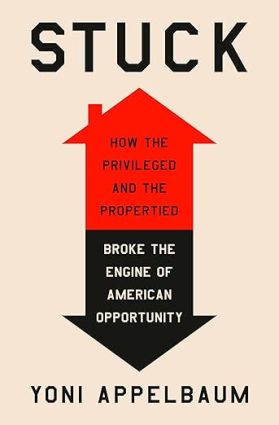
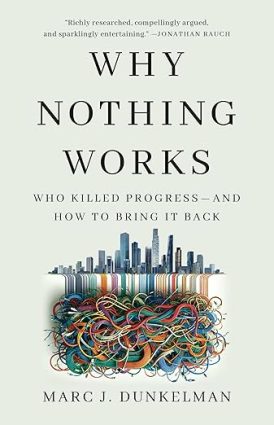
It pays to read the Claremont Review of Books—even, and perhaps especially, for Democrats. While they were celebrating Donald Trump’s banishment to the political wilderness, the Spring 2021 CRB published “Progressively Worse,” which argued that it was no coincidence that California, one of the republic’s bluest states, was also among the worst-governed. Activist government, the essay contended, was suffering a “crisis of competence,” exemplified by California’s high-speed rail system, approved by the voters in 2008 but, then as now, years if not decades away from carrying its first passenger.
The proximate cause of this crisis was not an outbreak of stupidity, but an excess of participatory democracy. “We are beginning to wipe out the line that divides the practical from the ideal,” Franklin Roosevelt had declared in his Second Inaugural, “and in so doing we are fashioning an instrument of unimagined power for the establishment of a morally better world.” Though exhilarating to New Dealers, this kind of proclamation landed differently for a later generation of liberals. One of the era’s most influential books, David Halberstam’s The Best and The Brightest (1972), savagely derided the architects of the Vietnam war, especially McGeorge Bundy and Robert McNamara. As the Democratic Party was being torn apart by the Vietnam debacle, progressives were becoming aware of Big Government’s darker side.
In short order, skepticism about entrusting vast policymaking discretion to experts of dubious judgment and motives grew to encompass domestic as well as foreign affairs, aided by Robert Caro’s The Power Broker (1974), which turned Robert Moses, an unelected public official responsible for most of New York’s 20th-century infrastructure, from a liberal hero into a villain. Rather than give the benefit of the doubt to administrators who claimed to know and want what was best, a revised, chastened liberalism emerged, determined that any significant public endeavor should proceed only after the most exacting review process. A morally better world now required that no big project undertaken or authorized by the government go forward until every constituency that might dislike some aspect of it is first given the chance to register its objections before a decision-making body—or, usually, several.
This effort to constrain arbitrary government action, however, has been too successful for liberalism and for America’s own good. The biggest reason, for example, why it has taken California 17 years to not build its bullet train is that there have been protracted, convoluted challenges to nearly every mile of proposed track, in the form of lawsuits and environmental impact reviews. As “Progressively Worse” argued, “Demanding that government solve more problems while, at the same time, providing more tools to more groups that enable them to challenge, reshape, postpone, or even veto government undertakings is a recipe for gridlock and failure.
A Walk on the Supply Side
Four tumultuous years and one presidential election later, the argument that CRB put forward is one that three new books elaborate: Abundance, by Ezra Klein and Derek Thompson; Stuck: How the Privileged and the Propertied Broke the Engine of American Opportunity, by Yoni Appelbaum; and Why Nothing Works: Who Killed Progress—And How to Bring It Back, by Marc J. Dunkelman. All four authors’ politics are left of center, but not so far left that they dogmatically insist that the cure for any ailment of progressivism is, only and always, even more progressivism. Klein and Thompson make the point in words Appelbaum or Dunkelman could have written: “We have many disagreements with the modern American right. But we focus, in this book, on the pathologies of the broad left.”
Of the four writers, Klein is the most prominent, having founded Vox in 2014 before joining The New York Times six years later. His co-author, Derek Thompson, is a senior editor of The Atlantic, which also employs Stuck’s Yoni Appelbaum as deputy executive editor. (Appelbaum’s past work includes a March 2019 Atlantic essay, “Impeach Donald Trump.”) Dunkelman is a fellow at Brown University’s Watson Institute, having previously held positions at the Clinton Foundation and as a Democratic staffer on Capitol Hill.
All three thoroughly researched books are written clearly and well. Few readers will regret spending time with any of them. More interesting than the books’ content, however, is their relationship to larger, ongoing political disputes. That three thematically similar books were undertaken independently is less likely happenstance than a consequence of progressives’ growing apprehensions since Donald Trump’s upset victory over Hillary Clinton in 2016. Written during the Biden presidency, the books warn that the Democratic Party’s governing failures were making its political success increasingly unlikely. All three were then published in early 2025, a time when Democrats were debating both the causes of their 2024 defeat and the best way to avoid equally bitter disappointments in the future. The attention paid to the three books has made the thread connecting them—“abundance liberalism,” also known as “supply-side liberalism”—a prominent part of those arguments. The “abundance agenda,” as Thompson wrote in The Atlantic in 2022, seeks to devise and implement solutions for America’s “national failure to increase the supply of essential goods.”
To understand the governance-politics nexus that preoccupies supply-side liberals, consider housing, a major subject of Abundance and Why Nothing Works, and the sole focus of Stuck. All three books argue that, whatever liberal policies’ abstract merits, their practical benefits won’t mean much if—as is increasingly the case—affluent Americans are the only people who can afford to reside in cities and states run by Democrats. The biggest single reason is the cost of housing, which is higher and growing faster in blue states than in red ones. The biggest single reason for skyrocketing costs is that the supply of housing is tighter and increases slower in blue states than in red ones. “Since 2015,” Klein and Thompson write, California “has authorized construction on about half as many housing units as Texas, despite it now having 9 million more residents.”
And the biggest single reason for that phenomenon is that, as a rule, blue states and cities make the process of adding to the housing supply harder than it is in places run by Republicans. The blue-state model, fiercely committed to giving every affected party a say in decision-making, has created procedural gauntlets for home builders that cause the abandonment of some developments and raise the costs of the rest. “Almost all new construction in the United States now requires government approval,” Appelbaum writes in Stuck, “and anyone with sufficient time and resources and education can effectively veto that approval, or at least impose great expense and delay. The result is that in the very places that need it most desperately, housing has become prohibitively difficult to build.” We have, Dunkelman laments, created a regulatory regime that subjects “even mildly controversial development proposals to a nearly endless litany of objections.”
Even when a developer managed to accommodate one set of concerns, another would emerge. And if a zoning board approved a plan over local objections, the disappointed interests would sue, arguing that the zoning board’s process had been deficient in some way—that it had been arbitrary, or capricious, or contrary to the law, or been approved via a process that somehow failed to measure up.
One response to the resulting housing shortage is that Americans are voting with their U-Hauls, relocating from jurisdictions where housing is scarce and expensive to places where it is more abundant and affordable. The American Redistricting Project estimates that if the state-by-state population changes—variations driven by such relocations—that have taken place from 2020 through 2024 continue for the rest of the decade, then the reliably blue states of California, Illinois, Minnesota, New York, Oregon, and Rhode Island will lose a total of nine congressional seats (and electoral votes) after the 2030 Census, while the reliably red states of Florida, Idaho, Texas, and Utah will gain ten. Had Kamala Harris prevailed in the “blue wall” states of Michigan, Pennsylvania, and Wisconsin in 2024, she would have secured exactly 270 electoral votes to Trump’s 268, making her president. But if the 2032 Democratic nominee faces the Electoral College map the American Redistricting Project expects, then holding all the states Harris won and adding the blue-wall trio she lost will yield only 259 electoral votes…and defeat.
Deliverism and Predistribution
Of course, voters can also repudiate the Democratic Party without traveling any farther than their local polling place. Democratic leaders and thinkers have viewed the electoral trends since 2016 with growing consternation. The Obama coalition, dominated by college graduates and ethnic minorities, once thought to be an invincible electoral force comparable to FDR’s New Deal coalition, has proven increasingly vincible. The 2016 election turned on defections from Democratic candidates by white working-class voters, in numbers too large for the Obama coalition to overcome. Despite winning in 2020, Democrats found the election results more ominous than comforting. The unexpectedly narrow victories in the presidential and congressional races showed that the Obama coalition, in addition to being too small to guarantee Democratic dominance, might also be too eclectic and disparate to endure. Not only white but non-white working-class voters, Hispanics in particular, voted Republican in unexpected, unprecedented numbers.
What emerged in response was a Democratic theory that shaped the Biden Administration’s political mission. As a candidate in 2019 and 2020, Biden had been uncharacteristically diffident, describing himself at one rally as merely “a bridge” to the next generation of Democratic leaders, and telling another group of donors that, if elected, “nothing would fundamentally change.” But no politician, even a cognitively declining one, lusts for the presidency his entire adult life and then, upon finally reaching it, agrees to serve as a caretaker. No sooner was Biden 2020’s presumptive nominee than he was assuring Senator Bernie Sanders, “I want to be the most progressive president since FDR.”
Such grandiosity was not only consistent with Biden’s well-established public persona but with his party’s raison d’être and assessment of its own perils and prospects. Under FDR, progressivism had come to mean the vigorous reliance on activist government for improving how people live. Although Barack Obama’s controversial remarks at a 2008 San Francisco fundraising event caused him political embarrassment, Democrats came to believe that his diagnosis was fundamentally correct. “The places where [Democrats] are going to have to do the most work are the places where people feel most cynical about government,” the candidate said. Thus, “our challenge is to get people persuaded that we can make progress when there’s not evidence of that in their daily lives.”
And then, notoriously:
You go into some of these small towns in Pennsylvania, and like a lot of small towns in the Midwest, the jobs have been gone now for 25 years and nothing’s replaced them. And they fell through the Clinton Administration, and the Bush Administration, and each successive administration has said that somehow these communities are gonna regenerate and they have not. So it’s not surprising then that they get bitter, they cling to guns or religion or antipathy to people who aren’t like them or anti-immigrant sentiment or anti-trade sentiment as a way to explain their frustrations.
In this telling, working-class attitudes about social issues, which went on to become Trumpism’s raw material, were epiphenomena located downstream from the fundamental realities of economic deprivation and despair. If, Democrats reasoned, progressive policies could cause jobs that have departed to return, and communities that have decayed to regenerate, then the people who feel most cynical about government would finally connect it to tangible progress in their daily lives. In response they would, at the least, cling to their guns and religion less tightly, making them once again receptive to the New Deal bargain: the Democratic Party had earned working-class voters’ support by virtue of being the protector of their security and dignity.
This old Democratic conviction acquired several new names and theoretical refinements during the Biden years. David Dayen, executive editor of The American Prospect, made “The Case for Deliverism,” which he defined as nothing more esoteric than the idea of “governing well and establishing a record” of palpably beneficial policy achievements that would bring voters back to the Democratic fold and make the party electorally formidable again. Other designations reflect the belief that Democrats need to update New Deal initiatives like the National Industrial Recovery Act and the Tennessee Valley Authority, rather than passively let the economy generate wealth as it will, which the government subsequently taxes and transfers to others. As Yale political scientist Jacob Hacker characterized it in The Guardian, the goal is “predistribution”: strategic interventions in the economy that redress power and status imbalances rather than just income inequalities. “Middle-out economics” is another term for, basically, the same approach. Economist Heather Boushey, a member of Biden’s Council of Economic Advisers, explained to Nicholas Lemann of The New Yorker, “We don’t just want the economy to grow. Growing from the middle out means that what we make and how we make it matters.”
The force of these ideas within Democratic circles explains how, despite their very different profiles and fortunes over the course of the 2020 nominating contest, the Joe Biden presidency yielded the Elizabeth Warren agenda. During his first two years in office, Biden and the (narrowly) Democratic Congress enacted four massive domestic bills that will “generate government spending of at least five trillion dollars, spread across a wide range of purposes, in every corner of the country,” in Lemann’s summary, their goal being “to rebuild and redirect the industrial capacity of the United States.”
An Underwhelming Response
And yet, in an article published days before the 2024 election, Lemann had to admit the “vast gulf” between the scope and spending of Bidenomics, on the one hand, “and its political impact, which is essentially zero, even though a major part of its rationale is political.” In the aftermath of the GOP victories, the gulf appeared even larger. Armed with election results, The Atlantic’s Jonathan Chait looked at six locations, one in Georgia and five in the Rust Belt, where Biden programs had resulted in a huge federal commitment to predistributive industrial policy, such as a new plant in Lordstown, Ohio manufacturing batteries for electric automobiles. Employing 2,200 workers in 2024, it received billions of dollars in federal loans and grants.
As Chait discovered, however, all six areas assisted by such initiatives gave Donald Trump a larger share of their vote in 2024 than he had received in 2020. As recently as 2012, Barack Obama had won a 23-percentage-point margin over Mitt Romney in Trumbull County, where Lordstown is located. Trump won it in 2016, however, increased his margin of victory in 2020, and then increased it by an additional six percentage points in 2024. “The notion that there is a populist economic formula to reversing the rightward drift of the working class has been tried,” Chait concludes, “and, as clearly as these things can be proved by real-world experimentation, it has failed.”
Further evidence that the policy agenda progressives seek to implement is connected only tenuously to the political gains Democrats need to secure comes from “The Death of ‘Deliverism,’” a 2023 essay in the liberal quarterly Democracy. Written by three activists affiliated with the Roosevelt Institute, it addresses the negligible political impact of one Biden Administration policy achievement, the expansion of the child tax credit, part of the $1.9 trillion American Rescue Plan Act passed in March 2021. A massive effort to stimulate economic recovery from the COVID pandemic, the law temporarily increased the tax credit’s size as well as the number of people eligible for it. By one Census Bureau measure, the changes contributed to cutting the child poverty rate nearly in half, from 9.7% in 2020 to 5.2% in 2021. The Democracy article lamented, however, that the electorate was neither discernibly impressed by, nor grateful for, the law’s impact. Some Democrats, including Biden, spoke in favor of making the child tax credit’s expansion permanent, but no one devoted any political capital to that goal. The credit reverted to its lower limits and outlays at the end of 2021.
More generally, a Washington Post/ABC poll taken after Biden had been in office two years found that 23% of Americans believed he had accomplished “not much” as president, and another 39% said he had done “little or nothing.” It is, said Democracy, “a remarkable feat to spend trillions in an attempt to usher in an economic transformation and to get such an underwhelming response.”
Worse still, the federal spending surge from the 2021 law, and other ensuing Bidenomics measures, contributed to the rising inflation that, more than any other factor, weighed down Biden’s approval ratings. Predistribution advocates had maintained that the benefits of increased government social spending would be so profound as to obviate “worrying about inflation quite so frantically,” in the words of a 2020 Hewlett Foundation report. Few voters seem to have read it, a fact few Biden Administration officials seem to have noticed. Instead, they took comfort in their belief that, to quote Chait again, inflation “wouldn’t rise, wouldn’t last, or wouldn’t matter.”
These political setbacks argue that the Democratic Party has no evident way to regain working-class Americans’ support, but also no evident path to steady electoral success without a larger share of those voters. The lack of any apparent escape from this dilemma was conveyed by a recent James Carville op-ed in The New York Times that urged Democrats to “roll over and play dead.” Since there was no short-term prospect for Democrats to solve their party’s problems, he argued, the best option was a “strategic political retreat.” President Trump’s own blunders, Carville reasoned, might spare Democrats the necessity of figuring out some way to reconcile what they really want to do with what voters are willing to support.
Well, perhaps. But counting on Trump to self-destruct is a big reason why Democrats got into their current mess in the first place. As one Democratic campaign manager says in Uncharted (2025), Chris Whipple’s chronicle of the 2024 election, “We’ve got to stop relying on Donald Trump to suck and actually get our sh-t together.”
Abundance Liberalism’s Catch-22
Can abundance liberalism help Democrats get…it…together? In fairness, there are sure to be some political benefits if Democrats commit to procedural reforms that result in more housing and infrastructure. Dunkelman’s Why Nothing Works is especially clear that the goal is not to find and empower a 21st-century Robert Moses. That kind of planner really was given too much discretion, often abusing it. What’s needed instead is a sensible compromise. People affected by a government decision do deserve a mechanism to make their perspectives and concerns known to decision-makers, officials who don’t just go through the motions of listening but pay serious attention to serious arguments. But, in turn, the various objectors must work within a framework in which they agree that ultimately the government must decide and then must act, and it cannot do either without being, as Dunkleman puts it, “insulated from” today’s “Kafkaesque series of veto points.” Effecting such procedural reforms would get more things built, faster and cheaper, to the social and economic benefit of many people and, presumably, the political benefit of the Democratic Party.
But it is hard to envision the political payoff for any such resolution being transformative rather than just marginal. The gauntlet that promising initiatives must run exacerbates Democrats’ problems with working-class voters, especially since the most influential component of the Democratic base, voters with post-graduate degrees, is especially adept and assertive about using these veto points. But it’s unlikely that this procedural problem has caused the working-class exodus from the Democratic Party. The 2021 expansion of the child tax credit was not required to navigate a procedural maze. Congress passed the bill, money began to flow, and the political results were imperceptible.
This dog that didn’t bark strongly suggests there are other, deeper sources of the working-class disaffection for Democrats. Abundance points out that Republicans are more likely than Democrats to sway voters by saying that the Democratic Party wants to do for America what it has recently done “for” (but mostly to) California. But that campaign ad will probably focus on things like the de jure decriminalization of narcotics, the de facto decriminalization of shoplifting, and the state’s efforts to nullify federal immigration laws. The absence of the promised high-speed rail system is a problem, but even if it were up and running, the prospect of speeding from San Francisco’s homeless encampments and open-air drug markets in order to stroll through the ones in Los Angeles would not be a vote-getter.
Perhaps the best that can be said on behalf of supply-side liberalism’s analytical framework is that the rising problem of “state incapacity,” to borrow a social science term, has given oxygen to tribalism. Voters who have grown cynical, or perhaps just observant, about all the improvements that politicians have promised and not delivered stop thinking of voting as a means to get things done. Instead, they view it as a way to express solidarity with the crowd that respects us and express defiance for the crowd that disdains us.
Whatever abundance liberalism’s intellectual merits, it faces a political Catch-22. The electoral benefits to the Democratic Party of paring back the procedural excesses that have ensnared activist government are more likely to be modest than dramatic, and to accrue slowly than emerge suddenly. But the present regime of Kafkaesque veto points did not come about by accident. It emerged, then persisted, because large portions of the Democratic coalition favor it. (Or, at least, they favor the portion of it with which they are most familiar and have exploited most successfully to advance their specific agendas. And if every faction of the party feels this way, then the cumulative effect is indistinguishable from the whole party endorsing the whole Rube Goldberg apparatus.) Syllogisms and case studies are not going to dislodge this commitment to the status quo. Only the prospect of significant political gains will secure the Democratic buy-in supply-side liberalism needs. But these are precisely the political gains that cannot even begin to materialize until after—well after—Democrats make and implement a major commitment to procedural reform.
Congenital Pathologies
That four liberal writers have produced three books examining the pathologies of the broad Left is a bold departure from the safer course of being dependable team players. But not bold enough. The abundance liberals’ desire to make progressivism great again prevents them from confronting the possibility that the broad Left’s most serious pathologies are congenital rather than acquired.
Consider three difficulties. First, unless Democrats commit to building millions of public housing units—which, given the abysmal record of such projects in the U.S., would be a dubious way to expand the party’s coalition—housing will become abundant only through real estate developers becoming rich. Indeed, they will become richer if the regulatory process they confront before starting to build is streamlined. Even if the Republican whom Democrats hate most were not a former real estate developer currently renovating the White House, this pill would be hard to swallow. Modern liberalism has never reconciled itself to the decency of relying on the butcher, brewer, and baker’s concern for their own interests and advantages to produce our dinner, as opposed to appealing to their benevolence. The underlying fear is that even if this policy does produce good dinners, by also validating bad attitudes it will steadily elevate selfishness over kindness. The predictable but revealing intra-Left critique of supply-side liberals is that they are crypto-libertarians, undermining the 2025 Democratic Party’s renewed commitment to fighting “oligarchy.” The rebuttal has been less than fierce. Too many “left-leaning abundance advocates,” Manhattan Institute president Reihan Salam argued in City Journal, shy away from insisting that “profit isn’t a dirty word, and building is a noble pursuit.”
Second, supply-side liberals proceed in the collegial belief that their fellow progressives need to be reminded more than instructed. Pointing out the ways in which progressivism in action has come to negate progressivism in theory is supposed to go a long way to reacquainting liberals with the better angels of their nature. According to Abundance:
In much of San Francisco, you can’t walk twenty feet without seeing a multicolored sign declaring that Black Lives Matter, Kindness Is Everything, and No Human Being Is Illegal. Those signs sit in yards zoned for single families, in communities that organize against efforts to add the new homes that would bring those values closer to reality. San Francisco’s Black population has fallen in every Census count since 1970. Poorer families—disproportionately nonwhite and immigrant—are pushed into long commutes, overcrowded housing, and street homelessness.
But there’s good reason to believe that this anomaly isn’t all that anomalous. In We Have Never Been Woke (2024), sociologist Musa al-Gharbi contends that self-interest and self-regard have always been the dominant strands of liberal empathy. I made a similar argument in The Pity Party (2014): because compassion is an inherently rickety basis for a system of ethics, it is entirely predictable that liberalism will be more concerned with how empathizers feel than with how empathizees fare. A progressivism committed to results above all else would be radically different from the only progressivism America has ever known.
Finally, urging progressives to have a more sober, realistic understanding of politics looks distinctly unpromising. Marc Dunkelman gives it the best try. The proliferation of procedural choke points, he argues, stems from the post-’60s belief that guaranteeing “voice” would be some kind of “magic bullet.” If every perspective and objection could be expressed to decision-makers who were obliged to take each one into account, then “only worthwhile initiatives would move forward.” This belief is anchored in the fantasy that all differences are resolvable if the people who hold them stay at the table long enough to hash out an agreement everyone can accept. Once polluters and environmentalists, or highway builders and neighborhood preservationists, gain sufficient understanding of one another’s premises and concerns, the process will ultimately yield a synthesis that leaves no participant feeling like a loser. This is, among other problems, an unfalsifiable principle: the fact that we have not arrived at a consensus only proves that we haven’t tried hard enough and talked long enough.
In reality, Dunkelman writes,
there is no way to serve the greater good without exacting some cost on at least someone…. Giving everyone a seat at the table doesn’t by any stretch guarantee a mutually agreeable fix. But…giving anyone at the table a veto almost ensures that nothing will be accomplished.
That such elementary realities need to be explained in such painstaking detail reveals what abundance liberals are up against. Their problem is so big because it is so basic. As Ronald J. Pestritto argued in Woodrow Wilson and the Roots of Modern Liberalism (2005), Progressives rejected the liberalism of the American Founding because they rejected the idea of human nature, and with it, the idea that self-interest and faction were permanent realities that a well-structured government must account for and mitigate. Following Wilson, they believed instead that “history brings a unity of sentiment and fundamental will to the nation,” in Pestritto’s summary. This, above all, is the progress that progressivism exists to keep on track and accelerate.
Seen in this light, the conflict between the liberalism of Robert Moses and the liberalism of endless procedural hurdles is not all that fundamental. The question at issue is only about how best to manifest the protean popular will. In its first, Wilsonian iteration, the essence of democratic political leadership consisted in discerning what the people wanted before they fully realized it themselves, and then directing them to understand their own desires through rhetoric and governance. When liberals came to appreciate the dangers of such leadership, they substituted the idea that evolving standards of decency were best realized through protracted, often interminable, deliberations among every party that might conceivably have a stake in how a disputed question is settled. Both approaches rest on the assumption that the intractability of any problem or conflict is a mirage. Whether apprehended from above or below, a resolution of every disagreement is always there to be found, one that keeps the nation on the right side of history. In this sense, modern Left-liberalism is less a political philosophy than an anti-political philosophy.
In short, if supply-side liberals follow their analysis of progressivism’s pathologies to its logical conclusion, they will concede the likelihood that the remedies they propose are inadequate to the condition they diagnose. That is an inconvenient truth leading to another: that progressivism’s present difficulties result from inherent, uncorrectable flaws rather than transient and remediable ones. If, to conclude where we began, abundance liberals are willing to admit the plausibility of this thesis, they will then find it explicated in every issue of the Claremont Review of Books.
Next in the spring 2025 Issue

Make Speech Free Again

Mi Casa Es Su Casa