Books Reviewed



Listen to this article
The Leninist party-state founded in China by Mao Zedong has justly been called an “Empire of Lies.” From the Chinese Communist Revolution of 1927–1949 onward, the regime has been telling lies about itself, and Western dupes have been telling lies about it. Indeed, Communist China was never more beloved of left-wing intellectuals than when it was at its most fanatical and murderous, as self-proclaimed Maoists in Europe and America thoughtlessly hailed “the winds from the East.” Quotations from Chairman Mao, the “Little Red Book” of excerpts from his speeches and mottoes dear to his heart, was celebrated by Western intellectuals who quoted its gnomic dictums as though cracking open salvific fortune cookies. Even Richard Nixon and Henry Kissinger saw high qualities of statesmanship in oppressive ideologues like Mao and his right-hand man, Zhou Enlai. Kissinger, in particular, confused Mao’s drab autocracy with the venerable Chinese empires of old.
The doyen of American sinologists, Harvard’s John K. Fairbank, wrote an approving introduction to the journalist Edgar Snow’s Red Star Over China (1937), a shameful attempt to valorize Mao’s savage Red Army. In his vitally important 1981 book, Political Pilgrims, sociologist Paul Hollander recounts how gullible visitors to Maoist China saw freedom where there was slavery, peace where there was chaos, prosperity where there was penury, and dignity where humiliation reigned. Tens of millions of victims went ignored. There were a few notable exceptions: The Belgian art historian and man of letters Pierre Ryckmans (best known by his nom de plume Simon Leys), lamented the destruction of traditional Chinese culture in Chinese Shadows (1974); he was pilloried by mainstream scholars and leftist fellow-travelers alike. Chinese émigrée Jung Chang captured the dark absurdism of the Cultural Revolution in her poignant family autobiography Wild Swans (1991), which was banned in the People’s Republic of China but sold 15 million copies worldwide. The biography of Mao that she wrote in 2005 with her husband, Irish historian Jon Halliday, enraged the dictator’s admirers.
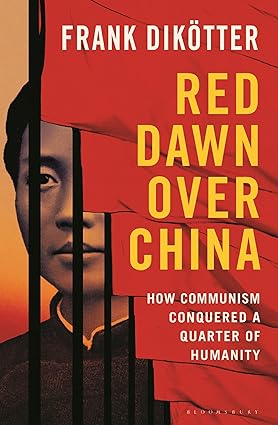
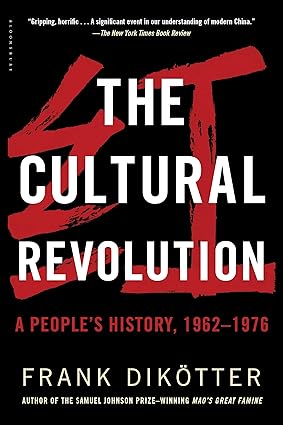
These are all valuable works. But the Dutch-born historian Frank Dikötter has exposed the bitter truth about Mao’s China more starkly than anyone before him. Drawing on secret party archives to which he gained access as a scholar in Hong Kong, he allows us to appreciate the revolution’s hideous consequences for the Chinese people. Born in 1961, educated in Geneva and London, and long a thorn in the side of “mainstream” Sinology, his “People’s Trilogy”—Mao’s Great Famine (2010), The Tragedy of Liberation (2013), and The Cultural Revolution (2016)—is a clear, accessible, and devastating account of the atrocities Mao committed upon seizing power. Dikötter’s work is as indispensable in the Chinese context as Robert Conquest’s was in the Soviet context a generation or two ago. He is an anti-totalitarian historian par excellence. Now, working from his post at Stanford’s Hoover Institution (it has become impossible to conduct truly independent scholarship on such sensitive themes in Hong Kong since the Chinese crackdown of 2019-20), Dikötter has produced a groundbreaking new book, Red Dawn Over China: How Communism Conquered a Quarter of Humanity. It tells the story of how Mao’s Red Army raped, slaughtered, and pillaged its way to control of China.
His title, a riff on that of Snow’s dishonest apologia, signals an intention to eschew the practice of credulous hagiography that has dominated the study of Chinese Communism. Dikötter’s approach has nothing in common with that of the academic Sinologists who habitually indulge the party’s foundational myths in a confused attempt at “balanced” analysis. Instead, Dikötter combines archival evidence with oral interviews and testimonials from victims of the regime who are often ignored or dismissed as “biased” by other scholars. As Leys already pointed out in the 1970s, those who listen to these voices will understand Chinese Communism far better than those who defer to “expert” analysis and opinion.
At the Barrel of a Gun
The reader of Red Dawn Over China discovers that, for all its impact on the history of the 20th century, Chinese Communism remained a niche ideology well into the 1930s. Membership in the party was comparatively small. “Communism was never popular in China,” writes Dikötter. It had to be “brought to the population at the barrel of a gun.” China’s last imperial dynasty, the Qing, had nominally given way to a republic at the beginning of the century. But its Beiyang government was effectively run by a gang of competing warlords. Starting in 1926, Generalissimo Chiang Kai-Shek and his Kuomintang, or Nationalist Party, made a bid for control. Mao and his supporters initially represented a minority faction within Chiang’s Army; at the bidding of Joseph Stalin, they were folded into Chiang’s alliance. But the Communists were so determined to wreak havoc throughout the country that Chiang made a costly decision to break with them. “Communists in their midst encouraged mobs to loot and burn the property of wealthy merchants and landowners along the way,” Dikötter explains. “They also singled out foreigners as agents of imperialism, causing such havoc that Chiang Kai-shek was prompted to remove them from the ranks and end the alliance imposed by Stalin.”
Henceforth, the Kuomintang became a fiercely anti-Communist party and Stalin began to divert Soviet support toward Mao. Western reporters portrayed Chiang as little more than a corrupt autocrat in hoc to entrenched feudal or semi-feudal interests (Marxist-style class analysis was de rigueur among those who commented knowingly on Chinese affairs). But in his rich and eye-opening 2008 monograph, The Age of Openness, Dikötter picks apart the biased historical narrative that portrays republican China as a place of “endemic corruption, inept policies, political dissension, continued warfare and economic depression.” In truth, the republic was also characterized by dynamism, openness, and vitality. Chinese citizens traveled widely and gained access to the best insights the West had to offer. Shanghai became known as “the jazz Mecca of Asia,” producing and accumulating tens of thousands of jazz records that were destroyed or damaged beyond repair after the Communist takeover. Under Nationalist rule, what Alexis de Tocqueville called “the art of association”—chambers of commerce, intellectual associations, civic and religious bodies, and even beggar unions—flourished. Schools improved dramatically. And in 1948, on the eve of the Communist takeover, “upwards of 1400 deputies from all parts of China…adopted a constitution which contained an elaborate bill of rights: it was one of the largest representative bodies ever to meet in any country and it exercised its freedom of speech with gusto, voicing all kinds of discontents.” All this in a time of civil war.
Lamentably, however, the republic did not survive its confrontation with Mao’s inhuman tactics. In Red Dawn Over China, Dikötter describes the Red Army as a group of determined ideological fanatics who governed by force wherever they gained control and “left a trail of destruction” in their wake. The Chinese Communists survived “on loot and ransom as they laid siege to towns, burning government buildings, killing so-called ‘class enemies,’ seizing their property and distributing it to the troops.” When the “sources of plunder dried up and government forces came to the rescue, the Communists were forced to seek greener pastures elsewhere.” About 1.3 million civilians died at Communist hands in this phase of the war. Whenever the Kuomintang chased the Red Army out of an area, they found mass graves.
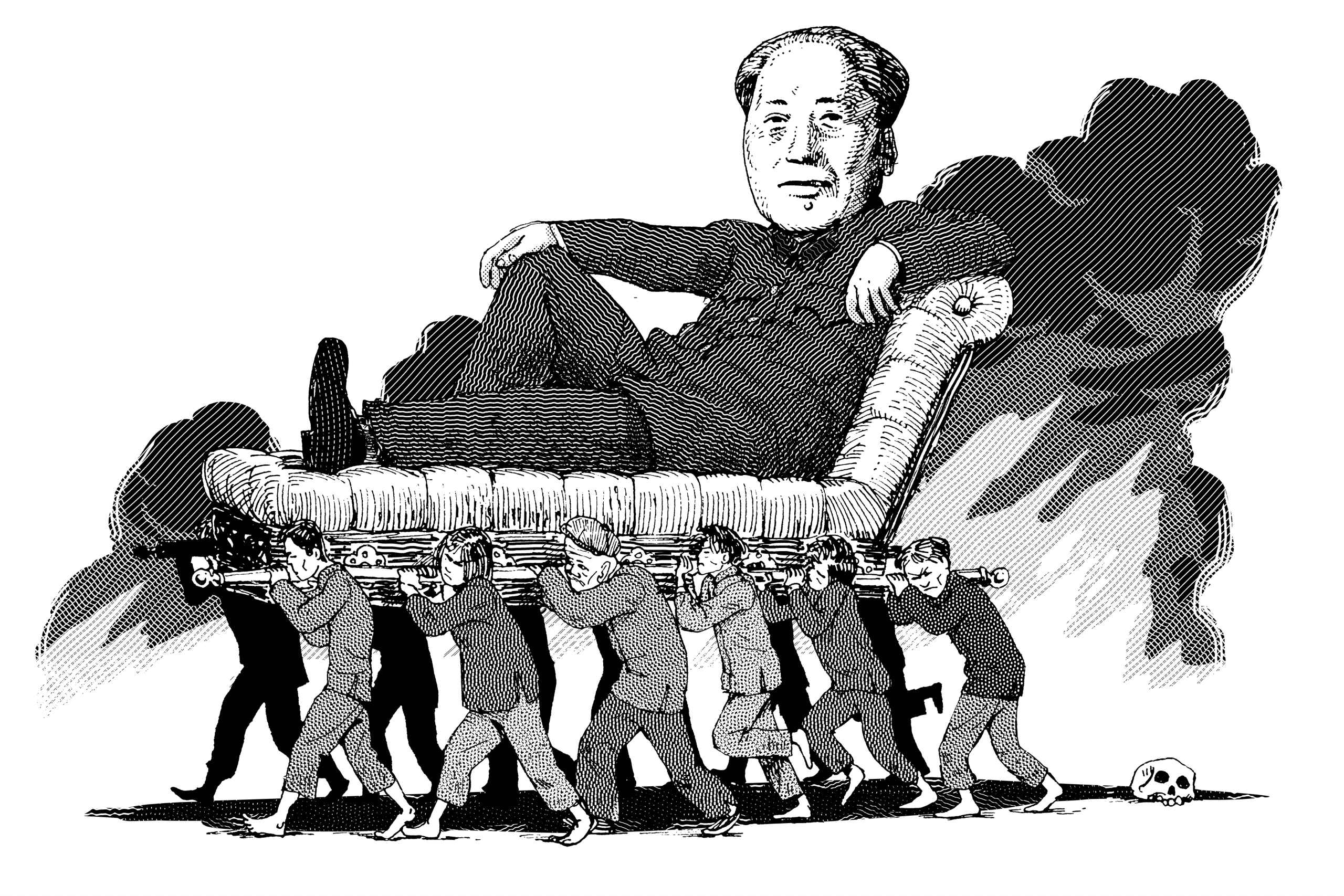
During the much-mythologized “Long March” of 1934-35, Mao’s forces evaded the Nationalist army by “marching, chasing, feigning, and running” over a 3,400-mile retreat. Mao himself did none of the above, however, because for most of the Long March he was carried by soldiers and servants like an oriental potentate. (In such moments, the line separating an ideological leader from a classical tyrant can be hard to locate.) Finally, the Communists established a rump state centered around the northwestern city of Yan’an. It would provide a model for what would follow in the whole of China from 1949 onward. Since the traditional Chinese village was highly egalitarian and few truly “rich landlords” existed (as least as depicted in Communist caricature), Mao had to gin up imaginary class warfare so as to dissolve the social ties that bound villagers to each other. Dikötter establishes beyond a reasonable doubt that “[v]iolence was not merely incidental to the revolution. As Simon Schama observed of the French Revolution, violence was its engine from the very beginning.”
Dikötter ably dispels the mythology that has concealed these grim realities from view. For example, the Battle of Luding Bridge on May 29, 1935, is a celebrated incident in which brave revolutionaries supposedly placed wooden boards across rushing water as “enemy guns sprayed them with bullets.” The truth, unveiled by Jung Chang, is far less romantic or edifying. A local who had observed the battle told Chang that the boards in question were ripped from the doors of people’s homes, and the bullets were pure fiction. The local did not recall the Communist forces “coming under any fire at all.” After she publicized this discovery, Dikötter notes, Chang “was never again invited to an academic conference.”
Willful Blindness
This was the period in which Edgar Snow presented Mao as “an accomplished scholar of classical Chinese, an omnivorous reader, a deep student of philosophy and history…an able writer,” and a remarkable military strategist. All the while as he was ravaging the countryside, Mao reached out rhetorically to other “revolutionary classes” and “progressive” groups. After the typical fashion of Communist leaders, he lied with a blithe unconcern that would have made Machiavelli blush. In a 1940 pamphlet entitled “On New Democracy,” he committed himself to “multi-party democracy, universal and equal suffrage, democratic freedoms and protection of private property.” The deception worked, as it so often did elsewhere in the 20th century. “[T]housands of students, teachers, artists, writers and journalists flocked to Yan’an,” Dikötter writes. What they found there was not progressive democracy but a relentlessly paranoid crusade to root out ideological impurities. “Thousands of suspects were locked up, investigated, tortured, purged, and occasionally executed.” Yet official propaganda, reinforced by the naïve testimony of “useful idiots” both Western and Chinese, “continued to beam a message of justice and equality for all.”
The Soviets, meanwhile, sat out the Asian front until the last days of World War II. They left the republic without the weapons they had formerly provided when calling upon Nationalists and Communists to present a united front against “fascism.” At the same time, American journalists stationed in the wartime capital of Chongqing, such as Theodore White, Jack Belden, and Graham Peck, “published searing indictments of the central government.” By contrast, they waxed poetic about the democracy, social justice, and moral probity that reigned in Communist-controlled parts of China. Captain Evans Carlson visited Yan’an and reported to President Roosevelt that Mao and the other Communists he met were selfless dreamers of statesmanlike genius. “They are incorruptible,” he reported. Roosevelt was inclined to believe him.
It got worse. Patrick Hurley, Roosevelt’s special emissary, arrived in China in November 1944 and was easily taken in by Mao. He signed on to agreements written by the Chinese Communists themselves, much to the consternation and dismay of Chiang and the Nationalists. To his credit, Hurley later acknowledged he had been given the runaround. In that regard, he was very much an exception. Vice President Henry Wallace, a fool of fools who would run for president on an openly pro-Communist platform in 1948, arrived in China shortly after praising the deadly forced labor camps of Magadan in Soviet Siberia. He advocated a coalition government between the Communists and Nationalists. General Joseph Stilwell, Roosevelt’s emissary to China and commander of American forces in that country, hated Chiang and saw nothing positive about republican China. In Communist-controlled China, by contrast, he saw a high standard of living, widespread participation in government, and a generous idealism at work.
General George C. Marshall shared these same dangerous misconceptions. He believed Mao to be a liberal reformer and a true democrat; he reported to the president that the teeming Communist legions in Manchuria consisted of “little more than loosely organized bands.” He persuaded President Truman to impose a disastrous arms embargo on our Nationalist allies in 1946. Stalin had occupied Manchuria in the summer of 1945 and given the Maoists unlimited access to what was then the industrial heartland of China. After the withdrawal of Soviet troops, bereft of American arms, the Nationalists struggled to maintain control of Manchuria’s leading cities. Cities such as Changchun and Shenyang were cruelly blockaded by Communist forces and hundreds of thousands of civilians starved to death in each city. In the Manchurian countryside, “rich” peasants were hounded, persecuted, and killed. Incredibly, there are no reported cases of civilians fleeing to the Communist side despite the desperation they faced.
When meagre American military aid was restored in the final year of the Civil War, it was far too late to make a difference. After the last major city in Manchuria fell to the Reds, the road to Beijing was opened for the Communist forces who arrived on January 31, 1949. By the beginning of 1950, all of China was subjugated while Chiang and two million Nationalists, military and civilian, fled to Taiwan and kept a remnant of the republic alive. By the end of 1950, the Red Army, euphemistically renamed the People’s Liberation Army, would be at war with American and United Nations forces in Korea.
Tyrant and True Believer
Senator Joseph McCarthy famously asked, “Who lost China?” A credible answer would include the following obvious counterfactuals: with less indulgence from New Deal liberals, with sustained military aid rather than an unwarranted military embargo, with a press corps that preferred an imperfect and semi-democratic China to totalitarian Communism, republican China—and thus the best Chinese traditions plus a modicum of liberty—might have endured. China would have escaped what Dikötter calls “The Tragedy of Liberation.” This is the great theme of his major trilogy.
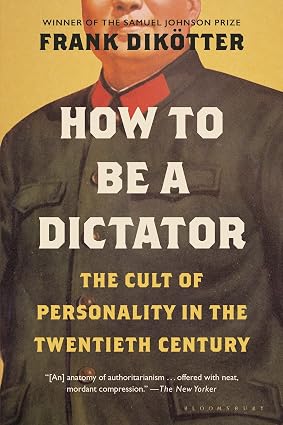
Immediately upon securing power, Mao embarked on a ruthless purge of enemies inside and outside of the party. He enveloped himself in parodical delusions of grandeur; the mystique of “Mao Zedong thought” took on absurdist dimensions. His cult of personality was unrivalled except perhaps by that of Stalin in the Soviet Union or the Kim family in North Korea. Dikötter gets this across vividly in How to Be a Dictator, his 2019 survey of ideological tyrants, though that book is marred by a certain over-emphasis on the personality cult as the alpha and omega of totalitarianism. In truth, egoism is only one dimension of despotic rule in the modern era, which is marked just as deeply by grievous philosophical errors as by personal character flaws. Dikötter’s more detailed historical books show this with greater nuance and clarity. As he puts it at the beginning of The Cultural Revolution, Mao “combined grandiose ideas about his own historical destiny with an extraordinary capacity for malice.” “Easily offended and resentful,” he delighted in seeing “longstanding comrades-in-arms” subjected to “public humiliation, imprisonment and torture.” He settled old scores while dreaming of presiding over a socialist paradise on earth. These “two aspects of the Cultural Revolution—the vision of a socialist world free of revisionism, the sordid, vengeful plotting against real and imagined enemies—were not mutually exclusive.” In his self-understanding, Mao “was the revolution.” To disagree with him, or to show inadequate submission to his latest whim, “was a direct threat to the dictatorship of the proletariat.” Mao never simply invoked ideology out of pure cynicism. He was at once cruel, capricious, and strangely sincere. He was both tyrant and true believer.
Barely a year after Mao had done away with his rivals there came the Great Terror, in which hundreds of thousands more perished according to killing quotas assiduously set by Mao himself. Sphinx-like, the chairman reminded his public that “Revolution is Not a Dinner Party.” His name ubiquitously adorned public buildings and monuments; his face could be seen on “mugs, vases, and calendars.” Tens of thousands of books were destroyed, and “a literary inquisition ensured that artists and writers conformed to the dictates of the party.” Clerics and laymen alike were hounded, harassed, arrested, and persecuted for resisting the newfound atheism of the state. The official Catholic Church, loyal to Rome, was outlawed and remains outlawed to this day (although some bishops are jointly recognized by both Rome and the official “patriotic church”). By the end of 1951, “10 million landlords had been expropriated and more than 40 per cent of the land had changed hands.” Up to two million peasants had been killed and “millions more had their lives destroyed by being stigmatized as exploiters and class enemies.”
The Great Terror officially came to a conclusion by the end of 1951, “but the killings never really stopped.” Real or imagined critics of the state were sent to imprisonment and hard labor at the merest provocation. There was a brief period when Mao had to rein in his most violent impulses, or at least keep the killing concealed, but only to curry favor with his counterparts in other Communist countries. Mao was not well treated by Stalin, who wanted to make abundantly clear who had pride of place in the international Communist movement. When Mao came to Moscow in early 1950 for discussions with Stalin, the Soviet dictator made his Chinese counterpart wait two weeks before they had a significant meeting. Mao bitterly complained that he had not come to Moscow “to eat and shit.” But he had no ideological quarrel with Stalin—far from it. In contrast, he was suspicious of Nikita Khrushchev’s “revisionism” and appalled by his famous denunciation of Stalin’s ubiquitous “cult of personality” in 1956. Still, Mao had no choice but to tone down his own professions of grandeur in response to criticism within the CCP.
Then he bided his time. In 1957, he famously invited the people to “let a hundred flowers bloom, let a hundred schools contend.” The public (and some critics within the party) became emboldened. Placards and posters throughout the country demanded democracy and human rights, freedom for culture and the arts, and the abolition of the arbitrary party-state. People also took issue with the party’s “slavish emulation” of the Soviet Union. Mao was briefly “in a state of shock,” depressed and bed-ridden. Then he rebounded in full force to denounce the “bandits and whores” who spoke out in the name of liberty. A draconian “Anti-Rightist Campaign” followed, with fresh waves of new arrests and purges. Then, in 1958-62, came the so-called Great Leap Forward, Mao’s frantic effort to force his millions of subjects to collectivize and modernize. If it had been a sick joke, the name could not have been more ludicrously misapplied. As the middle book of Dikötter’s trilogy shows in punishing detail, what really transpired was a Great Famine of staggering proportions.
“Between 1958 and 1962,” reads the opening line of Mao’s Great Famine, “China descended into hell.” In “pursuit of a utopian paradise,” driven by Mao’s monomaniacal desire to convert “a backward economy into a modern Communist society of plenty for all,” tens of millions of villagers were “herded together in giant communes” and forced “to follow the party’s every dictate.” To this day, “The true dimensions of what happened during the Great Leap Forward remain little known” outside of China and, after decades of systematic whitewashing, even within in it. Dikötter establishes that at least 45 million people perished over a three-year period—not the 15-32 million estimated by some previous scholars, who often worked at the sufferance of the CCP. Hundreds of thousands, even millions, were beaten to death. The Chinese Gulag expanded dramatically, even if most perceived “enemies” died of hunger and brutality without ever having to be sent to “reeducation” camps. Provinces such as Gansu, Sichuan, Guizhou, and Shandong saw over 10% of the population die in 1960 alone. Anhui saw significantly more. The once noisy and lively countryside fell silent as untold numbers of animals were slaughtered and some townspeople, at extremes of desperation, even resorted to cannibalism.
By January 1962, the hellish reality became too hard to ignore. At a CCP congress that month, a group of party leaders headed by Liu Shaoqi (who was later arrested by Mao and died in prison) spoke more or less honestly about what had happened to China before a truculent and defensive Mao. Zhou Enlai blamed himself for many of Mao’s decisions and crimes, shielding Mao’s alleged infallibility from the bitter truth. Mao had to back down. He had lost a battle, but not the war. Even then, Dikötter writes, he was already laying the “patient groundwork for launching the series of convulsions and purges” that we know as the Cultural Revolution of 1966-76. “It would tear the party and the country apart.”
China’s Wounded Soul
If the Great Leap Forward “destroyed the credibility of the party,” the Cultural Revolution “destroyed its organization.” It was a period of incessant warfare against vaguely defined “class enemies,” “capitalist roaders,” and “revisionists.” It featured public displays of humiliation directed against “enemies of the people” and mad assaults on anything traditional or Western. Brainwashing (xinao in Chinese) was openly lauded and practiced. China became a “garrison state” dominated by a military oligarchy that tirelessly hunted down “undesirable elements,” or simply insufficiently zealous ones, and sent them to the countryside to be “reeducated by peasants.” These witch hunts were followed by anti-corruption campaigns and non-stop party purges. At the same time, “the revolutionary frenzy had exhausted almost everyone.” Ordinary Chinese people grew wary of the one-party state and increasingly offered little more “than outward complaisance” to a regime they did not support or respect. “Even before Mao died in September 1976,” Dikötter observes, “large parts of the countryside had abandoned the planned economy.” They had no alternative if they wished to survive. The “communes,” or collective farms, were officially dissolved by party leadership in 1983.
“Only” 1.5-2 million people perished in the Cultural Revolution—small numbers compared to the demographic calamities that were “Liberation” and the Great Leap Forward. But “even if, in terms of human loss, the Cultural Revolution was far less murderous than many earlier campaigns, in particular the catastrophe unleashed during Mao’s Great Famine, it left a trail of broken lives and cultural devastation.” Chinese culture came under systematic assault, cherished spiritual values were besmirched, untold millions were humiliated, and there followed a “loss of trust and predictability in human relations, as people turned against each other.” The soul of China was deeply wounded.
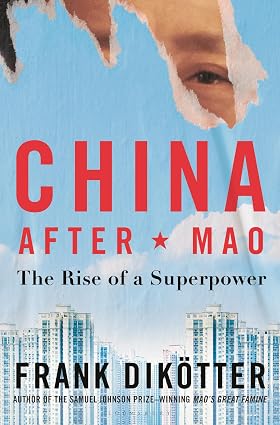
Dikötter’s 2022 book, China After Mao: The Rise of a Superpower, brings the story up to date and reminds us how little we know about contemporary China. It is a political superpower and economic heavyweight that habitually lies about itself and its own history. The official statistics bandied about by the regime are “unreliable, partial or distorted.” As a result, “We do not know the true size of the economy.” Its much-vaunted “capitalist” system is controlled by “private firms” that “belong to current or former party members.” Rule of law is honored in the breach. China has not seen authentic market reforms because it has yet to see genuine political reform. A cult of secrecy and gigantism mars its much lauded “economic miracle.” Economic development, impressive as it has been, has not led to true political development. China is freer than it was during the long Maoist period of 1949 to 1976, but it remains dominated by an unaccountable Leninist party-state and haunted by the blood-soaked ghosts of its formative decades. The openness of the republican period has not begun to be approximated.
As China continues to loom ever larger on the world stage, Frank Dikötter’s work is only becoming more indispensable for understanding the contemporary world. He combines admirable empiricism with moral good sense. He thwarts all efforts to apologize for totalitarian regimes whose records of human destruction beggar the imagination. Like the hero of anti-Soviet truth-telling Aleksandr Solzhenitsyn, he shows what the individual can do in an ideological age. His life’s work is a sustained, scholarly, and morally serious one-man demolition of what I have called the Ideological Lie. May his following increase and prosper.
Next in the summer 2026 Issue
Parallel Lives
Summer 2026 Correspondence