Books Reviewed
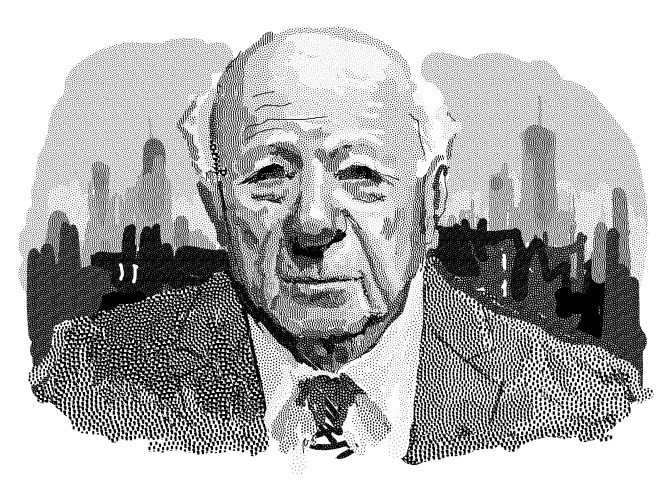
When I first met Harvey Mansfield in the fall of 1977, he was not yet famous for being that rarest of beasts—a conservative professor at Harvard. He was just beginning to separate himself from the leftish academic mainstream as he prepared to publish The Spirit of Liberalism (1978), a collection of essays defending the classical liberalism of John Locke and Thomas Jefferson against the rising tide of the New Left. He certainly did not spare his colleague John Rawls. I arrived at Harvard as a graduate student invested in the study of Rawls’s celebrated Theory of Justice (1971). I barely knew who Mansfield was. But in an essay whimsically titled “Cucumber Liberalism” (as in “cool as a cucumber”), Mansfield lampooned Rawls’s bland pseudo-neutrality. In an observation that proved all too prescient, Mansfield pointed out that liberals complacently position themselves as “guardians of the least advantaged,” without accounting for “the fact that when the least advantaged rule, they are no longer least advantaged.”
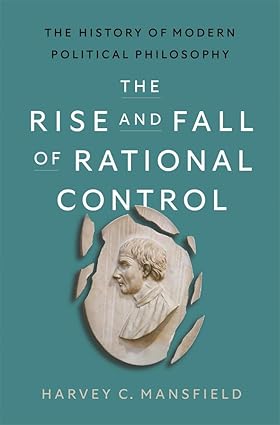
This was the beginning of Mansfield’s rightward turn, and of my own. By November 1980, when he and I shared the news of Ronald Reagan’s election in Harvard Yard, he took no pains to disguise his delight. At that point I had laid aside my Rawlsian studies and become a philosophical conservative in Mansfield’s classroom, beginning with his course on the History of Modern Political Philosophy. His new book, The Rise and Fall of Rational Control: The History of Modern Political Philosophy, is based on the lectures he delivered in that class from 1968 to 2022.
***
I was reminded in reading the book of the experience so well described by the accomplished political philosopher Mark Blitz, a fellow Mansfield student, who has recalled our teacher’s “exquisitely polished set pieces delivered with characteristic flair and rapid pace. One struggled desperately to get down every word including—especially including—the jokes…. The effect was like having a hundred Sandy Koufax curve balls aimed mercilessly at one’s head.” Every chapter in The Rise and Fall of Rational Control is rich enough to be its own book. While hardly limited to the kind of “introduction” most of us teachers would be able to offer beginning undergraduates, the account is genuinely introductory in the best sense: it will invite years of further reflection.
Mansfield’s argument is true to his title. For him, the essence of the modern project is the ambition of subjecting human affairs to “rational control.” That ambition seemed wildly successful for a time, but has now proven a disastrous failure in essential respects. Mansfield concentrates on eight authors (Niccolò Machiavelli, Thomas Hobbes, John Locke, Jean-Jacques Rousseau, Immanuel Kant, G.W.F. Hegel, Karl Marx, and Friedrich Nietzsche), with ample and incisive comparisons to others (Francis Bacon, David Hume, The Baron de Montesquieu, Edmund Burke, etc.). Amid all these, the clear star of this book and the lynchpin of Mansfield’s account is none other than “Old Nick,” i.e., Machiavelli.
In this, as in so much else, Mansfield is the student par excellence of Leo Strauss, whom he does not cite copiously but acknowledges gratefully as “the inspiration for my thinking and the source of many particular insights.” With Strauss, Mansfield sees that “the true language of modern political philosophy [is] Machiavelli’s splendid Italian.” On his evaluation of Machiavelli hangs his whole argument concerning modernity’s meaning and the causes of its rise and fall.
Mansfield proposes that modernity’s “rise” originated with Machiavelli’s “belief that reason supports and enlivens humans, freeing them from slavery, constituting their very being.” The dawn of modernity was marked by the hope that reason would bring freedom—freedom from superstition, from the order of custom or ancestry, and from “God or the gods.” In turn, modernity’s fall was heralded by Nietzsche’s disheartening conclusion “that reason deadens humans, stifling and enslaving them.” Reason on its own, without any external source of authority, cannot decide what to aim at. It ends up groping wildly for ever-new causes or ultimate ends. This assessment (with which Mansfield substantially agrees) leaves us with the judgment that the ambition of rational control is itself far from rational. It results in a project with an “identity that never stops changing.” The project of “liberation” so conceived turns out to be endless: “it wants to stop but does not know where or when.”
***
Mansfield begins his argument somewhat unusually with La Mandragola (“The Mandrake”), Machiavelli’s play about an advantageously manipulated adultery. The drama, argues Mansfield, reveals modern liberation from God as a liberation from love. Love “claims and acts without consent of the one loved.” It is “invasive and tyrannical.” In the play, the ardent young Callimaco is guided by his hireling Ligurio (“a fixer or, to speak plainly, a pimp”), who uses priestly fraud to overcome the beautiful Lucrezia’s pious resistance to adultery. Lucrezia’s husband, Messer Nicia, is persuaded to be cuckolded by the promise of a cure (derived from the mandrake root) for his wife’s presumed infertility. The whole improbable scheme depends upon the characters’ conspiratorial agreement to keep up moral appearances while circumventing morality itself. It is an arrangement made attractive and mutually beneficial by the inherent tension between absolute morality and circumstantial necessity.
Popular morality pretends to ignore consequences and focus only on divine imperatives. But even God can be seen to obey “the rule of necessity that Machiavelli legislates for human beings”—a rule accessible to reason and now, with reason, made higher than God. Lucrezia is brought to obey the biological or natural necessity, now understood as divine, “to satisfy her desires for sexual pleasure and generation.” In the end, Lucrezia, Nicia, and Callimaco live together in a strange kind of throuple, as the younger man is invited to become “the staff of [Nicia’s] old age” in an outwardly respectable household, now pragmatically assured of at least some perpetuation. Mansfield reads this perplexing and outrageous comedy as an allegory for the hard realities of politics: “the marriage of tyranny and respectability is shown in founding.” Moral appearances have not been simply abandoned, but have been subjected to rational control by attention to bodily necessities.
Though Mandragola makes for an unexpected introduction to Machiavelli, many CRB readers will recognize, in outline, the interpretation of The Prince and Discourses on Livy that follows. Mansfield’s new book invites admiration for the Florentine’s perspicuous observations, shrewd strategies, and pervasive but masked influence. Still, he does not avoid penetrating critical questions. Distilling his book-length discussion in 1989’s Taming the Prince, Mansfield indicates how much latter-day doctrines of “consent” owe to what Machiavelli calls “a new mode of ruling.” We have replaced the public frankness of ruling outright, as in a premodern monarchy, with the necessary dose of self-deception inherent in modern ideas of “representative government” and its associated euphemisms: “management,” “executive,” “leader,” “prime minister,” and so on.
***
“No modern government is ashamed to rule,” writes Mansfield, “but every modern government is ashamed to admit it.” Machiavelli’s strategy of “indirect government”—adapted and refined, to be sure, by master propagandists from Bacon to Montesquieu and beyond—appears to have been massively successful. This is the “rise” of rational control that Mansfield traces. But the beginnings of the “fall” are there from the start, as well. Mansfield lets the reader see the seeds of modern rationalism’s undoing in its suppression of the most natural human question—the question of what is good. “How can impartial benefit come from Machiavelli’s paradoxical advocacy of selfishness? In political terms, how can the common good—an impartial good—be derived from the most ruthless partiality to one’s own good?”
The rise and the fall of rationalism are thus intertwined from the beginning, in every text examined. Still, the arc of the story as a whole follows the main plotline already uncovered by Leo Strauss, notably in his 1960 essay, “The Three Waves of Modernity.” Machiavelli’s project of rational control was initially developed with massive success, first in Hobbes’s science of peace and then in Locke’s prototype of liberalism as “the form of government that protects rights and leaves it to individuals, or to a society of individuals, to exercise them as they please.” With the protean Rousseau, the worm in the apple of modern rationalism begins to squirm forth. Its name will be “history.” Mansfield writes that “Rousseau’s Second Discourse is the hinge of modern political philosophy and of this book, by which reliance on reason is replaced by reliance on history.” For rational control to be fully in control, it must give up the standard of nature: “man relies on himself only if he makes himself rather than fulfills a human nature he has not made.” Rousseau frees humanity from the necessity of following its nature, but “the idea of man’s creating himself leads to the necessity that he is subject to his environment,” that is, to “society” and the “accidents of history.” Absent nature or God, there can be no other absolute standard than that which emerges moment to moment from the arbiter and interpreter of the general will. “Rousseau, a political scientist, cannot specify the content of the general will, but a legislator of that people can do so.”
***
Tracing the arc of historicism that begins with Rousseau, Mansfield does a marvelous job of extracting what is essential for political philosophy from the abstruse writings of Kant and Hegel. He assures his students that “Kant is less difficult than Plato,” and primarily a moralist. He deconstructs Kant’s idealism and shows how “Kant’s morality is more realistic than realism.” Machiavelli remains the “effectual truth” of Kant, which is to say, Machiavellian amorality is the actual outcome produced by following Kant. “We are very idealistic today, thanks in good part to Kant, but are we more moral?” In the irreducible conflict between competing ideals and rationally pursued interests, with no higher standard to judge between them, all must rationally jockey for power against all. If the whole state is unified under the principle of rational control, then every faction within the state will rationally compete against every other. The upshot of Kant’s search for “perpetual peace” is, as Kant himself acknowledged, perpetual war.
Mansfield next offers Hegel’s philosophy as a more radical, complete, and open assertion of what it means to seek Machiavelli’s rational control. In effect, Hegel says, “‘Kant, you dummy, you have the solution to the problem in hand.’ The essential contradictoriness of reason can be the vehicle of reason and its instrument.” If “[r]ational control wants a system that depends on nothing outside it,” as Mansfield argues, then “Hegel’s is the masterpiece” of such a system. There is no right beyond the unfolding of history, and so whatever conflict emerges between competing ideals is subsumed into a hermetically sealed totality, an ultimate History that simply is. Hegel is the only consistent modern; he alone reckons with the fact that for the sake of purely rational self-possession, “the whole process must be completed, for if it were not, one could never prove its rationality.”
Hegel cannot accomplish this consummation of modern political philosophy, however, without putting an end to political philosophy. Followers of Hegel must abandon all deliberation about what should happen and leave philosophy vulnerable to the idolatry of what its practitioners assert will happen. Therefore, “after Hegel’s splendid idealism, noxious weeds take over,” notably those named Marx and Nietzsche. Mansfield gives respectful attention to Karl Marx’s wish for human community or wholeness, but his critique exposes the incoherence of Marx’s project, which is the incoherence of the modern project: “How can man produce what defines him?” And he does not miss the relevance of Marx’s radicalism to the neo-Marxist war on natural sexuality: “The possibilities now of being transgender or of indulging in polymorphous perversity are only steps in the right direction of abolishing bourgeois sex roles.”
***
It is Nietzsche, however, whose writings represent the modern project’s ultimate dénouement. Nietzsche sees deeper than Marx: “the only vitality of communism has been in its point of resemblance to Nietzsche.” Does he also see deeper than Machiavelli? Not if he is still “part of Machiavelli’s team of rational controllers.” Mansfield agrees with P.G. Wodehouse’s Jeeves that “Nietzsche is fundamentally unsound,” and he warns Nietzsche’s followers to “beware of the company they keep.” Still, he acknowledges “Nietzsche’s nobility” and his vestigial impulse to recover some natural vitality.
Modern rationalism’s rise was impressive and clearly grounded in some insight into human nature and the condition of this world. Its fall has been far from accidental, and far from good news. But what was the original and enduring meaning, what is the purpose and the motivation, of the modern aspiration to “rational control”? It has always been clearer what the modern project is against than what it is for. “From beginning to end,” Mansfield observes, “it appears…modern political philosophy joins combat against Christianity and its source in the rationalism of the ancients” (emphasis added). This attempt to “escape from God and nature” was a kind of “self-cruelty.” It sought total control by rejecting any ultimate or commanding truth, leaving only the desire for power—the power of certainty, or the certainty of power. This is the effectual truth of reason’s ambition to absolute rule. As modernism decays, “reason gives way to control” and delivers humanity into “human bondage.”
What, then, if Machiavelli’s quest for a purely rational account of man was always a form of partial blindness, a self-deception? What if modernity itself was never lucid—never fully self-aware? Leo Strauss already concluded that “what is greatest in [Machiavelli] cannot be properly appreciated on the basis of his own narrow view of the nature of man.” Machiavelli’s teaching is “soulless,” Strauss said. But if the soul is real, then a soulless philosophy is not fully reasonable, not capable of reckoning with the full truth of what it purports to understand—namely man. Are we not therefore authorized to question the very rationality of Machiavelli’s project? And, if the modern battle against God and the good is not governed by reason, then just how are we to understand its motives?
***
Mansfield addressed this question most penetratingly in his magisterial Machiavelli’s New Modes and Orders (1979). There, he argues that an essential feature of Machiavelli’s rebellion against God and the good is his assertion of transformative power through the recruitment of co-conspirators, or of ministering rebels—that is, of students. Lacking any inherent reference to the good, the modern must evaluate his success purely by reference to a measure that has become almost painfully significant in recent years: the measure of influence.
Influence as a form of power may indeed be the ultimate motivation of modernity. It is certainly a driving motivation of the characters in that enigmatic comedy with which Mansfield began his account of modernity’s rise and fall. In chapter 4 of Machiavelli’s Effectual Truth (2023), Mansfield suggests that the old man Messer Nicia—whose initials are a mirror image of Niccolò Machiavelli—allows his wife’s lover free rein as long as he gets to claim the heirs of the union for his own legacy. Machiavelli, Mansfield suggests, doesn’t mind being “cuckolded” or shut out of political power himself, if this means that his seeming “impotence” can be remedied by the ambition of his followers, who will generate students for him.
Suppose, then, that we enter for the sake of argument into the logic of Machiavelli’s thought experiment in Mandragola as Mansfield reads it. Does it show a real understanding of the human soul in action? For example, is Lucrezia’s radical and untroubled acceptance of her double life quite believable? We know, alas, that a woman, as much as a man, can become utterly corrupted—but can she at the same time be reliably convinced of her piety and virtue, without pangs of conscience?
Then consider the perhaps slightly simpler question of male motivation. Can we really concretely imagine—or ought we to imagine—being so detached from warm-blooded sentiment and committed instead to the calculus of rational control that we would cheerfully open our marriage to the lust of a younger man for “practical” ends? Can the cold thrill of mastery really compensate for the renunciation of every natural desire—for the violation of love, truth, and honor? Do we really want to be like M.N., or for that matter, like N.M.? Is the prince in his pure form not in fact soulless, inhuman, and in that sense properly unintelligible? The desire for “rational” mastery at the cost of all natural desire is in the fullest sense unnatural, anti-natural. It finally sustains no content but negation, the hatred of nature and of God. If Machiavelli is the founder of modernity, then moderns are at best manipulated dupes, inventing games of four-dimensional chess to explain away their own natural revulsion at being metaphorically or sometimes literally cuckholded. Nietzsche was not wrong, as quoted by Mansfield, that “[t]he degree and kind of a man’s sexuality reach up into the ultimate pinnacle of his spirit.” Mansfield is therefore right to begin his account of the rise and fall of modern “rationalism” with the strange case of the Mandragola.
***
This, then, is the arc of Mansfield’s story of modernity as the project of rational control: Machiavelli’s “escape from God and nature” delivered us into “the bondage of human necessities.” History soon collapsed into the Will to Power, a predicament that still defines us. But what is the moral of the story? If liberalism’s foundations are indeed rotten, as I learned from my first day in Mansfield’s class, then what avenue is now open to human choice and human thought? Machiavelli’s modernity is, we have seen, a conspiracy against Christian morality. It is strong enough to undermine religion’s effective rule, but not strong enough to rule effectively. But just what would it mean in practice for us late moderns to defect?
Mansfield expresses reservations about the option of a simple “return,” an “escape…back into the arms of God and nature.” He sees that there is “something dubious about an escape into our original prison.” His critique of Machiavelli’s motivation does not, after all, invalidate the Florentine’s trenchant political critique of the Church: “For all its enormous power, then, it can do no more than weaken the strong.” Yet Mansfield does venture, in his concluding “Envoi,” to suggest “a reworked liberalism to serve as a rescue [not a replacement] for modern rational control.” He hopes it may be possible to make rational control “reasonable” by grounding it in “honor rather than gain,…virtue rather than survival.”
It starts to seem, then, as if Mansfield is inviting not an “escape” toward God, but a return to Nature. Mansfield concludes by proposing the classical idea that “our freedom comes from nature,” which corresponds to the teaching that “man is a political animal by nature.” He does not conceal the limitation inherent in the classical priority of nature to freedom: If the full definition of man is “political animal by nature,” then it follows that “most humans can be free only through politics.” A liberalism based on our political natures would go beyond the “unnatural” limitation of self-interest and material necessity to include “a concern for nobility and sacrifice.” But what is the horizon of this “nobility and sacrifice”? Is there no freedom that transcends the city? In other words, does the classical framing of “nobility and sacrifice” in terms of the intrinsic good of the soul, ultimately consummated in the self-sufficiency of the philosophic life, do justice to the nobility of sacrifice itself?
***
On his last page Mansfield points us to Alexis de Tocqueville as well as Aristotle. Similarly, in the last chapter of his Machiavelli’s Effectual Truth (based in part upon an unfinished essay by his late wife, Delba Winthrop), he concludes by quoting Tocqueville on the “vice” of pride: “Moralists constantly complain that the favorite vice of our period is pride…. I would willingly trade several of our small virtues for this vice.” But Tocqueville’s is a Christian pride that has made its peace with democracy and embraced the spiritual dignity of every human soul.
For Tocqueville, the “‘honor of the world’ can be sustained only by the honor of the other world, because religion accords to ‘each one’ the benefit of a divine soul as opposed to Machiavelli’s license to satisfy necessity.” Machiavelli’s project of unnatural mastery is the inversion of the biblical notion and promise of a freedom not finally subordinated to nature. But the subordination of nature to freedom has also been tried and found wanting—not least, as Mansfield shows, by modernity.
Mansfield in the end proposes a Tocquevillian understanding of liberalism that rejects unnatural mastery without returning to the idea of absolute divine freedom that provoked it. Tocqueville combines or coordinates natural pride with an awareness of a freedom beyond nature. He “combines democracy, Christianity, and ancient nobility.”
In a deep sense, then, the “spirit of liberalism” has the last word for Mansfield. Modernity’s fall reminds us that animo (spiritedness) depends upon anima (soul). Today more than ever we must be proud of having immortal souls. This insight, which is only now revealing its full desperate urgency, has been a guiding thread of Harvey Mansfield’s long and profound career. As my teacher once wrote of his teacher, so every time I believe I have made a new discovery, I come across a sign that says, “Mansfield was here.”