Books Reviewed





The Obama Presidential Center, located on Chicago’s South Side, opened in June 2026, nine years and five months after Barack Obama’s term in office concluded. The politicians who build these centers force themselves to run one final fundraising gauntlet, not to finance an election campaign but to leave behind an edifice that makes an enduring case for their probity, sagacity, and historical importance.
What sets Obama apart is that he began publicly discussing the greatness he hoped for prior to occupying, winning, or seeking the nation’s highest office. “My attitude about something like the presidency is that you don’t want to just be the president,” Barack Obama told journalist Jacob Weisberg in 2006. “You want to change the country. You want to make a unique contribution. You want to be a great president.” Later in the interview he said, “There are, what, maybe 10 presidents in our history out of 40-something who you can truly say led the country? And then there are 30 who just kind of did their best.”
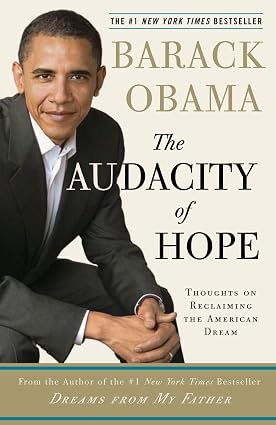
At the time, having been elected to the U.S. Senate in 2004 after serving eight years in the Illinois state legislature, Obama was still a Washington, D.C. newcomer. The author of The Audacity of Hope (2006) lived up to his book’s title in October 2006, during an appearance on NBC’s Meet the Press. “When I think about great presidents, I think about those who transform how we think about ourselves as a country in fundamental ways,” Obama said. Specifically, “they transformed the culture” rather than “simply promoted one or two particular issues.”
After Obama announced his candidacy in February 2007, he continued to dilate on history’s judgment. “Ronald Reagan changed the trajectory of America in a way that Richard Nixon did not and in a way that Bill Clinton did not,” Obama told the Reno Gazette-Journal in January 2008. “He put us on a fundamentally different path because the country was ready for it.”
In June 2008, when the South Dakota and Montana primary results clinched the Democratic presidential nomination for Obama, his victory speech was astonishingly grandiose:
I am absolutely certain that generations from now, we will be able to look back and tell our children that this was the moment when we began to provide care for the sick and good jobs to the jobless; this was the moment when the rise of the oceans began to slow and our planet began to heal; this was the moment when we ended a war and secured our nation and restored our image as the last, best hope on Earth. This was the moment—this was the time—when we came together to remake this great nation so that it may always reflect our very best selves, and our highest ideals.
The Obama Presidential Center’s opening elicited many assessments of the 44th president’s legacy, but few reassessments. Politicians and writers who criticized Obama in the decade between the beginning of his candidacy and the end of his presidency reaffirmed their critiques, and those who supported him reiterated their high regard.
Notably absent from the latter takes, however, were claims that Obama had fulfilled the lofty expectations he had set before being elected. His admirers, rather, had long since concluded that he was a capable leader but not a world-historical figure. Jacob Weisberg, reflecting in 2017 for Slate on the career of the young politician he had interviewed eleven years before, wrote that Obama’s “legacy of integrity, eloquence, and patient commitment” qualified him as an “inspirational” president. But not a “transformational” one.
Obama himself appears to have moved on from the question of presidential greatness. His speech at his Center’s opening ceremonies touched on his administration’s achievements obliquely, while conceding that it “did not accomplish everything we set out to do,” in part because “hard things are hard,” as a sign he kept on his desk in the Oval Office affirmed. Even before leaving the White House, Obama addressed his legacy in a lower register, having apparently concluded that being president was tougher than becoming president. “At the end of the day we’re part of a long-running story. We just try to get our paragraph right,” Obama told The New Yorker in January 2014. “The President of the United States cannot remake our society, and that’s probably a good thing.”
Kumbayama
When campaigning for Hillary Clinton in 2016, President Obama frequently warned audiences, “All the progress we’ve made over these last eight years goes out the window if we don’t win this election.” Along with discounting for hyperbole, listeners would have assumed that Obama was referring to policy achievements. Of these, Republicans have indeed done some dismantling, but have failed to dislodge Obama’s principal accomplishment, “Obamacare,” formally known as the Affordable Care Act.
But it is fair to suspect that the progress Obama referred to, and the greatness he envisioned before being elected president, had less to do with policies than with politics. From the night his electrifying keynote address at the 2004 Democratic National Convention made him a national figure, Barack Obama’s signature “issue” was not an issue at all, but an argument about the need to cherish and invigorate the American polity’s underlying cohesion. There “is not a liberal America and a conservative America—there is the United States of America,” he told the delegates.
According to David Garrow’s doorstop biography, Rising Star: The Making of Barack Obama (2017), rendering politics less divisive was a theme Obama returned to repeatedly throughout his political career. In an NPR interview two weeks after his convention speech, Obama said that people are “just weary of…slash-and-burn politics that demonizes whoever doesn’t agree with you.” In the final days of his 2004 Senate election campaign, he made the same point on Fox News: “the most important thing that we have to do in improving our politics is not assuming bad faith on the part of other people.”
Announcing his presidential candidacy in 2007, Obama stressed civility and unity once more. Provided that “we’re willing to listen to each other” and “assume the best in people instead of the worst,” we can “disagree without being disagreeable.” Nearly a decade later, in his presidential farewell address, Obama returned to the theme: America is founded on “a basic sense of solidarity—the idea that for all our outward differences, we’re all in this together; that we rise or fall as one.”
To transcend America’s ethnic divisions was, of course, the goal associated most closely with Obama. “There is not,” he had said to the 2004 convention, “a Black America and a White America and Latino America and Asian America—there’s the United States of America.” In April 2008 his presidential campaign had a near-death experience following the publication of wild, incendiary statements that had been made by Jeremiah Wright, the pastor of Trinity United Church in Chicago, where the Obamas were members. “I have spent my entire adult life trying to bridge the gap between different kinds of people,” Obama said in addressing the controversy, and repudiating Reverend Wright. “That’s in my DNA, trying to promote mutual understanding, to insist that we all share common hopes and common dreams as Americans and as human beings.” The DNA reference was not a metaphor but an unsubtle signal that Obama—the son of a Kenyan father and a white woman born in Kansas, who had spent some of his formative years living in Jakarta with his mother and Indonesian stepfather, and the rest of them in Hawaii being raised by his white grandparents—was uniquely, even historically, equipped to heal America’s racial wounds.
It is said that some people go into politics to do something, and the rest do it to be something. Barack Obama was in the rare position of being able to do something by being something, the first black president. “The day I’m inaugurated, the racial dynamics in this country will change to some degree,” he told the National Association of Black Journalists during the 2008 campaign. “If you’ve got Michelle as first lady, and Malia and Sasha running around on the South Lawn, that changes how America looks at itself. It changes how white children think about black children, and it changes how black children think about black children.”
After his 2004 keynote address, Obama’s second-most famous speech was “A More Perfect Union,” delivered at Philadelphia’s National Constitution Center in March 2008. In it, he addressed the need for unity with, appropriately, a synthesis of: aspirations bequeathed by the civil rights movement, the Democratic Party’s enduring quest to promote social welfare by expanding activist government, and even the sort of calls for self-help and self-respect associated with black conservatives from Booker T. Washington to Clarence Thomas. The “path to a more perfect union,” Obama said, requires blacks “to insist on a full measure of justice in every aspect of American life,” but “also means binding our particular grievances, for better health care and better schools and better jobs, to the larger aspirations of all Americans.” The entire nation can join this quest by realizing “that your dreams do not have to come at the expense of my dreams, that investing in the health, welfare, and education of black and brown and white children will ultimately help all of America prosper.” And blacks, Obama said, must take “responsibility for our own lives—by demanding more from our fathers, and spending more time with our children, and reading to them, and teaching them that while they may face challenges and discrimination in their own lives, they must never succumb to despair or cynicism.”
Political Malpractice
For Obama and his supporters, the bitterest possible denouement of his repeated calls for harmony and civility was the election of a successor who can rarely even agree without being disagreeable. Never mind transformative: had Obama’s two terms in office merely been successful, the nomination and election of Donald Trump, his nemesis and antithesis, should have been impossible. “The outcome of the [2016] election was a direct rebuke of everything that we had been trying to do for the last 10 years,” Obama’s final White House press secretary, Josh Earnest, said in an interview for the Obama Presidency Oral History, compiled by Columbia University’s Incite Institute. “Trump’s candidacy, the essence of his being and everything that he stood for and everything about the way that he carried himself and everything that he championed and his rhetoric, his campaign tactics—all were anathema to everything that the Obama campaign and the Obama era, the Obama administration, had been about.”
Before turning to the question of whether Obamaism’s deeper purposes and implications rendered it susceptible to Trumpism, it must be said that 2016 had more prosaic causes. Though an excellent politician when it came to winning elections for himself, Obama was far less interested and successful in strengthening the Democratic Party or identifying promising leaders to whom he could pass the baton. The defeated 2016 Democratic nominee was Hillary Clinton, not Barack Obama, but the fact that her name was on the ballot reflects poorly on his stewardship of the party. As the leftist writer Ross Barkan observed after the 2024 election in his online newsletter, Political Currents, Clinton was “a failed presidential candidate [whom] Obama appointed his secretary of state and then decided, for reasons never entirely clear, to anoint as his successor” by “whipping elite donors and endorsers behind” her.
As different as the two were, Obama and Trump were identically fortunate in one crucial respect: the biggest obstacle standing between each and the White House was the over-rated, under-talented Mrs. Clinton. Her 2008 run for office, expected to be a coronation, turned into a debacle. According to Joshua Green’s autopsy for The Atlantic, Clinton presented herself as the candidate singularly prepared to “do the job from Day One,” but turned out to be incompetent at making crucial strategic and personnel decisions in her own campaign. “Her hesitancy and habit of avoiding hard choices exacted a price that eventually sank her chances at the presidency.” Obama and his advisors had the least excuse of anyone in American politics for being oblivious to Clinton’s limitations and vulnerabilities, which had been among the biggest reasons the former First Lady lost the Democratic nomination to a junior senator. In The World as It Is (2018), Obama speechwriter Ben Rhodes reproaches himself for failing to realize until after 2016 that Trump’s argument against Hillary Clinton was fundamentally the same as the one the Obama campaign had used, to devastating effect, in 2008: “She’s part of a corrupt establishment that can’t be trusted to bring change.”
As there would have been no first term for Trump without Clinton, there would have been no second term absent Obama’s other baffling personnel decision: choosing as his running mate Joe Biden, a gaffe-prone Washington fixture since being elected to the Senate in 1972, best known for presidential campaigns in 1988 and 2008 that ended in humiliating defeats. In a 2013 Vanity Fair article, Todd Purdum shared the opinion of “a former senior administration advisor” that President Obama’s isolation stemmed not from arrogance but from “a basic insecurity on the president’s part that keeps him from surrounding himself with strong intellectual rivals.” Obama’s biographer David Garrow told a Tablet magazine interviewer in 2023, “Barack doesn’t want to be close with people who are his equals.” If there is a measure of truth in these assessments, Obama’s selection of Biden in 2008 becomes less mystifying.
Inexplicably, Obama’s audacious ascent from the Illinois state senate to the White House in just four years disposed him to rely heavily on his political opposites: retreads and second-raters. Worse, Obama’s poor judgment proved contagious. He was not only directly responsible for elevating Clinton and Biden, but was located one degree of separation from Biden’s 2020 selection of Kamala Harris, a politician even less adroit than her party’s two previous presidential nominees. This means that Obama was two degrees of separation from Harris’s 2024 running mate, Tim Walz, a doofus who was the worst politician of them all.
Loveless Marriage
It’s not just that Trump’s victory represented a repudiation of his predecessor’s style and substance. It’s that despite all the soaring rhetoric about our underlying unity, American politics in the 22 years since Obama became famous has been defined by increasing rancor: from social media rage-fests to congressional hearings that routinely descend to verbal abuse; from murder in Seattle’s “Capitol Hill Autonomous Zone” in June 2020 to mayhem on Washington, D.C.’s Capitol Hill on January 6, 2021. The things that red states and blue states had in common, Obama said in his 2004 speech, were more numerous and important than the questions on which they disagreed. However true that may have been at the time, it became increasingly inapplicable over the ensuing years. Red states have become so determined and resourceful at resisting the federal government when it’s run by Democrats, and blue states equally so when it’s run by Republicans, that America is undergoing a “soft secession,” as the writer Kurt Andersen recently argued in The New York Times. Though “not yet a divorce,” the state of our union is “more like a bitter, loveless marriage in which the parties stay technically but less and less enthusiastically united because splitting up is too complicated or dreadful or expensive.” (Andersen’s latest novel, The Breakup, is set in a near-future United States that has split apart.)
Since the end of Obama’s presidency, American politics has been dominated by the growing enmity between adherents of wokeism and Trumpism. Social justice warriors and MAGA true believers disagree bitterly about nearly everything. But both proceed as if appeals to their adversaries’ decency and good faith are ludicrous and contemptible. Both, that is, disdain the idea of practicing politics in ways best suited to “imagined republics and principalities that have never been seen or known to exist in truth,” as Machiavelli wrote in The Prince.
Detractors from Obama’s left lament that his failure to grasp the realities of American politics from 2009 to 2017 meant that his odes to civility amounted to unilateral disarmament. In their assessment, Obama achieved far less than he could have because there was never a chance that his stirring rhetoric would stir Republican politicians or the GOP’s electoral base. In his New Republic review of A Promised Land (2020), the first volume of Obama’s presidential memoirs, contributing editor Osita Nwanevu scorned Obama for indulging the “fantasy” that “the primary obstacle to progress in America is nothing more than sheer pettiness on the part of our leaders,” which can be remedied “in the same way toddlers in a playroom might be encouraged to share their blocks.” Very few Democrats do not admire Obama personally, but the much larger number who regret his political conduct agree with Nwanevu that Obama’s presidency amounted to eight years of missed opportunities. The 44th president’s naïveté, Nwanevu writes, blinded him to the reality that “our hopes should lie not in the dream of transcending our political battles but in the possibility that we might win them.” To cite The Prince once more, “a man who wants to make a profession of good in all regards must come to ruin among so many who are not good.”
For some on the left who gave Obama low marks, the “many who are not good” meant America’s white majority. Obama underachieved in the White House, that is, through some combination of strategic miscalculations about how to resist white racism and an innate incapacity to grasp the danger it posed to his presidency. Writing for The Atlantic in 2017, Ta-Nehisi Coates said that Obama’s 2004 DNC speech “appealed to a belief in innocence—in particular a white innocence—that ascribed the country’s historical errors more to misunderstanding and the work of a small cabal than to any deliberate malevolence or widespread racism.” (Coates laid out his own assessment of white malevolence in the 2015 bestseller, Between the World and Me. Being in New York on the day of the 9/11 attacks had left him “cold,” he wrote. The “police who died, or the firefighters who died” trying to rescue office workers from the Twin Towers “were not human to me.” Because Wall Street had been the site of a slave market—which closed in 1762—Coates felt only contempt for “the ridiculous pageantry of flags, the machismo of firemen, the overwrought slogans” evident in the weeks following September 11.) Part of the reason Obama does not share this unforgiving viewpoint on white racism, Coates believes, is that Obama had the option, unavailable to all but a handful of other black Americans, of identifying and living as a “raceless cosmopolitan,” which led him to “underestimate his opposition’s resolve to destroy him.”
Obama himself, according to Ben Rhodes’s book, interpreted Trump’s victory as a repudiation of his own presidency, and speculated about the role race had played in the outcome. “Maybe we pushed too far,” Rhodes quoted Obama saying in the 2016 election’s aftermath. “Maybe people just want to fall back into their tribe.” Aides’ opinions that Obama would have defeated Trump, but for the Constitution prohibiting third presidential terms, did not reassure. “Sometimes I wonder whether I was ten or twenty years too early,” Obama said in response. In other words, America had not been too white to elect and re-elect Obama but had been too white to affirm rather than disavow these earlier electoral verdicts. In a more distant future, after immigration and differences in birth rates had moved America closer to the day when whites account for less than half the population, Hope and Change could have been affirmed by a successor’s victory, as the New Deal was in 1948, or the Reagan Revolution in 1988.
The Opacity of Hope
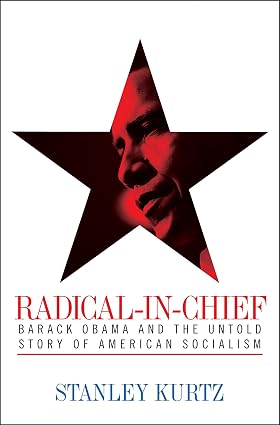
The conservative critique of Obama’s calls for harmony is a photographic negative of the liberal one: Obama was being calculating rather than credulous, intentionally furthering a left-wing agenda rather than inadvertently undermining it. Too much Machiavellianism, that is, rather than too little. The hallmark of “Obama’s leadership style” is that he “talks about uniting, even as he deliberately polarizes,” Stanley Kurtz wrote for National Review in 2011. “He moves incrementally toward radical left goals, but never owns up to his ideology.” Kurtz laid out this argument in Radical-in-Chief: Barack Obama and the Untold Story of American Socialism (2010). What the Obama Administration did, in this view, was often several steps to the left of what President Obama said. And what he said was carefully crafted to obscure or misrepresent his ultimate goals.
If Obama was indeed running this con, then it was an unusually long one. In 1990, during his second year at Harvard Law School, Obama sought to become president of the Harvard Law Review. There were too few Federalist Society members to elect a conservative to the position, but there were enough to determine the outcome when the choice came down to Obama and one other left-of-center candidate. Obama won because he “was not perceived as a zealot,” as one of the conservative law students recalled for The Washington Post in 2007. “Conservatives felt that he respected them on a personal level and would take seriously what they had to say, and their points of view—even if he didn’t always, or ever, agree with them—would be treated with some measure of respect.”
This facility to convey respect and objective detachment remained intact a decade later, when Obama was teaching at the University of Chicago Law School. One law student David Garrow interviewed for Rising Star contrasted Obama with feminist professor Catharine MacKinnon, whose course was “just so painfully one-sided” that “you couldn’t disagree with her at all.” Obama’s approach, “completely in the opposite direction,” was to “challenge folks of all stripes,” even going so far as to explain the merits of Robert Bork’s argument that the 1964 Civil Rights Act was unconstitutional.
One point in favor of conservatives’ skepticism about Obama-the-Uniter is that the liberal argument that he was too conciliatory works best with the premise that Obama, open and transparent, meant only and exactly what he said when he called for reciprocal respect and compromise. Accounts from those who knew him cast doubt on this picture of a guileless Obama, whose words, deeds, and affect reliably convey his interior life and sincere intentions.
“I’ve never met anyone who was more impenetrable,” a Harvard law student who worked on the Review under Obama told Garrow. He was, she said, “one of the most opaque people I’ve ever met.” Twenty years and many startling changes in his life later, Obama remained inscrutable. “He’s opaque even to us,” a presidential aide told Peter Baker for a 2010 New York Times profile. “Except maybe for a few people in the inner circle, he’s a closed book.”
He was a closed book even to those who opened his book Dreams from My Father, a memoir published in 1995 but not widely read until it was reissued in the frenzy following Obama’s 2004 convention speech. In 2007, shortly after Obama began his presidential campaign, the Washington Monthly’s Kevin Drum read Dreams. “By the time I was done,” Drum reported, “I felt like I knew less about [Obama] than before.” Not only do readers get “very little sense of what motivates him,” but “there’s very little insight into what he believes and what really makes him tick.”
When the mask does slip a bit, we see someone less nice but more interesting than the saint advancing mutual understanding and common dreams. In his 2006 interview with Jacob Weisberg, Obama revealed that “there’s a piece of [Lyndon Johnson] in me—that kind of hungry, desperate to win, please, succeed, dominate—I don’t know any politician who doesn’t have some of that reptilian side to him.” During the 2004 campaign for the Democratic senatorial nomination, Obama told the editors of the Windy City Times, an LGBT publication, that he possessed “an ability to translate my passion for equality and justice into a language that a broad audience can relate to and understand.” This claim itself can be translated: Obama is telling representatives of a Democratic constituency that he can advance Democratic agenda items by persuading independents and Republicans to believe, dubiously but usefully, that he shares their views and concerns. It is, after all, a skill that Obama honed in the legal academy.
Charm? Offensive.
Republicans’ intransigence during Obama’s decade as a national political leader reflected their deepening belief that the point of all the soaring rhetoric was for them to be eloquently hornswoggled. “Whenever I hear people saying that our problems would be solved without government,” Obama said in a 2015 New York Review of Books conversation with novelist Marilynne Robinson, his reaction is that a country “where the roads are never repaired” or “the postal system doesn’t work” is “the logical conclusion if…you think that government is the enemy.” It would be equally rigorous and persuasive to say that North Korea is the logical conclusion if you think that government is our friend. As Christopher Scalia pointed out in The Washington Examiner, this conflation of “the desire for less government with the desire for no government” is one of Obama’s most unfortunate rhetorical proclivities.
As reliably as he misrepresented his opponents’ views, Obama misrepresented his own. “People don’t expect government to solve all their problems,” Obama said in his 2004 Democratic convention speech. “But they sense, deep in their bones, that with just a slight change in priorities, we can make sure that every child in America has a decent shot at life, and that the doors of opportunity remain open to all.” First, construct a strawman for the purpose of torching it. Then, make the sort of too-good-to-be-true claim—about minor tweaks magically yielding profound transformations—that would become Obama’s hallmark over the ensuing twelve years.
Exhibit A, of course, was President Obama’s promise that, under his reform proposals, people who liked their existing arrangements for health care and insurance could keep them. What the president meant to say, according to Jared Bernstein, one of his administration’s economic advisors, was, “If you like your plan and it doesn’t get significantly worse such that it’s out of sync with what we’re trying to do here, you can keep it.”
More broadly, before and after he was elected president, Obama spoke of America’s urgent need to slow the rate at which health care costs were increasing. Rising Star records that in 2007 Obama informed a symposium that the bad news was that “one out of four health care dollars is spent on non-medical costs, mostly bills and paperwork,” but the good news was that clawing back these high overhead expenditures was simply “a problem of political will.” In 2009, weeks after his inauguration, Obama told an interviewer, “The long-term problem is Medicaid and Medicare. If we don’t reduce long-term health care inflation significantly, we can’t get control of the deficit.” Upon signing the Affordable Care Act into law in March 2010, Obama said that it would “lower costs for families and for businesses and for the federal government, reducing our deficit by over $1 trillion in the next two decades. It is paid for. It is fiscally responsible. And it will help lift a decades-long drag on our economy.”
But it became clear while Obama was still in office that reducing health costs was…not Obamacare’s point. MIT economist Jonathan Gruber, who consulted the administration on its design, told The Washington Post in January 2014 that cost control “was sometimes a misleading motivator for the Affordable Care Act.” To the contrary: “The law isn’t designed to save money. It’s designed to improve health, and that’s going to cost money.” Which it has. The Peterson-Kaiser Family Foundation Health System Tracker shows that America’s per-capita health care spending (expressed in 2024 dollars) was $11,309 in 2009 and $15,474 in 2024, a 36.8% increase. Relatedly, it is impossible to differentiate current complaints about our health system’s high costs and inadequate care, made incessantly by Democratic politicians, writers, and activists, from complaints voiced by the same sort of people, Obama included, in the decade before Obamacare was enacted.
Having stared into the abyss separating Obama’s words from his actions, Republicans became convinced that his entreaties for them to co-operate with him were maneuvers to get them to capitulate to him. The little sermons about good faith were delivered in bad faith. His abhorrence of cynicism was, itself, cynical. The pivot to MAGA’s rhetorical bombast and crudity may be understood, in part, as a reflection of the belief that Obama had been urging civility for the purpose of weaponizing it.
Do the Wright Thing
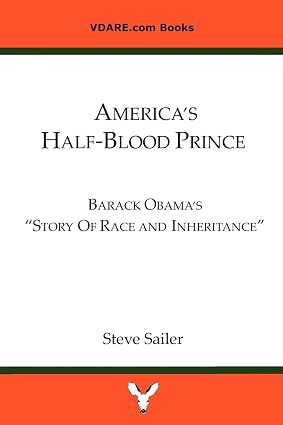
A variant on, and more specific version of, the contention that Obama is a radical leftist pretending to be a reform liberal is that he is a black supremacist pretending to be a racial healer. This is the thesis Steve Sailer explored in America’s Half-Blood Prince. Published on the eve of the 2008 election, it is a meditation on Obama’s Dreams from My Father. Painstaking exegesis is beside the point since, Sailer argued, “there’s no secret about Obama’s big secret” in Dreams, beginning with its subtitle, A Story of Race and Inheritance. In his book’s Introduction, Obama describes it as “a record of a personal, interior journey—a boy’s search for his father, and through that search a workable meaning for his life as a black American.” He goes on to say that this search entails “learning to accept…that I can embrace my black brothers and sisters, whether in this country or in Africa, and affirm a common destiny.” Sailer found Obama, then in his early thirties, to be “a literary artist of considerable power in plumbing his deep reservoirs of self-pity and resentment,” one who is “consumed by umbrage toward his mother’s people for being more successful than his father’s people.”
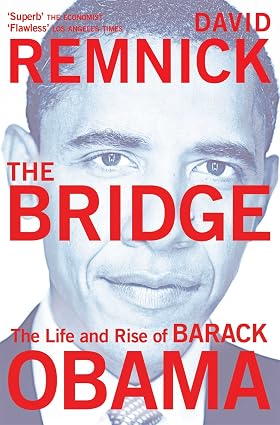
Dreams from My Father was secret only in the sense that its exoteric message was kept secret during the 2008 presidential campaign. Obama fans in politics and the press were completely invested in the idea of a post-racial Obama, who affirmed a common destiny with Americans of all races and ethnicities, not just with blacks in America and Africa. In David Remnick’s The Bridge: The Life and Rise of Barack Obama (2009), one Hillary Clinton campaign aide said that her 2008 candidacy suffered at the hands of “the racial arbiters,” journalists in particular, who were “mainly Northeastern liberals, who had very little contact with African-Americans in their lives.” These arbiters had made an all-in commitment to the idea that the race-transcending Obama of the 2004 keynote address was the true and only Obama, and that all contrary evidence of a racialist Obama from his 460-page memoir was spurious and unfit for public discussion.
It was the press’s effective embargo of ominous interpretations that made the race-conscious aspect of Obama all the more interesting to Sailer. He notes, for example, that in Dreams from My Father Obama ascribes black nationalist opinions to “Rafiq,” a Chicago activist and Nation of Islam follower, before objecting to them solely in terms of their impracticality, not their indecency. According to Dreams, Rafiq was on to something when arguing that black anger should be, in Obama’s words, “redirected” rather than “bottled up and often turned inward.” Further, Rafiq had good reason to believe that “a black politics that suppressed rage toward whites generally, or one that failed to elevate race loyalty above all else, was a politics inadequate to the task.” When thinking through the barriers to implementing these ideas, however, Obama concludes that while black nationalism could “thrive as an emotion” it was doomed to “flounder as a program.”
Dreams recounts that after first meeting Jeremiah Wright, Obama read a Trinity United brochure on the “Black Value System,” which devoted a section to “A Disavowal of the Pursuit of Middleclassness.” The chief argument for this disavowing, Sailer discovered (on the Trinity website rather than in Dreams) is, “If we avoid this snare…. Black people no longer will be deprived of their birthright: the leadership, resourcefulness and example of their own talented persons.” It would be hard to accuse Reverend Wright of failing to elevate race loyalty above all else. Senator and Mrs. Obama, who donated $53,770 to Trinity United Church from 2005 to 2007, either did not notice or did not object.
Similarly, the title of Obama’s second book slightly revised the title of a sermon by Jeremiah Wright, “The Audacity to Hope.” Dreams relates, incorrectly, that this sermon was delivered in Chicago at Trinity, and that Obama was there to hear it. But it does quote, accurately and without dissent, Wright’s lament about the temptation to despair in face of the reality that “white folks’ greed runs a world in need.”
Protected, as always, by his journalistic praetorian guard, Obama was allowed to finish his presidential campaign without facing hard questions about his close, 20-year relationship with Wright. “I may not know him as well as I thought,” Obama said at the height of the controversy. In any case, “He was never my ‘spiritual mentor.’”
It’s as surprising that Obama tried to sell this weak response as it is that the press, except for explicitly conservative outlets, was happy to buy it and declare the Wright controversy over. After all, how could Obama have anticipated that the clergyman whose good judgment led him to accompany Louis Farrakhan to Libya at the invitation of Muammar Gaddafi in 1984 would end up defending Farrakhan at the National Press Club in 2008, where he would also reaffirm his belief that the U.S. government had deliberately introduced HIV and AIDS into minority communities? The racial arbiters effectively squelched any serious effort to pursue the Watergate question: what did Obama know about his pastor’s belief system, and when did he know it? To doubt Obama’s word that he knew surprisingly little—and none of the really bad stuff until 2008—was, the arbiters held, racist.
Nihilist-in-Chief
Quarantining the toxic Watergate question made it difficult to answer a more important one: what does Obama believe, and how seriously does he believe it? The answer was not clear during his presidency, and it is not clear in 2026, when Obama has leaned into the ex-president’s work of polishing his historical legacy. As Charles Kesler argued in I Am the Change: Barack Obama and the Future of Liberalism (2012), Obama spent his political career trying to square the circle, to praise moral fervor while denying that it could be anchored in moral principles, as opposed to moral preferences. In The Audacity of Hope, Obama claimed that “a rejection of absolute truth” is implicit “in the very idea of ordered liberty.” But if it’s just “values, visions, dreams, ideals, myths, and narratives” all the way down, Kesler argues, then Obama cannot, for example, dispute the Dred Scott v. Sandford (1857) ruling that blacks possessed no rights that whites were obliged to respect. In The Audacity of Hope Obama tries to dig out of this hole, and succeeds in digging in deeper, with handwaving about pursuing “our own absolute truths,” which could mean many things, or nothing, but certainly does not sound like a repudiation of fanaticism. Obama, writes Kesler, appears to suffer from “certainty envy.” Obama is, of course, hardly unique among politicians in being abundantly blessed with flexibility of conviction. He has few equals, however, in fashioning rhetoric that elevates the rejection of moral principle into something that sounds a lot like a moral principle.
The Barack Obama of the early 1990s who developed a close relationship with Jeremiah Wright and wrote Dreams from My Father was plotting the first steps of a political career to be launched on the South Side. But Obama had not grown up in Chicago. Dreams was published in July 1995, ten years after Obama had first arrived there (from New York) to begin working as a community organizer. And Obama spent three years of the decade between that relocation and the publication of Dreams from My Father at Harvard Law School. To prospective black constituents in poor South Side neighborhoods, his Kenyan-Kansan lineage and life experience in Indonesia, Hawaii, and Harvard made Obama less relatable than the average Martian. And, according to Rising Star, one of the people who worked with him in New York after his graduation from Columbia University later recalled Obama as “the whitest black guy I’ve ever met.”
It became necessary, or at least strongly advisable, to overcompensate, to exaggerate his blackness, his commitment to race loyalty. Thomas Sowell, in a March 2008 column, compared Obama to the sort of adult converts to Catholicism who make an ostentatious commitment to being more religiously serious than “cradle Catholics” who take the Church for granted. As a convert to blackness, Obama needed to go out of his way to show that he was fully committed to his adopted identity. Trinity United and Dreams were the result.
It worked. Obama won election to an open state senate seat in 1996, and was re-elected in 1998. But having gotten his foot on the political ladder in the 1990s, Obama came to understand that climbing much higher would require getting on a different ladder. Illinois Democrats, in charge of redistricting after the 2000 census, drew a district with a mix of voters suited to assembling the coalition Obama saw as his path forward: “wealthier, whiter, more Jewish, less blue-collar, and better educated,” as Ryan Lizza described it for The New Yorker in 2008. Obama was easily re-elected in 2002 to a district that included fewer black precincts adjacent to Hyde Park, but took in “lakefront liberal” precincts as far north as the Loop and Gold Coast.
Obama was uniquely prepared to demonstrate that this multiracial, low- and high-status coalition could lead to a statewide victory in 2004, and a nationwide victory in 2008. He had been getting ready for this challenge all his life. Dreams from My Father records that during the four years he lived in Indonesia, Obama came to understand that his mother’s “needlepoint virtues depended on a faith…that rational, thoughtful people could shape their own destiny.” Jakarta would prove as impervious to this faith as the South Side did later to Obama’s efforts to organize its communities. Nevertheless, she remained “a lonely witness for secular humanism, a soldier for New Deal, Peace Corps, position-paper liberalism.”
This direct experience of earnest white-lady liberalism made it easy for the adult Obama to grasp that it could be the basis for a winning Third World-Nerd World political coalition. In a 2008 Rolling Stone article, “The Radical Roots of Barack Obama,” Benjamin Wallace-Wells reported that Obama’s advisors realized at the start of his 2004 Senate campaign that his political future depended on women like his mother. “We were doing a focus group in suburban Chicago,” one recalled, “and this woman, seventy years old, looks seventy-five, hears Obama’s life story, and she clasps her hand to her chest and says, ‘Be still, my heart.’”
Obama’s challenge became to recalibrate his message—and, because his life story was central to that message, to recalibrate his identity—to enlist liberal white voters into his coalition without losing his political base among black voters. There was no easy or obvious way to transition from a black politics that acknowledged the merits of elevating race loyalty above all else, to a unifying politics led by a man who claimed to have devoted his adult life to bridging the gaps between different kinds of people. Eloquent speeches and friendly journalists could do only so much to solve the problem, especially after Jeremiah Wright became infamous by proving to be his own and Obama’s worst advocate. Obama finally had to become as explicit as he could, repudiating Wright and resigning from Trinity United to convey that he differed from, more than he resembled, recent black presidential candidates like Jesse Jackson and Al Sharpton.
These concessions sufficed to get Obama past the finish line in November 2008, but the Obama coalition’s viability remained a question throughout his presidency, a question that beset the Democratic Party in the years that followed. For the sake of electing the nation’s first black president, blacks were happy enough to join with white liberals to form an electoral majority. But they were looking for tangible as well as symbolic benefits. It was not enough that Obama’s unique appeal enabled white liberals to “feel self-congratulatory,” in Liza Mundy’s summary for The Washington Post in 2007.
The Obama Administration did deliver several important racialist policies, especially after his re-election in 2012, and especially by administrative rather than legislative action. The logic of disparate impact (the culpability of a neutral practice that produces unequal outcomes) was borrowed from employment law and applied to: housing policy (to challenge, for example, zoning laws restricting apartment construction, whose effects might keep a suburb whiter than the Department of Housing and Urban Development wanted); policing, through consent decrees with 15 cities that enabled the Department of Justice to monitor every facet of law enforcement; and even school discipline, after the Department of Education announced that it would treat racial disparities in suspensions or expulsions as evidence of unacceptable discrimination, even if the disparities closely reflected racial disproportions in violating school policies.
But the real changes between 2008 and 2016 were in politics rather than in policy. The logic holding minority groups and white liberals together in the Obama coalition dictated that blacks were entitled to make more ambitious and specific demands, and white liberals were required to concede the necessity, or at least the legitimacy, of these claims. In May 2008, Hillary Clinton told USA Today, with characteristic felicity, that “Obama’s support among working—hardworking Americans, white Americans, is weakening again, and whites…who had not completed college were supporting me.” Sensing the shift in the Democratic zeitgeist, Clinton stated in a speech at the start of her second presidential campaign, “There is something wrong when a third of all black men face the prospect of prison during their lifetimes.” Hardworking whites would be surprised to learn that the something wrong was not that too many black males were committing too many crimes, but that this massively disproportionate propensity led to a disparate impact when police arrested and courts convicted lawbreakers.
By 2015 The Atlantic’s David Graham observed that Jeremiah Wright had had the last laugh: the argument in his most notoriously inflammatory sermons, that “the United States was structurally racist and conceived in white supremacy, are now commonly voiced by…Black Lives Matters activists, and white liberals.” But in 2016 and again in 2024, it became clear that Wright had had only the penultimate laugh. When the Obama coalition radicalizes in accordance with its inner logic, and endorses or speaks respectfully about defunding the police, closing prisons, ending border enforcement, or paying reparations, it cannot be a shock that voters outside the coalition notice, and object. Eloquent platitudes cannot distract enough voters over enough election cycles for these political preferences to have no ill effects.
When his political career was just getting started, Barack Obama inadvertently offered the second-best summary of the legacy he would go on to build. In December 1995, while first running for the Illinois state senate, he gave a long interview to The Chicago Reader. The subject turned to one of his political heroes, Harold Washington, Chicago’s first black mayor whose sudden death in 1987 occurred just seven months after the start of his second term. “He was a classic charismatic leader,” Obama said, “and when he died all of that dissipated. This potentially powerful collective spirit that went into supporting him was never translated into clear principles, or into an articulable agenda for community change.” In Rising Star, published four months after the end of Obama’s presidency, David Garrow writes that these remarks “would echo painfully two decades later.”
The best summary of Obama’s legacy—of why fundamental political realities are so inhospitable to charisma disconnected from clear principles—comes from Sheila Miyoshi Jager, an Oberlin College professor of East Asian Studies. The most-discussed revelation of Rising Star was that Jager had been Obama’s girlfriend in Chicago during the 1980s, and that their relationship had been serious enough that they lived together and that Obama proposed to her twice. She appears to have communicated extensively with Garrow, both about the past but also by sharing her reflections on Obama’s political career. At one point she explained her regret that Obama had not learned more about history. “I think if he had,” Jager said to Garrow, “he’d have much less faith in the ‘arc of history’ or ‘21st-century behavior and norms’ and a better understanding that we lead blessed lives not because it is the natural order of things but precisely because it is so very unnatural, and that people have had to fight and die to attain and maintain it. I think that history teaches us that evil is much more a prevalent force in the world than goodness and peace.”