Books Reviewed

In 2011, when U.S. Navy Seals blew open the front door of Osama bin Laden’s fortified compound in Pakistan, stormed up the stairs, and shot him dead, they found more than a loaded AK-47 in his room. Bin Laden had been reading the Yale historian Paul Kennedy’s The Rise and Fall of the Great Powers (1987), which told the story of military conflict since the 15th century. Kennedy’s argument was as dismaying to his fellow countrymen as it must have been heartening to bin Laden: the American empire, too, was mortal, and “imperial overstretch” was bringing inevitable decline. Kennedy wrote with such brio that his book climbed The New York Times bestseller list, peaking in March 1988 at number two, topped only by a real-estate mogul’s ghost-written memoir called Trump: The Art of the Deal.
This year, just days after President Trump committed the United States to join Benjamin Netanyahu’s Israel in bombing Iran into regime change, another Yale historian, Odd Arne Westad, published a book that also warns of relative decline and imperial overstretch. Westad, a Norwegian-born expert on Asia and the author of the highly regarded The Cold War: A World History (2017), focuses on the turn of the 20th century, when Europe’s Great Powers—prosperous, complacent, and at peace—lurched into civilizational catastrophe.
The world that World War I brought to a close has powerful resemblances to our own, Westad warns, adding, “We take an immense risk by engaging in large-scale warfare.” He did not predict the new Iranian war, of course, but he does point clearly to the Israeli-Iranian breach as one into which Great Powers risked getting drawn if they were not careful. “Having stateless peoples at the center of an already volatile region is a recipe for disaster,” he observes, noting both Israel’s Palestinians and Iran’s Kurds. “The greater danger in an era of intensified Great Power competition is that the Palestinian conflict with Israel, and the conflict between Israel and its neighbors, could come together with other clashes and lead to a larger conflagration.”
***
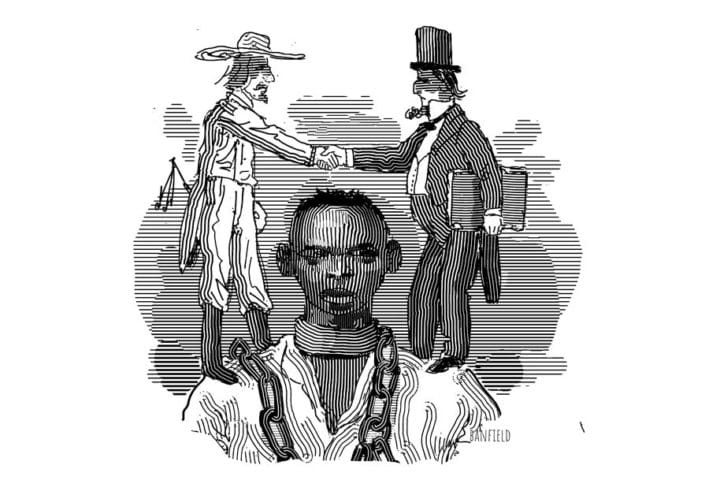
Comparing the run-up to World War I with whatever it is we’re entering into now, Westad finds parallels between the nations that, in each era, knit the world together through their institutions—pre-1914 Britain, with its empire; post-Cold War America, with its alliances. Each seemed to be a new and exceptional kind of power. “Britain,” Westad writes, “was a hegemon that carried its role lightly.” But each faced an upstart challenger that seemed to have come out of nowhere.
Germany hadn’t even been a nation-state until Otto von Bismarck unified it after the Franco-Prussian War of 1870. By the 20th century, taking advantage of the free-trade system that Englishmen had designed, Germany was outcompeting Britain and driving it out of one manufacturing market after another. Nor was it always scrupulous about respecting British patents. Britain’s share of global manufacturing fell from 23% in 1890 to 13.5% in 1913. Britain, unrivaled on the oceans until then, now discovered that Germany’s shipbuilders had learned to make advanced battleships.
Mismanagement compounded the problem, as Britain found itself beset by internal strife. In 1912 it underwent a wave of strikes. The 40 million workdays lost that year, Westad notes, were 20 times as many as in any previous year. The problem had begun at the turn of the century, when Britain embarked on a series of foolish, expensive wars for ill-defined reasons. Soon, an important part of the public was mesmerized by a businessman-turned-politician—in this case, Joseph Chamberlain, father of the future prime minister, Neville. The elder Chamberlain began arguing for tariffs, of all things, on the grounds that the money wealthy people saved on their goods from abroad was actually coming from the low foreign wages against which working-class Britons now had to compete. The parallels to 21st-century America are too obvious to need drawing: Britain was a country that had gained the world and (perhaps thereby) lost its domestic tranquility.
***
Westad, who has spent much of his career studying China, is very good at quantifying this century’s Great Power rivalry. When China began its rise in the 1980s, it was poorer than most African countries. It is now the main trading partner of at least 120 countries. It accounts for 31% of the world’s manufacturing output, more than the next three countries combined. Like Germany a century ago, China hopes a new-model military will enable it to break out of any encirclement its rivals might devise. China not only has the world’s largest navy, it has the world’s largest military apparatus—provided you count by men under arms rather than the dollar amount thrown at it.
What these changes mean is open to debate. In Westad’s view, the essential thing is to remember that imperial decline is most often relative. In 1914, as World War I began, Britain still had 45 battleships, Germany only 26. “The idea that the [British] navy was in dire straits numerically, technologically, or in terms of manpower,” he writes, “was simply misplaced.” And yet, for a country that holds power in the special way that Britain did and America does, relative changes can be threats to survival. Britain controlled the system of the world. The main product it manufactured was order. The symbol of this order was the pound sterling, its reserve currency. One had to pass through it to do business, and Britain could collect a kind of rent for this. The result was unprecedented and somewhat inexplicable sums of money coming in, upon which Britain built not just material prosperity but also an immortal literary and artistic culture, a society of mutual respect, and a widening roster of rights and entitlements.
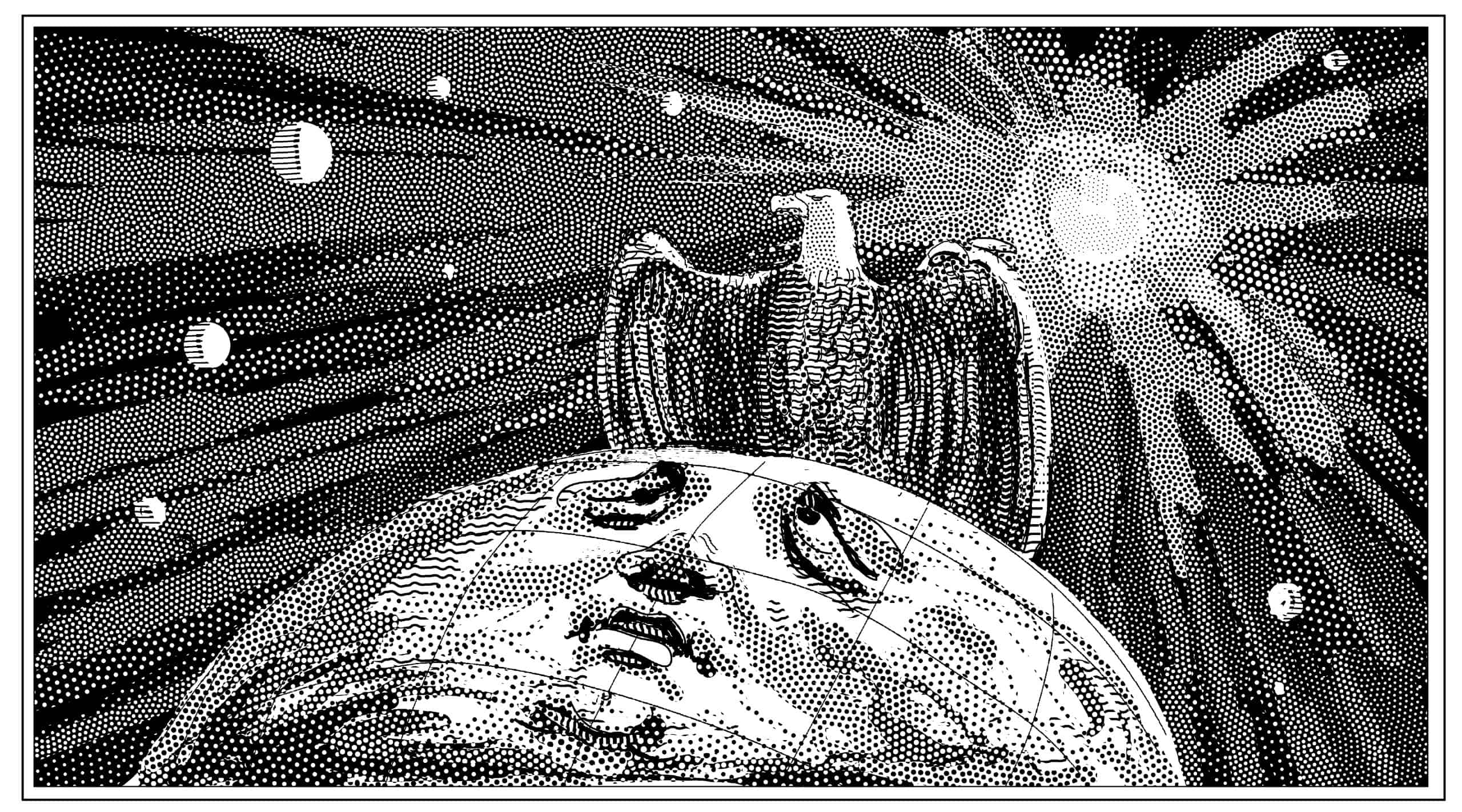
Alas, an imperial power can collect these rents only when its writ runs everywhere. Even relative military decline leads to loss of rule-making ability abroad, which leads to absolute economic decline, which leads to absolute military decline, and so on. Challenges to its prerogatives are thus understood as dangerous precedents. Arresting a cycle of decline is difficult, but empires must try. So it is that in the 20th century the British Empire expanded as it weakened, into parts of Africa and the Middle East that it lacked the resources to rule effectively. And so it is that in the 21st, the United States has run the risk of giving security guarantees to five countries in the Pacific (Japan, South Korea, the Philippines, Thailand, and Australia) and most of the countries of Europe. This is the imperial overstretch that Paul Kennedy warned about.
***
Worse, nations that face this problem are usually in the process of losing the moral fiber that allowed them to rise in the first place. Hegemony is a privilege worth protecting because it is a privilege worth milking. Trade deficits offer a reliable measure of the protect-to-milk ratio. At the turn of the 20th century the leaders of Britain, a manufacturing powerhouse for decades, snapped awake to discover they had huge trade deficits not just with Germany but also with France and the United States. Last year’s U.S. trade deficit was $902 billion, basically unbudged from the year before and the third-highest in American history. “In an almost exact parallel to early twentieth-century Britain,” Westad argues, “the United States wants to be respected as the number one country while also wanting to do less and less to defend that position.”
A president can improve his country’s prospects by using his military with focus and restraint. Avoiding other countries’ wars would seem to be a no-brainer. The presidents of the last half-century who made their parties’ programs the basis for enduring change—Ronald Reagan and Barack Obama—have that in common. (Westad credits Trump for turning away from the excessive foreign commitments of the Biden years, though one suspects he would revise that judgment if he were sending his book off to the publisher today.)
The social and economic decline is harder to stop. Westad is very interested in the question of whether a dominant nation’s decline is real or imagined, but the heart of the problem lies elsewhere. An international financial empire is a goose that lays golden eggs. You would think that keeping the goose alive would be a top priority. In a democracy, that would mean allowing the working class a share in what they’ve worked for. Oddly it has proved almost impossible to do, even for governments, like those of Obama and Bill Clinton, that make a big rhetorical show of fairness. A culture of investing is a culture of maximizing returns. In such a culture it seems natural that the less well-off in society should be asked to wait until further investment has made the pot bigger before they get their distributions. Keeping the social peace requires handling money in a way that experts in money—businessmen and economists—consider stupid.
***
Something that both 1914 and the present moment have in common is that both periods mark the culmination of a technological cycle: the Industrial Revolution a century ago, the Information Revolution now. It is not just that wars can come up at the end of a technological revolution, it is that they tend to, as a way of bringing international relations into line with the relative changes in national power the new technology has wrought. World War I was a changing-world conflict, as opposed to World War II, which was a clashing-ideologies conflict. The former kind of conflict is the kind we face, and it is harder to read. When Westad looks at China he sees a mix of strengths and weaknesses. Its industrial base is a formidable advantage, as is the unfamiliarity of its adversaries with Chinese military doctrine. Its inexperience in interstate war since it fought (with great difficulty) Vietnam in the 1970s might be a disadvantage. The incipient collapse in China’s population, after decades in which it practiced a one-child policy, is the biggest disadvantage of all. Uncertainty may retard the eruption of hostilities.
But it would be rash to bet on it. Westad astutely notes that the Industrial Revolution was, in its own way, an information revolution avant la lettre. The speed with which fast trains allowed countries to mobilize troops, and with which telegraphs could report mobilization to foreign governments, turned mobilization itself into a de facto act of war. In a similar way, the introduction of A.I. onto battlefields may draw us into unanticipated blunders, the way stock-trading algorithms have produced periodic “flash crashes” over the past generation. More information doesn’t always mean you make better decisions—it may mean you have to make decisions more quickly, which often means lousier decisions.
Though it was not Westad’s intent, no one will close The Coming Storm without thinking of President Trump’s strike on Iran. Leaders of countries that were falling behind in 1914—as Britain was falling behind Germany, and Germany felt it was falling behind Russia—had incentives to take risks. They assumed it would be better to fight today than tomorrow. This was a calamitous miscalculation. While they were not looking, a much faster mechanism of automatic escalation had been built into the system, and they were too short-sighted to see it.