Books Reviewed

“Taste” is a word that used to be applied routinely to the informed appreciation of architecture and the fine arts. “You see that I am an enthusiast on the subject of the arts,” Thomas Jefferson—the amateur architect who would one day design the University of Virginia’s enchanting “academical village”—wrote to James Madison in 1785. “But it is an enthusiasm of which I am not ashamed, as its object is to improve the taste of my countrymen, to increase their reputation, to reconcile to them the respect of the world, and procure them its praise.”
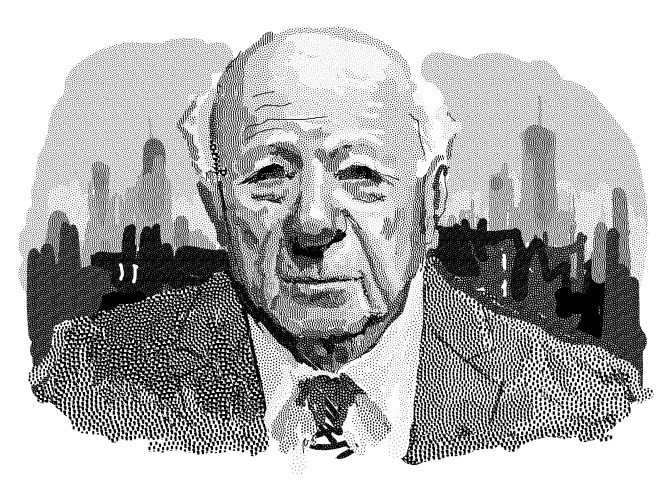
Taste has lost traction over the past century. As Henry Hope Reed observed back in the 1950s, modernism’s ephemeral enthusiasms are incompatible with a term—and an ethos—rooted in the assumption that the aesthetic instinct, refined by disinterested study of the great works of the past, is capable of superior critical judgment. But the late British architecture historian James Stevens Curl was nothing if not a man of taste, and it shows in his final work, Classical Architecture: Language, Variety and Adaptability, a revised and expanded edition of a book first published in 1992.
***
Raising the issue of taste might seem irrelevant, if not positively effete, given the uncultured state of affairs that has nurtured architecture’s debasement since World War II. But it is highly relevant—to cite but one important example—to an appreciation of President Trump’s architectural endeavors, which are intended to re-establish classicism’s historic primacy in the public architecture of our nation’s capital. Taste is quite arguably lacking in a couple of his principal projects, which he wants completed before the end of his second term in office: a huge ballroom wing for the White House and a huge triumphal arch celebrating the nation’s Semiquincentennial—the latter to be erected at the opposite end of Arlington Memorial Bridge from the Lincoln Memorial. The problem, as both Jefferson and Curl would readily recognize, is the president’s gigantism—his obsession with sheer magnitude as opposed to a classical monumentality of scale.
Trump’s espousal of classical architecture has nevertheless resonated with conservatives who see ugliness as modernism’s main stock in trade and its perseverance in the nation’s public realm as another example of our “progressive” elites’ perverse dominion. Visceral hostility to that dominion and loyalty to Trump are apt to reconcile many on the right to the president’s evident intention to leave a colossal personal imprint on the capital—even if that intention is at odds with the essentially impersonal classical norms informing Washington’s finest federal buildings. It so happens that an excellent executive order Trump issued last August on the reform of Uncle Sam’s architectural patronage seeks to perpetuate those norms.
Curl, who died in November 2025 at the age of 88, would sympathize with the populist yearning for an “architectural uprising”—this is actually the name of a noteworthy anti-modernist movement that originated in Sweden a decade ago. A deeper appreciation of classical architecture among conservatives is essential to a renewal of the American civic-art tradition that Jefferson did so much to inaugurate. Hence the value of Curl’s generously illustrated new book. His final work brings exceptional scholarly depth to a subject with a deep history.
***
Curl’s subtitle offers the first of many important lessons. Classicism in architecture is not a style. It entails a formal vocabulary and syntax that amount to a three-dimensional visual language, from which a number of historic idioms or styles—Romanesque, Gothic, Baroque, even Art Deco—have developed.
The classical language began to assume canonic form in Ancient Greece in the 6th century B.C. Initially employed in the design of temples, it was adapted to new building types by the Greeks and Romans and their successors. Rome not only devised its own variations on the Greek orders—Doric, Ionic, and Corinthian columns and their formalized superstructures, or entablatures—and contributed two more of its own, Tuscan and Composite, but also boldly explored new realms of interior space through the development of concrete vaults and domes. (Unlike our latter-day Brutalists, the Romans had far too much sense to leave their concrete exposed, deprived of a suitable envelope of stone or brick, the latter sometimes covered in stucco scored with false joints to resemble stone.)
The Italian Renaissance sought to recreate the grandeur that was ancient Rome. Architects such as Donato Bramante and Andrea Palladio, the latter the object of Jefferson’s particular reverence, surveyed the Eternal City’s ruins for sources of authority and inspiration. (As the great art historian Fiske Kimball observed, it was largely through study of Palladio’s Four Books on Architecture that Jefferson came to regard classical architecture as having the authority of natural law.) Significant Roman structural types and motifs—including the triumphal arch and the superimposition of different orders, one on top of the other, as with the engaged columns flanking the ascending rows of arches on the Colosseum (A.D. 82)—recurred in the design of Renaissance churches and palazzi.
Bramante expressed the Renaissance ideal in the exquisite circular tempietto of 1502 erected at the reputed site of Saint Peter’s martyrdom in Rome. A circular peristyle of Doric columns surmounted by a slender balustrade was wrapped around a taller cylindrical structure crowned by a dome and lantern. The perfection of form and proportion achieved here conveys a sense of timeless grace and repose. It is interesting to observe how key elements of the tempietto’s design—peristyle, balustrade, drum, dome, and lantern—recur, mutatis mutandis, in the United States Capitol’s monumental dome.
Then Michelangelo, having achieved renown as a sculptor and painter through his magisterial expression of the human body, turned to architecture. Taking bold “Mannerist” liberties with canonic forms, he endowed stupendous creations like his exterior elevations for Saint Peter’s in Rome and the vestibule of the Laurentian Library in Florence with a powerfully dynamic interplay of architectonic elements. For his twin palaces flanking the Campidoglio, the majestic Roman piazza he designed, Michelangelo devised a giant order of pilasters running up to the very heavy entablature bearing down on them. A vivid sense of compression is conveyed, and the secondary rank of columns—arrayed in freestanding pairs at the seven entrances to each palace’s loggia—are spaced widely enough from one another that their respective entablatures seem to enjoy barely adequate support. We experience these tectonic dynamics in terms of our own embodied state.
***
Few architects are able to interpret the classical language so freely. But Curl shows how Michelangelo’s Mannerism lent itself to successful academic reinterpretation in the Peckwater Quadrangle library (1738) at Oxford’s Christ Church College. Here the Campidoglio palaces’ design was reworked to create a composition whose architectural forms generate a monumental equipoise, with Michelangelo’s giant pilasters replaced by more tectonically muscular engaged columns and his loggia entrances, apart from a central portal, blocked in and equipped with windows handsomely framed by a minor order of pilasters.
As with Michelangelo’s Mannerism, the Baroque architecture of the 17th and early 18th centuries exhibits a highly inflected classical vocabulary and syntax. It stands apart as a distinctive and immensely significant mode of architectural expression. Curl provides an instructive summary:
Classical architecture implies a degree of clarity within precise boundaries, and perhaps a static quality, yet with a profound sense of order and of a continuity from Antiquity, and with a serenity, a balance, and a logic that expresses developed intellect.
Baroque architecture, on the other hand, gives an impression of always being in movement; it is expansive, and full of contrast, violence, and passion. It…seems to burst beyond its own space, and exploits illusion, appearing to defy reason and even logic; but it is in reality very much under control. It is in motion, with entablatures that sway in and out, surfaces that undulate on plan and are deeply modelled, and a sense of the theatrical that never seems far away.
These qualities are most evident in the Baroque churches of Italy, Austria, and southern Germany. Whereas a classical temple might convey a sense of perfected form crystallized in stone, a baroque church like Santa Maria della Pace in Rome (1659) suggests arrested movement or suspended animation. This church’s lower convex portico thrusts out from the body of the edifice while an upper façade of engaged columns and pilasters converge on a central window, giving an impression of tectonic movement on perpendicular planes. At the magnificent Santa Maria della Salute in Venice (1687), statuary saints surf serenely atop huge rolling scrolls buttressing the drum of the church’s dome.
***
Classical Architecture calls due attention to less widely known interiors of Baroque churches in Austria and Germany, with their dazzling spatial complexity accompanied by richly multicolored decoration that tricks the eye. Here as elsewhere, detailed captions accompanying illustrations sensibly reprise themes in the text. Serious architecture typically entails considerable complexity, and this expository technique helps the principal lessons of the many buildings Curl describes to sink in.
The Baroque coincided with the Counter-Reformation and the rule of the Bourbon and Habsburg dynasties. In England, where the idiom came to be tainted—simplistically—by association with the Jacobite cause, its most stupendous manifestation is Blenheim Palace (1716), the titanic pile erected for the first Duke of Marlborough, John Churchill, as his reward for vanquishing Louis XIV’s armies during the War of the Spanish Succession. This robustly modeled building reflects sophisticated Italian Baroque influences especially, yet the picturesque finials crowning massive belvederes atop squat towers at the corners hark back to England’s rich Tudor heritage of edifices mingling medieval and Renaissance influences.
Curl correlates the rise in Britain of a distinctly more restrained, and quintessentially classical, Palladian style later in the 18th century with the Whig ascendancy. A key example of this shift is Lord Burlington’s villa, Chiswick House (1729) in west London, whose design was influenced by Palladio’s Villa Rotonda in the Veneto. The same applies more emphatically to a proposed White House design Jefferson submitted, pseudonymously and unsuccessfully, in a 1792 competition.
***
Architecture can reflect distinct national temperaments. French Baroque churches tend to be statelier and less formally agitated than their Italian counterparts. That holds, for example, for the Dôme des Invalides (1691) in Paris, whose dome served as the model for the dome on Arthur Brown, Jr.’s superb City Hall (1916) in San Francisco, one of our nation’s finest public buildings. The East Front of the Louvre (1674) offers the innovation of closely paired upper-level Corinthian columns arrayed so as not to obstruct views from the windows set to their rear. The edifice includes no dramatic projections. Arrayed above a ground-floor podium in two parallel ranges, the colonnades flank a pedimented centerpiece and are enclosed by a pair of terminating pavilions. This supremely elegant and refined structure, one of the Parisian works which most impressed Jefferson during his service as minister to France, casts a hypnotic spell through the sublime proportional equilibrium of its components. This is “static” classicism—static like an eternally enchanting pastoral landscape by Claude Lorrain, a contemporary of the East Front’s architects.
Classical architecture took new directions in the second half of the 18th century, as a result of rigorous investigation and measurement of Greek temples, archeological explorations at Pompeii and Herculaneum, and the rationalist theories of a Frenchman, the abbé Marc-Antoine Laugier. Laugier called for an architecture that derived from a notional primitive hut consisting of wooden columns, beams, and a raking roof. It was a reductionist theory that nevertheless harmonized, even to Laugier’s mind, with the majestic Panthéon in Paris, a domed temple consecrated to illustrious Frenchmen that was originally designed as a church during the reign of Louis XV.
The Panthéon was a harbinger of Neoclassicism, a reaction against the perceived frivolity of the Baroque and its frothy derivative, the Rococo (to which Curl pays due respect). The authority of the ancients once again came to the fore, though the movement manifested itself in different ways in France, Britain, and Germany. In the latter two countries, the influence of ancient Greek architecture was more pronounced—notably in Berlin and Munich, where the brilliant 19th-century neoclassicists Karl Friedrich Schinkel and Leo von Klenze left lasting imprints. As for Jefferson, ever mindful that the architecture of Greco-Roman antiquity “has had the approbation of thousands of years,” he collaborated, while posted in Paris, on the design for a new Virginia Capitol in Richmond emulating an exquisite Roman temple in the south of France. Although the resulting edifice was flawed, its Ionic portico introduced a new monumental scale to American architecture that was enhanced by the Capitol’s commanding location overlooking the James River.
***
Curl’s survey covers 20th-century developments including the “stripped” classicism which appeared during the interwar period in countries under utterly dissimilar political regimes—e.g., the democratic U.S., Nazi Germany, Fascist Italy, and Bolshevik Russia—along with the classically-oriented counterculture that has slowly emerged over the last half-century, mainly in the U.S. and England. Throughout the book, Curl places an essential priority on assessing architecture “as architecture” (emphasis his) rather than as an ideological by-product. Baroque churches might have significant historical ties to the Counter-Reformation in many instances, but they also have significant formal antecedents in the architecture of pagan Rome. And San Francisco’s City Hall, though formally grounded in the French Baroque, has absolutely nothing to do with Bourbon absolutism, let alone the Counter-Reformation. The creative instinct’s capacity for adapting or reworking humanist concepts of mass, space, and decoration can’t be ideologically or chronologically pigeonholed.
The absurdity of dismissing classicism as inherently reactionary becomes clearer when we understand it as Curl does: as a corpus of enduring, objective forms that has enriched Western civilization immeasurably. It is precisely in the absence of a normative language that Curl—like his predecessor John Summerson, an influential 20th-century British scholar whose dissatisfaction with modernism increased over the course of his career—perceives the crux of the architectural dysfunction that has degraded cities and towns the world over.
Curl’s critical assessments can seem fastidious. Most visitors are enchanted by the rhythmically arcuated colonnades (combining columns and arches) that separate the naves of Filippo Brunelleschi’s Florentine churches of San Lorenzo and Santo Spirito from the flanking aisles, so that Curl’s objection to the “slightly clunky” entablature-like superstructures from which the arches spring might seem beside the point. And yet his key insight is that this great 15th-century architect was struggling to master the grammar of classicism, an aim extending beyond “mere imitation” of exemplary precedents. Curl does not regard this immensely complex language as a closed system. Rather, “it offers enormous possibilities for expression, creative design, and composition.”
***
From Curl’s treatise, readers will acquire essential knowledge of classical architecture’s European background. It offers many high-quality photographs and architectural drawings. It also includes an excellent 65-page illustrated glossary, and what little you can’t find there almost certainly can be located in his admirably comprehensive Oxford Dictionary of Architecture (1999). Among the books that focus on the American scene, the aforementioned Henry Hope Reed’s The Golden City: An Argument for Classical Architecture (1959), republished in 2020, serves as a worthy counterpart to Curl’s—which happens to be dedicated to Reed’s memory, a fitting tribute to a tireless advocate for the great tradition in civic art.
President Trump’s ballroom and arch projects risk being assessed not “as architecture” but as Trumpian vainglory. Detractors have made unflattering comparisons to Louis XIV, but the truth is that the brilliant results of the Sun King’s patronage—the Louvre East Front that won Jefferson’s admiration, even the sumptuous transformation of the palace of Versailles, where Jefferson’s young protégé, the painter John Trumbull, experienced “magnificence in the highest degree”—reflected essentially impersonal aesthetic standards. The ballroom wing renderings the White House released last summer were noteworthy for displaying a welcome sense of decorum: a structure of large dimensions was clearly intended to defer to the original Executive Mansion. At this point the ballroom was intended to accommodate 650. But the president soon decided he wanted it to accommodate 1,000. And he switched architects—hiring a modernist in place of a classicist. (The classicist, James C. McCrery II, and I are co-founders of the National Civic Art Society.) In February, a new ballroom wing model and renderings were made public. They suggest a ballroom capacity exceeding 1,000 within an enormous, ungainly structure that would be thoroughly out of place on the White House grounds.
And while the proposed Independence Arch will occupy what is now a grassy traffic circle of the same size as the site of the Arc de Triomphe, the latter stands in splendid isolation at the nexus of a dozen avenues. Trump’s 250-foot arch—rising more than 85 feet higher than the Arc in tribute to the nation’s 250th birthday—will downsize the Lincoln Memorial at the opposite end of the Arlington bridge. It will also stand a short distance east of Arlington National Cemetery, the nation’s most honored burial ground. What is unclear at this juncture is whether the Independence Arch would be crowned by the gilt, torch-bearing, winged figure of Liberty that appears in designs publicized last fall, or whether there will be no crowning sculptural figure, as renderings Trump posted on Truth Social in January suggest. The latter option entails an even loftier architectural mass. The bottom line, however, is that if the president is looking to leave his personal imprint on the capital, this is not the place to do it. Meanwhile, both the ballroom wing and arch face legal challenges, along with an extremely constricted time frame for construction projects of such magnitude.
***
The National Garden of American Heroes, on the other hand, could prove to be the best of Trump’s monumental initiatives, if he gets behind a plan commissioned by his administration. Trump first announced the National Garden project at Mount Rushmore in 2020, in response to the iconoclastic mobs incited by George Floyd’s killing, but the site—Washington’s West Potomac Park—was only selected late last year. The park lies on a peninsula just south of the Lincoln Memorial and the Mall that is bounded by Independence Avenue, the Tidal Basin, and the Potomac. Deficient memorials to the Reverend Martin Luther King, Jr. and Franklin Delano Roosevelt gird the Tidal Basin, but most of the underutilized park has been taken up by flat grassland and playing fields. The proposed 56-acre National Garden is intended to harbor some 250 statues of Americans who have distinguished themselves in various realms, including statesmanship, military service, religion, exploration, jurisprudence, the sciences, industry, the visual arts, literature, sports, and popular entertainment.
Under the direction of sculptor-architect Michael J. Curtis (another NCAS co-founder), two design alternatives for the garden have been developed—one more formal and civic, the other more landscape-oriented and naturalistic. The latter alternative shares some attractive features with the more formal design and would be less expensive. But the former would have a more impressive effect on Washington’s civic heart. This design is subordinated to the vast scale of the Mall’s Versailles-like monumental axis through a much more fine-grained arrangement, on subtly shifting axes, of halls, tempiettos, colonnades, and an amphitheater—all serving as venues for the thematically coherent placement of statues. The plan also includes a classical building for the production of sculpture, a Potomac water gate, courts and promenades, a parterre garden, groves, pools, and fountains. Restaurants and cafés, revenue-generating amenities which Washington’s monumental core sorely lacks, figure in the plan, as do astutely located and landscaped parking lots.
***
Whether it is realized or not, this National Garden plan should serve as a blueprint for the transformation of urban landscapes. But either design alternative might require congressional approval—and this remains a hurdle the Independence Arch and the ballroom wing might also need to clear. Trump’s August 2025 executive order—calling for new federal agency buildings and courthouses that “uplift and beautify public spaces, inspire the human spirit, ennoble the United States, and command respect from the general public”—sets an even more important cultural precedent. Not only is it a soundly reasoned document in aesthetic terms, it addresses modernist architects’ tendency to produce buildings—especially glassy ones—that boast relatively low construction costs while often requiring steep outlays for operation and maintenance. The Trump executive order accordingly stipulates that modernist design proposals include not just construction costs but life-cycle costs. This common-sense reform goes a long way toward leveling the playing field for classically-oriented designers whose buildings can be expected to yield superior long-term structural performance. Trump’s essential aim is to reverse the polarity of postwar federal patronage: classical and traditional buildings are to be the rule, modernist structures the exceptions.
The common sense embedded in the executive order would appeal to the author of the Declaration of Independence, and he would probably find a good deal to like in both National Garden designs. But he would surely be distressed by the size of the ballroom wing (Jefferson, lest we forget, resided in the White House during his two presidential terms) as well as the Independence Arch. In the latter case, he would be mindful of the fact that in classical architecture monumental effect does not depend on mere size. The Arch of Titus (A.D. 82) in the Roman Forum, on which the original Independence Arch design was largely based, is less than 50 feet tall, a fraction of the latter’s intended height. The Washington arch does need to be somewhat bigger in order to accommodate the scale of its surroundings, but the size Trump wants is out of scale with the Arlington bridge as well as the Lincoln Memorial.
Will taste worthy of the name ever regain the standing it has lost? Let’s hope so, though that’s a tall order in a fragmented culture like ours, in which eminences like Thomas Jefferson are lacking. Even so—and whatever the fruits of President Trump’s architectural ambitions—we are in the early phases of a movement that can help us build a much more beautiful world than the misguided exploits of recent decades. In giving us a clearer idea of the nature and enduring importance of its subject, James Stevens Curl’s Classical Architecture, marking a worthy conclusion to an outstanding scholarly career, will assist that honorable cause.