Accepted wisdom in the academic world today holds that fully developed human beings have existed on the earth for no more than 100,000 years or so. For much of that time, the story goes, men lived in small and scattered bands of “hunters and gatherers,” sheltering in caves and using primitive tools of stone or wood and without written language or more than rudimentary culture. At the end of the last Ice Age, or around the 10th millennium B.C., larger, more complex societies gradually evolved, in what is conventionally described as the “Neolithic revolution.” Animals and plants began to be domesticated, modest sedentary settlements were established, manufacturing (particularly in the form of pottery) made its appearance, goods were traded (sometimes over long distances), social stratification began to develop, and higher human aspirations manifested themselves in the form of art and religion. In the course of the 4th millennium, the first true civilizations emerged, in the Middle East and South Asia. These covered extensive territories and included major urban centers—the first cities. Written language here made its initial appearance, first for utilitarian purposes, but soon in the form of epic poetry and religious writings of various kinds. The rudiments of scientific knowledge began to be acquired, and impressive technical skills were demonstrated, especially in monumental building projects. Sumer (present-day Iraq) pioneered these developments, soon followed by Egypt and the Harrapan civilization of the Indus valley. Similar evolutions occurred independently several millennia later in China and Mesoamerica.
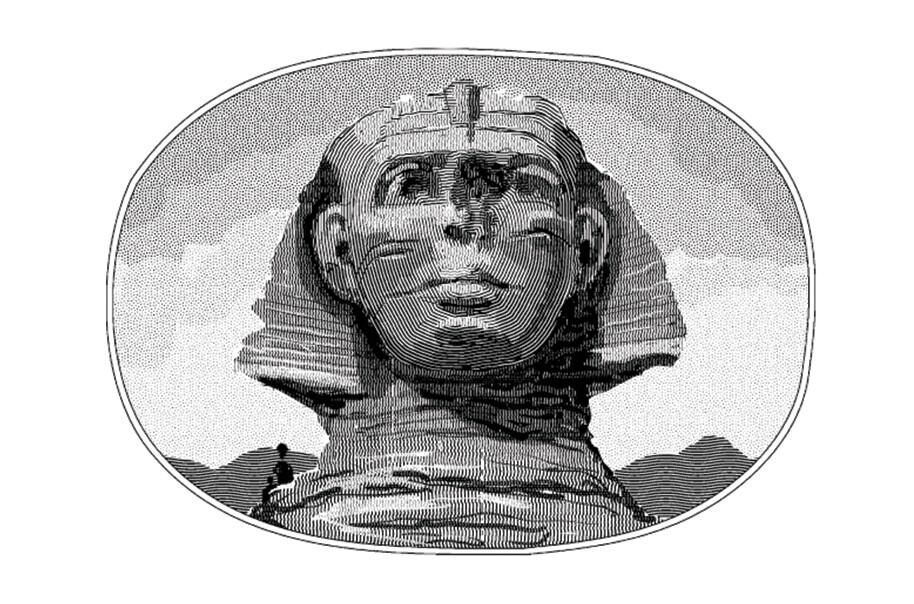
What’s wrong with this picture? According to an increasing number of intrepid investigators of various kinds, a great deal. The aptly named Robert Schoch, an American geologist, has done considerable damage to the edifice of contemporary prehistory by validating the suspicion voiced by several earlier dissident observers that the Sphinx is much older than the date usually assigned to it (around 2500 B.C.). Schoch first pointed out in an article in 1993 that the Sphinx shows signs of erosion that could only have been caused by exposure to many centuries of heavy rain, whereas by 4000 B.C. Egypt already had the same arid climate it enjoys today. He believes it has to date to the period 7000-5000 B.C. at the latest. Others believe a much older date is quite possible. Schoch’s technical analysis has never been effectively challenged by Egyptologists. Their only response has been to say that it cannot be right because there is no evidence of any civilization in those remote times capable of performing such a massive technical feat.
Out of Egypt
But the Egyptian case is a strange one in many ways. The Sphinx, and the three pyramids of the Giza Plateau closely associated with it, are by far the most impressive of the many monumental buildings created in ancient Egypt, but they are also generally accepted to be among the oldest. There is, in other words, no sign of a gradual progression from simpler and smaller to massive and more complex structures of a similar kind. And the fact of the matter is that these structures raise the most serious questions about the ability of the Egyptians as we currently understand them to create them in any period of their history. It is not only that they had to quarry literally millions of large blocks of stone, bring them to the plateau often from rather remote sites, and then raise them many feet in the air; even more remarkable is the precision with which they were fitted together. In fact, the planning of the entire enterprise must have been meticulous. The Great Pyramid, one of the most massive buildings ever created anywhere in the world, has tolerances in the alignments of its base stricter than what would be observed in a modern skyscraper. No one has any idea why they would have done that.
Christopher Dunn is an engineer by trade who has had many years of experience in large construction projects in the United States. His careful study of how the ancient Egyptians dressed stone, expounded at length in Lost Technologies of Ancient Egypt (2010), leads him to the inexorable conclusion that there is no way they could have achieved the precision they generally did using, as the Egyptologists insist, only stone and copper hand tools. Rather, he finds firm evidence that they milled stone using machines of various kinds. And given the fact that the Egyptians often seem to have preferred to work with the hardest stones (principally granite) as opposed to softer limestone (which was in fact more readily available), he finds it difficult to believe that they did not have cutting tools made of metal harder than copper. This of course contradicts all that pre-historians believe about the use of bronze or iron before the putative “bronze” or “iron” ages.
Noteworthy too is Dunn’s earlier book The Giza Power Plant (1998). This amazing work makes a highly detailed technical argument to the effect that the unique internal configuration of the Great Pyramid can only be explained by its intended use as a vast electricity-generating mechanism—one that presumably enabled the machine tools Dunn thinks the Egyptians had to have devised. (The accepted view that the pyramids generally were intended as royal tombs is inherently implausible and lacks any supporting hard evidence.) All of this may sound preposterous—but let anyone who thinks so explain exactly why it has to be wrong. No establishment scholar has stepped forward even to try.
A further dimension of the Egyptian case needs to be discussed. In his The Orion Mystery (1994), Robert Bauval, a Belgian amateur living in Alexandria, put forward the radical thesis that the Giza complex as a whole encodes a complex system of astronomical references. It has long been recognized that the Sphinx is aligned in such a way that the sun rises precisely due east of its face on the spring and fall equinoxes. Bauval’s key discovery was that the alignment of the three pyramids (those conventionally known as the pyramids of Khufu, Khafre, and Menkaure) mirrors perfectly that of the three stars in the belt of the constellation Orion. Orion had a special place in the mythology of ancient Egypt as the resting place of the god Osiris and of the pharaohs after their death. It seems relatively certain that the Giza complex was configured in such a way as to support an elaborate religious ceremony involving the translation of deceased pharaohs to the stars. More than that, however, Bauval believes that the star picture presupposed by the orientation of this complex reflects the skies, not of the 3rd but, astonishingly, the 11th millennium! This presumably corresponds to what the dynastic Egyptians called “the first time.” Whether they were actually built then is another question, but at the very least, this suggests a startling continuity and sophistication in astronomical observation in Egypt going back well into the remote past.
Journey to Atlantis
In classical Greek times, the Egyptians were acknowledged as exceptionally learned in the arts of astronomy and mathematics. Modern scholars have tended to discount this claim. Yet a good case can be made that the Egyptians possessed a system for measuring both space and time that was substantially superior to that of the later Greeks, who themselves were in advance of their time compared to Europeans at least until the Renaissance. An introduction to this fascinating subject is provided by Christopher Knight and Alan Butler in Before the Pyramids (2009). It is, to begin with, difficult to avoid concluding, from an abundance of circumstantial evidence, that the Egyptians recognized the sphericity of the earth. Not only that, they appear to have been able to measure its circumference with extreme accuracy. Remarkable too was their ability to understand and predict the movements of the heavenly bodies over very long periods of time, and to devise an efficient calendar based on this. Even more remarkable, however, is that this kind of knowledge may well have long predated ancient Egypt as known to history. Knight and Alan made the startling discovery that a complex of so-called “henges” at Thornborough in northern England, like the Giza pyramids, exactly mirrors the three stars in the belt of Orion. These henges, as well as many others like them throughout Britain, seem to have functioned as a sophisticated astronomical observatory. They were created around 3500 B.C., centuries before the more famous Stonehenge and the beginning of dynastic Egypt.
But it only gets worse. Elaborate megalithic-type structures clearly serving astronomical purposes have also been identified at Nabta Playa in Upper Egypt (5000 B.C.) and Karahunj in Armenia (5500 B.C.). But the most fundamental challenge to current chronologies of prehistory is perhaps the site of Göbekli Tepe in Anatolia, dating to roughly 9600 B.C., which offers unmistakable indicators of astronomical mensuration. Apparently a religious center rather than a city, yet on a very large scale, Göbekli Tepe also shows surprisingly early evidence of developed agriculture.
It is usually assumed that the first cities grew up in Sumer toward the end of the 4th millennium. But a very substantial city has recently been discovered at Catal Huyuk, also in Anatolia, dating to 6500 B.C. Even more strikingly, the biblical city of Jericho, with massive stone structures reminiscent of a medieval European castle, has been securely redated to the middle of the 10th millennium.
It is far from clear why the Egyptians (or for that matter early Turks or Armenians) should have taken an intense interest in astronomy. Astronomical knowledge is certainly of great practical importance for agriculture; but extremely precise astronomical knowledge is generally associated with maritime civilizations. This brings us to the flaming hoop of this entire subject, the Atlantis question. Building on detailed studies of 16th- and 17th-century maps of the world undertaken by American historian Charles Hapgood, Rand and Rose Flem-Ath, in Atlantis Beneath the Ice (2012), lay out the case that—astounding as it sounds—certain of these maps incorporate information from maps of extreme antiquity that were at the same time much more accurate than those generally available to Europeans up until the 18th century. It is well known that European navigators lacked a reliable method of determining longitude until the invention of accurate chronometers in England in the middle of that century. But these maps clearly reveal a capability for precise determination of longitude. Hapgood’s most intriguing discovery, however, is three maps showing the continent of Antarctica. Not only was Antarctica not officially “discovered” until 1818 (a notional southern continent is sometimes represented on earlier maps); these maps show in unmistakable detail, not the glaciated Antarctica as we know it today, but an Antarctica partially—and in one case wholly—without ice!
Orthodox geologists generally assume that the Antarctic ice cap has existed for millions of years. Hapgood argued that there is considerable evidence that an abrupt displacement of the earth’s crust occurred at the end of the last Ice Age that, among other things, shifted the position of the Antarctic continent far southward to its present position at the pole. (Though he has been ignored by mainstream science, his thesis was actually favorably viewed by none other than Albert Einstein.) This would mean that the maps he investigated must represent observations of Antarctica by a people of remarkable navigational skill at different points over the period 10000-4000 B.C.—the latter being the time when Antarctica reached more or less its present state of glaciation. But what could have caused such a displacement? And who could these people be?
Without A Trace
This brings us to what is probably the most critical divide separating conventional and alternative prehistory. The fundamental assumption made by most conventional prehistorians is that human development over the millennia has happened only gradually and in certain preordained patterns—hunting-gathering, then agriculture, and so forth. The difficulty here is that there is plentiful evidence that the earth underwent repeated catastrophic events in quite recent geological time, and notably, toward and just after the end of the last Ice Age. The retreat of the glaciers led to a rebounding of the earth’s crust that precipitated earthquakes and volcanic activity on a massive scale; at the same time, the melting ice cap together with the sudden collapse of huge glacial lakes in the northern hemisphere caused widespread flooding and a rapid rise in ocean levels. In addition to all that, there is much evidence in the geologic record, as well as in the mythologies of ancient peoples all over the world, that the earth was repeatedly struck during these times by large meteors or comets. One such event seems to have been particularly destructive by precipitating a global flood—the event described in very similar terms in the Old Testament, the Sumerian epic of Gilgamesh, and hundreds of other ancient traditions. An event of this kind could well be the explanation for the sudden geological and climatic changes we know occurred in the 10th millennium. It could also help account for the acute interest so widely manifested around this time in understanding astronomical events.
What are the implications of all this? The most obvious is that it should not be surprising if advanced civilizations existed on earth 12,000 years ago or earlier of which no trace remains today. A view commonly held by the ancient Greeks was that human civilization had flourished repeatedly in the past and been destroyed by catastrophic events, particularly floods, which wiped out all but a remnant who had taken refuge in high mountains. The classic account is that of Plato’s dialogues Timaeus and Critias, which recount the “myth”—although Plato insists it is a “true tale,” passed down by the Egyptians to the Athenian statesman Solon—of the lost island or continent of Atlantis and its epic war against a proto-Athens of the 10th millennium. Mary Settegast is an archeologist of impeccable credentials and obvious learning who has made an attempt to take Plato seriously and explore the hypothesis of an Athens-Atlantis war within the context of current archeological knowledge of Europe, North Africa, the Middle East, and—interestingly—ancient Iran, her particular specialty. She makes an intriguing if not compelling case that the Atlantis story is more than congruent with these recent discoveries. That she had to settle for such an obscure publisher for her book, Plato Prehistorian (2000), is a testimony to the guild-like mentality of mainstream archeology today.
A less obvious—but revelatory—implication is that archeologists may be looking for remains of ancient societies in the wrong places. The rise in global sea levels since the last glacial maximum (around 17000 B.C.) has been some 300-400 feet. This has inundated many thousands of square miles of what were once no doubt fertile coastal plains in, for example, the North Sea, the Baltic, the Black Sea, the Caspian Sea, the Mediterranean, the Persian Gulf, the Arabian Gulf, and the South China Sea. It stands to reason that many of these areas were inhabited by humans who left behind structures and artifacts they had to abandon when they fled the encroaching (and in some cases rapidly encroaching) seas. Yet virtually no systematic archeological survey has ever been conducted of these areas, in spite of the modest depths involved. Underwater archeology faces many technical challenges and is very expensive, but there seems little excuse for such neglect, particularly given the major recent technical advances in remote sensing of all kinds. In fact, the ruins of an ancient city of substantial size have come to light recently in the Gulf of Khambhat, off the Gujerat coast of India. There are indications that it may be at least 9,000 years old. Graham Hancock, in his Underworld (2002), makes the case that ancient Indian civilization may indeed go that far back, and also provides a global tour of promising underwater archeological sites off southern India, Malta, and Japan. Hancock has also pioneered the development of a technology for mapping ancient sea levels which potentially provides a powerful new tool for the dating of underwater artifacts. Needless to say, he is anathema to the archeological establishment.
Could there have been a high civilization existing in at least part of the world in the 11th millennium or earlier? Plato’s description of Atlantis provides much physical and other detail that has given rise to a minor cottage industry of more or less fanciful speculation on this score. Conventional pre-historians scoff at the notion that a land mass of the dimensions of Atlantis as described by Plato could be submerged somewhere in the Atlantic, given the extent to which the floor of that ocean has been mapped. Again, though, they leave out of account the possible implications of a global catastrophic event of the kind just discussed. The Flem-Aths have made an intriguing case that the only candidate really fitting all of Plato’s parameters is Antarctica itself.
The Flem-Aths and Robert Schoch, in his Voyages of the Pyramid Builders (2003), assemble a remarkable amount of evidence pointing to a world-wide diffusion of an advanced culture prior to the end of the last Ice Age. It is surely striking, in any case, that the traditions of many ancient peoples around the world speak in very similar terms of an early time when a benevolent race of superior beings suddenly appeared and taught the arts of astronomy, mathematics, agriculture, metallurgy, and others. In ancient America, the Incas, Aztecs, and Mayans all have such a tradition. It is certainly eyebrow-raising that some of them claim these strangers journeyed to them from the south. One might also pause to wonder what it was exactly that led the Incas or their forerunners to build major cities many thousands of feet up in the Andes. For another teaser, consider the peculiar properties of the local Aymara language, thought to be one of the oldest in the world: recent computer analysis suggests it may originally have been an artificial tongue devised as a translation mechanism. Schoch makes a compelling case that, contrary to the conventional wisdom, long ocean voyages were very much within the capabilities of prehistoric peoples.
Conventions and Conspiracies
There are as many unsolved mysteries concerning the ancient high civilizations of the Americas and their evolution as there are concerning the ancient Egyptians or the “Atlanteans.” The field of North American archeology in particular has been a virtual abattoir of academic careers, as new evidence from the field has repeatedly pushed back the date of the arrival of humans in the New World and suggested a much greater degree of interaction with the Old World in remote times than the archeological establishment has been generally willing to admit. There are, for example, many stone structures throughout the eastern United States that bear an uncanny resemblance to the megaliths of ancient Europe; and there is the more than occasional odd find—artifacts with apparent Sumerian or ancient Hebrew writing, for example, or Roman coins found on the banks of the Tennessee and Ohio rivers—that only increase one’s sense that much of the archeological picture of the New World today remains little more than a fable convenue.
There can be no starker contrast between conventional and alternative prehistory than T. Douglas Price’s Europe before Rome (2013) and Michael A. Cremo’s and Richard L. Thompson’s Forbidden Archeology (1996). Price’s book contains much that is of considerable interest and little known about particular sites throughout Europe, but it is, to say the least, thin in providing a larger picture. His introduction ends tellingly with a “very brief history of European archeology” that is little more than a piece of academic boosterism. There is no mention of any turmoil within the discipline, let alone challenge from without. Throughout the volume, large questions such as the question of catastrophism or the importance of astronomical matters for the ancient Europeans are barely mentioned. By contrast, Cremo and Thompson have launched a full-scale assault on the archeological establishment, extending not only to the recent period we have been discussing but to remotest antiquity, an assault which eventually implicates not only archeology but the entire apparatus of Darwinian evolution. Whatever one happens to think of this latter move, what is especially valuable about this volume is its relentless focus on the intellectual obfuscations and outright dishonesty that are so evident in the history of Western archeology since the mid-19th century. Much of this material is simply appalling.
Archeology as a discipline faces a peculiar challenge. Because archeological field work is very expensive, patronage—not to put too fine a point on it—takes on a much greater importance than in most academic fields (with exceptions mainly among the hard sciences). Because of its extreme specialization, moreover, not to mention the extreme difficulty of verifying or challenging the field work of others, there are ample opportunities for abuse of power and corruption. This is not intended as a blanket indictment of the field, in which there are of course many honorable and highly competent practitioners. It is only to highlight its propensity to resist what it perceives as unwarranted meddling by outsiders.
In the interests of fairness, though, a few words are in order about the alternativistas as well. Europe before Rome is a beautifully produced volume and will grace anyone’s coffee table. But it will not sell many copies. Books like Atlantis Beneath the Ice or Forbidden Archeology, with their garish, sensationalist covers, can have a huge market. One cannot get around the suspicion that many of these authors keep a sharp eye on the bottom line—though it has to be kept in mind that any sort of academic career is out of the question for most of them. Nevertheless, there is no doubt a connection between this brute fact and the two major limitations of this literature. The first is, indeed, amateurism. Though many of these authors have done an impressive amount of homework, and often manage to master a much wider range of materials than the average academic archeologist, they tend to lack method and discipline, and they can be cloying in providing ambient color and the personal element. The second is their tendency to drift off into the fever swamps, from global conspiracy theory to New Age fascinations of various kinds to Dan Brown-style excursions into Freemasonry. This is too bad, because I’m pretty sure they are onto something.
Next in the winter 2014 Issue

Politics Without the Regime
Founder by Day