Books Reviewed

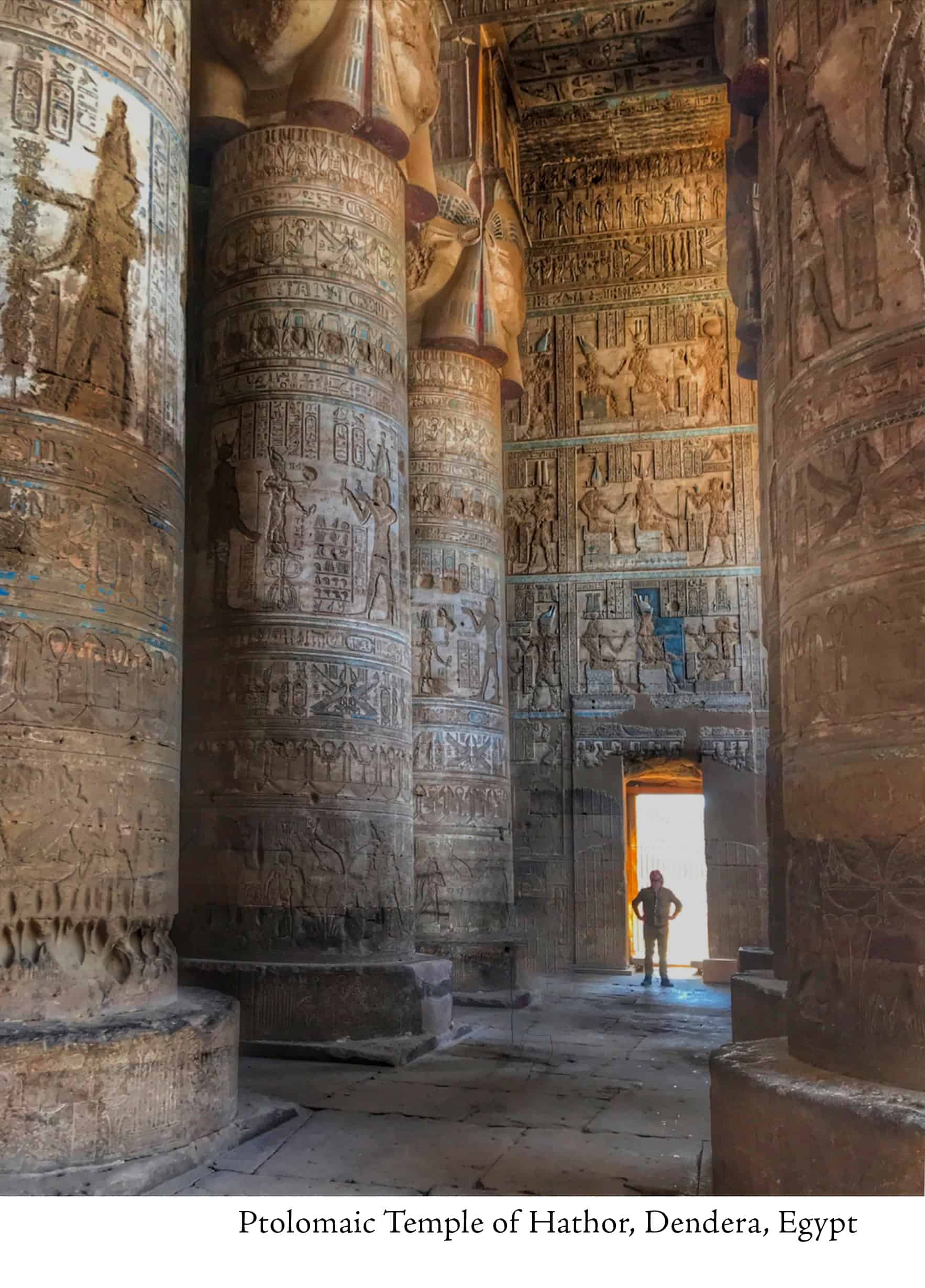
Ptolemaic Egypt is a paradox. The kingdom was founded by Ptolemy, one of Alexander the Great’s generals. It lasted for about three centuries, from 305 to 30 B.C.—roughly the length of the Hellenistic period that followed Alexander’s death in 323 B.C. Its long-term contribution to civilization was enormous. It was in Ptolemaic Egypt that Euclid wrote his elements of geometry; that Eratosthenes proved the earth was a sphere and calculated its circumference; that Aristarchus declared the earth revolves around the sun; that Herophilus showed the brain to be the controlling organ of the body, and not (as Aristotle had said) the heart; that Erasistratus described the workings of the circulatory system; and that scholars such as Callimachus codified and preserved the classics of ancient Greek literature. Ptolemaic Egypt also sowed the seeds of Christianity. For it was in Ptolemaic Egypt that the Jewish Diaspora became hellenized; it was there that the Tanakh, the Hebrew Bible, was translated into Greek in a version known as the Septuagint. And it was in Greek, using the Septuagint, and through a hybrid of Greek and Jewish thought, that the early followers of Jesus Christ developed their doctrine and wrote what became the New Testament.
***
Ptolemaic Egypt’s capital, Alexandria—a new construction that the Ptolemies built—was in its day the greatest city of the world. It boasted broad avenues, marble buildings, temples, and a palace district; a research institution—the museum and the library—that was a center of engineering, mathematics, astronomy, medicine, and literature; and a lighthouse called the Pharos, which was considered one of the Seven Wonders of the World. The city was splendid and tawdry, teeming and not infrequently rebellious, a colonial construct ruled by Greeks but full of Egyptians, Jews, Arabs, Libyans, Nubians (Sudanese), and, in its last years of independence, a Roman military force. Alexandria was a model for the grandeur that was urban Rome, previously an unprepossessing city until its emperors saw Egypt. A recent book by the British scholar Islam Issa aptly calls Alexandria The City that Changed the World (2024). Yet it may be best remembered nowadays through the work of a Greek poet, Constantine Cavafy, who lived in the city and died there in 1933. Consider his imagined advice to the Roman general Mark Antony, for example, in the poem “The God Abandons Antony.” Addressing Antony in 30 B.C., on the night before he would himself in Alexandria upon losing everything in a war, Cavafy writes: “you proved worthy of such a city,” so “say farewell to her, the Alexandria that you are losing.” The poet thereby evokes the vanished dignity of what, by the 20th century, had long since ceased to be the greatest city in the world.
As for the Ptolemies themselves, the men and women who ruled Egypt for three centuries, they were among the most proud and splendid monarchs of ancient history. Or perhaps of any history, because they had a taste for pageantry and pomp that would have put the Sun King to shame. Yet they are forgotten except for the last of them, a female Icarus who aimed high and fell far. Though ultimately a great failure, she is one of the most famous women in history, a queen whose name needs no introduction: Cleopatra. “Age cannot wither her, nor custom stale / Her infinite variety,” wrote Shakespeare in his Antony and Cleopatra. And yet her predecessors are fainter in historical memory than a nine-point footnote in an old man’s eye. When Octavian (later Augustus) visited Alexandria in 30 B.C., he asked to see the tomb of Alexander the Great. When, afterward, his hosts invited him to see the nearby monuments of the Ptolemies, he declined. “I came to see a king, not a row of corpses,” the future emperor is said to have replied. The Ptolemies, to paraphrase Rodney Dangerfield, didn’t get no respect. They still don’t. Except for Cleopatra, they tend to disappear from history books, college course syllabi, and spectacles on stage or screen.
***
In The Cleopatras: The Forgotten Queens of Egypt, Cardiff University professor of ancient history Lloyd Llewellyn-Jones aims to give the dynasty its due. The subject could be dry but, fortunately, Llewellyn-Jones is a great storyteller with an eye for detail, a vivid prose style, and a penchant for pop culture. Among his publications, besides works on the Persians, on Greek women, and on the Biblical Book of Esther, is a study of Hollywood and the ancient world. He grabbed me on the first page of The Cleopatras with a line about Cleopatra by the great scholar…uh, no, by Mae West. He cites her film My Little Chickadee (1940)—although, strictly as a title, West’s earlier movie I’m No Angel (1933), might better suit the ruler whom one Roman poet called “the queen of whores.” As for Mae West, the future Vegas vamp said “Cleopatra was the Queen of Egypt. She lived way back in the early times. And what a time she had.” True, the remark could be spicier. But Llewellyn-Jones recoups in the very next sentence with a quotation from West’s co-star, W.C. Fields, who once described West as “a plumber’s idea of Cleopatra.”
Llewellyn-Jones’s hook for the history of the Ptolemies is a good one: not the men but the women. And a juicy subject it is. Llewellyn-Jones tells the story of seven queens named Cleopatra. They lived between 192 and 30 B.C. These women, he writes, “lived full and dramatic lives, on a par with the plotlines of the very best Verdi operas or the most thrilling Latin American TV soaps.” But they also illustrate a political point. Taken together, “the seven Cleopatras set a new model for female power in antiquity.” They ruled jointly with husband, son, or brother, and more than one of them held the real power in the arrangement.
***
The book is more a series of life-and-times than of biographies. Llewellyn-Jones tells the stories of the queens of Ptolemaic Egypt against the background of the years in which they each lived. He offers the reader an enormous amount of information, drawn from a cornucopia of documentary material, about daily life in Alexandria and the Egyptian countryside. The arid conditions of Egypt have permitted a huge cache of papyrus documents from antiquity to survive. Nowhere else in the ancient Mediterranean has so much evidence of the everyday been preserved. Compare it to the Dead Sea Scrolls or the cave papyri from the Bar Kokhba revolt, both in Israel, or to the letters found at the Roman army base next to Hadrian’s Wall at Vindolanda, buried in the anaerobic mud of northern England. Unlike, say, Periclean Athens—where every surviving scrap of evidence, no matter how lacunary, is precious—Hellenistic Egypt is awash in data.
The result, in The Cleopatras, is fascinating even if it slows down the narrative. The reader swims through a sea of detail about life in Egypt and comes ashore again and again to meet a killer queen. Move over Eleanor of Aquitaine and Catherine de’ Medici! The Ptolemaic grandes dames were masters of power politics. They combined force and fraud, to which they added sex and celebrity. They did not neglect motherhood, because they knew that a queen had to provide heirs. Nor did they shrink from divinity: they were worshipped as goddesses. They knew the rules of the game and how to break them. Take for instance Cleopatra I Syra, “The Syrian” (ca. 204-ca. 176 B.C.), who may have been at a disadvantage in Egypt as a foreigner…but the art of power knows no borders. As a royal princess, daughter of King Antiochus III the Great of Syria, Cleopatra Syra learned early how to succeed at court. She came to Egypt as a girl to marry the teenaged king Ptolemy V. When her husband died after a dozen years of marriage, she ruled without him, serving as a regent for her young son. Ptolemy V had been planning a war against Syria, but Cleopatra preferred peace with her native country and put a stop to the plans, turning to diplomacy instead. Cleopatra III (ca. 160-ca. 101 B.C.) excelled not merely as a dynastic marriage broker but as an administrator, negotiator, and propagandist. Once she even led troops into battle. Her sister, Cleopatra Thea, “the Goddess” (ca. 164-ca. 121 B.C.), married three different Syrian kings in turn. After the last one died, one of her sons by her second husband tried to seize the throne, so Cleopatra Thea had him executed. She then ruled jointly with another son until they had a falling out. She tried to poison him, but he struck first and poisoned her instead. It was power as bloodsport.
***
Speaking of blood, the Ptolemies engaged in brother-sister marriage or, not to put too fine a point on it, incest. As we know from Oedipus, the Greeks found incest appalling. But it had been practiced from time to time by earlier Egyptian rulers, and it did set the royal family apart from their subjects, who behaved according to conventional rules. The Ptolemies always proclaimed themselves to be gods, and by marrying among themselves as they did, they showed that they weren’t bound by ordinary, mortal customs. Then too, incest was the last word in solidarity. Llewellyn-Jones writes: “The family that sleeps together keeps together.”
Kings and queens, presidents and prime ministers, rebels, captains, and buccaneers, historical figures in general are often remembered less for what they did than for what others made of them. A biography by Plutarch or Suetonius, a statue by Michelangelo, or a portrait by Jacques-Louis David may be worth more than the conquest of a continent. We remember Cleopatra—the Cleopatra, as Llewellyn-Jones calls her—because of Shakespeare and Hollywood, not to mention Plutarch, in whose Life of Mark Antony she steals all the scenes. So, too, the six earlier Cleopatras whom the author describes are most compelling in their artistic representations.
Llewellyn-Jones is at his best, for example, in his description of a portrait statue of Cleopatra III. He writes:
Cleopatra’s narrow eyes, complete with crow’s-feet creases, squint at the viewer, almost challenging the observer to break the queen’s penetrative gaze; heavy bags droop beneath the eyelids and deep furrows extend from the side of her nose to her thick lips.
In another, closely related portrait sculpture, he adds, “The queen’s head twists dramatically to the left, as though she is shooting a killer look at some poor emasculated courtier or feeble co-ruler. It speaks volumes.”
***
As interesting as the first six Cleopatras are, the most memorable thing about them is the light they shed on the seventh Cleopatra, the famous one. They demonstrate, as Llewellyn-Jones states, that Cleopatra’s pursuit of power was no one-off. Rather, it was only the latest show of strength in a dynasty of alpha females. Cleopatra pursued power aggressively. In name, she ruled with her brothers, and then her son; in fact, she ran the government. She made war and negotiated peace. She hesitated neither to be worshipped as a goddess nor to engage in retail politics at the rawest level of bribery. She blended sex and politics seamlessly. Since Rome was master of nearly all the Mediterranean, she became the lover in turn of the two most powerful men in Rome: Julius Caesar and Mark Antony. She had a son by Caesar out of wedlock; he never acknowledged the boy formally, but he allowed Cleopatra to give the child his name. He was called Ptolemy XV Caesar, but the Alexandrians nicknamed him Caesarion (“Little Caesar,” later the name of a pizza franchise), and the nickname has stuck. On March 15, 44 B.C., the Ides of March and the day of Caesar’s assassination, Cleopatra was in Rome. She was there to represent her country and, it seems, to try to have another child with Caesar. (She had a rumored miscarriage not long after his death.) Back in Egypt, she took up with Caesar’s powerful successor, Mark Antony.
She had two boys and a girl by him. Antony used Cleopatra to finance two wars, but they were both failures. In the first war, he attempted to invade the Parthian Empire, a powerful ancient Iranian state. In the second, as I narrated in The War that Made the Roman Empire (2022), he defended himself against his rival, Octavian—Caesar’s adopted son and heir. The war was fought in Greece. At the climactic battle of Actium in 31 B.C., Cleopatra was at Antony’s side commanding 60 Egyptian ships. By then, the enemy had worn Antony’s forces out, and the result was almost preordained. Cleopatra fled the losing battle with her naval contingent intact and took Antony aboard. Slander says that she had betrayed him but, in fact, the two had probably worked out an escape plan in the knowledge that their one last try to defeat an implacable foe was likely to fail. They fled to Egypt where, a year later, Octavian and his army came to get them. On the principle of “every man or woman for him or herself,” Cleopatra tossed Antony aside and tried to negotiate a way out for herself and her children. But the best that she could do was, probably, to extract a promise from Octavian to spare her children. Antony committed suicide first and Cleopatra followed soon after. Like her predecessors, she was a queen, a mother, a politician, a warrior, and a goddess. She is unforgettable—but, as Lloyd Llewellyn-Jones shows, she was also a chip off the old block.