In April of this year, senator Bernie Sanders once more introduced his trademark “Medicare for All” legislation, which would, if passed, ban private health insurance and bring to the United States single-payer health care, in which government administrators manage heath decisions according to their own expertise and fund it through tax revenue, becoming the “single payer” for all services. Although the bill is doomed in a Republican-controlled Congress, single-payer remains a progressive priority.
Many partisans for the cause have taken the fight to state capitals. In the last two years, California, Oregon, and Colorado have considered legislation that would similarly prohibit private insurance and install a single state-run alternative. Legislators in Washington, Connecticut, and even Florida introduced single-payer bills this year. Vermont set out to create a single-payer system in 2011—but abandoned the effort in 2014 after concluding that it couldn’t afford to do so.
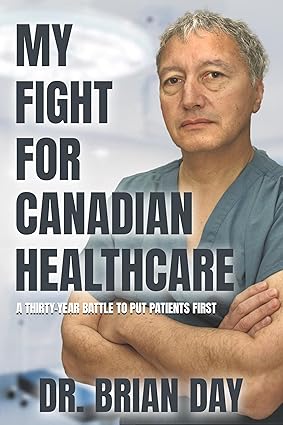
The obsession with government-run health care ignores the increasingly grim news coming out of countries with single-payer. To take just one example, the latest data from the Canadian government show that nearly 5% of all deaths in that country in 2023 came about via state-assisted suicide. When the state foots the bill for health care, it has a monetary interest in the deaths rather than the lives of its constituents. As Dr. Brian Day chronicles in heart-wrenching detail in My Fight for Canadian Health Care: A Thirty-Year Battle to Put Patients First, single-payer deprives patients of care, consigns them to undue suffering, and can even lead to premature death.
***
Things weren’t always so dire in Canada. When Day began practicing orthopedic surgery in 1973, wait times for surgery didn’t exist. As many as 30% of his patients had no health insurance. Doctors treated them anyway—for free. But now Canadian health care has become a prime example of the consequences of price controls. The government has a monopoly on paying for care deemed medically necessary. Provinces participate in the federal system—called Medicare, just like in the United States—but administer their own health-care regimens using federal and provincial tax dollars. Hospitals receive a fixed dollar amount, or “global budget,” to spend on patients—an arrangement which inevitably results in shortages, waits, and rationing. Because Canada has the fewest physicians per capita of several developed countries, including France, Germany, and New Zealand, it naturally follows that patients must queue up for treatment.
Last year, Canadians faced a median wait of 30 weeks for care from a specialist following referral by a general practitioner, according to research from the Fraser Institute, a Canadian think tank. Those who need orthopedic surgery, Day’s own specialty, had to wait a median of 57 weeks—more than a year. Canadians were languishing on wait lists for a total of 1.5 million procedures last year.
Long waits are a feature, not a bug, of Canada’s single-payer system. In the words of one physician consultant to the British Columbian and federal governments, “As for urgent patients in pain, the public system will decide when their pain requires care. These are societal decisions. The individual is not able to decide rationally.” Some appointments come too late to save ailing patients. Between 2021 and 2022, at least 13,581 people died on waiting lists in Canada, according to Canadian think tank SecondStreet.org.
Canada also has shortages of beds, equipment, and new health technologies. Hospital patients typically find themselves stuffed inside a room with three or more other people, including those of the opposite sex. What’s more, Canada’s national health system fails to cover the cost of ambulances, prosthetic limbs, and prescription drugs. Those who want these services must either pay out of pocket or purchase “extended health insurance,” which covers services that are not considered medically necessary and are excluded from Canada’s single-payer health plan. Employers often provide access to this supplementary health coverage, but even then, employees may still need to pay a share of the premium. And that’s on top of the nearly $18,000 in hidden taxes the typical family of four spends to cover the cost of their state-sponsored health coverage, according to the Fraser Institute. This state of affairs is striking for a nation that pretends health care is a right.
***
Canadian provinces began implementing single-payer health care as early as 1947. Saskatchewan was the first province to socialize its medical system, under Premier Tommy Douglas, crowned the “Greatest Canadian” by the Canadian Broadcasting Corporation in 2004 for his efforts. Under single-payer’s first iterations, some provinces allowed doctors and hospitals to charge extra fees for publicly insured services. Lawmakers worried this practice was unfair. In response, the federal government passed the 1984 Canada Health Act (CHA), which established a national single-payer plan. The legislation gave the government a monopoly on paying for care deemed “medically necessary” and conditioned provinces’ federal funding on their compliance with the law. Under the CHA, if Canada’s single-payer system covers a medical service, private insurance is banned from covering it. Private clinics must either bill the public system or perform that service for free.
In some provinces, physicians may opt out of the single-payer system and bill patients directly for care. These “non-participating physicians,” however, can never bill the public system for anything again, and patients cannot claim reimbursement for their services under the public plan. In effect, physicians must choose either to participate in the government’s single-payer system or run an entirely private practice—even though next to no market exists for doctors who require cash payments for everything. As a result, letting doctors “opt out” of the public system does little to make private health care more accessible.
Many of the CHA’s other restrictions will sound preposterous to American ears. As Day explains, under the CHA hospitals cannot exceed their government-stipulated budgets. If the money runs out, individuals stay on waiting lists. This system of block funding results in rationing. Canada forces surgeons to save money by limiting their time in the operating room—a problem Day has personally experienced. Between 1981 and 1995, surgeons at UBC Hospital in Vancouver saw their surgical hours cut from as much as 22 hours per week to roughly five. Physicians who perform extra surgeries risk losing their “surgical privileges.”
By the early 1990s, Canada was already suffering from a doctor shortage. Instead of tackling the problem, the government nonsensically attributed long wait times to an “oversupply” of doctors, which had supposedly spawned a “supply-induced demand” for care. According to this theory, cutting back the physician workforce would fix Canada’s access woes. Medical schools chopped admissions by between 11% and 30%. Immigrant doctors no longer received licenses. Nursing schools closed their doors.
***
Not every Canadian suffers the consequences, of course. The Canadian Armed Forces, Royal Canadian Mounted Police, federal employees, police officers, and even prisoners may skip the public queue by enrolling in the government’s own private health plan, which covers more than 600,000 people. While ordinary citizens wait months or years for care, Mounties and public officials have access to “rapid private care, out of country benefits, and other services through the government’s private insurance scheme.”
Day wanted to bring private care to more Canadians, so in 1996 he and his colleagues opened the Cambie Surgery Centre in Vancouver, British Columbia—the first private surgical hospital of its kind in Canada—which did not restrict care to people with private health insurance. The clinic also treated patients who couldn’t access timely care in the public system, and billed them directly for these services, in violation of a British Columbia statute.
Day soon found himself in legal hot water. In response, he initiated his own lawsuit, Cambie Surgeries Corporation, et al. v. Attorney General of British Columbia, et al., asking the courts to overturn British Columbian statutes limiting private care and health insurance on the grounds that they violate patients’ rights to life, liberty, and security of person. But without statutes limiting the private market, the counterargument went, British Columbia would be ineligible for federal funds under the CHA.
That reasoning didn’t satisfy Day. In a judicial battle that spanned more than a decade, he “challenged the government’s legal ability to prevent patients from seeking independent private care in the face of unacceptable delays” and questioned “the illegality of private insurance and the prohibition on physician dual practice.” Every Canadian, he argued, should have the right to spend his or her own money on private care and insurance. Even pets in Canada can go private! Why shouldn’t an ailing grandmother or an injured child athlete do the same?
British Columbia then countered that creating a private option would lead to longer wait times in the public sector and spawn a two-tiered system in which the rich enjoy better health care. Canadian progressives seem to believe in socialism’s “equal sharing of miseries,” in Winston Churchill’s phrase. Or as Day puts it in his book, “[o]ur critics believe it is better…to have everyone wait an equal six months for a procedure rather than have some wait one week and the rest wait two weeks.”
***
But wait times for surgery in Canada have less to do with the shortage of doctors than with the government-imposed restrictions on physicians’ operating time. Allowing doctors to set their own hours in the private sector would boost the supply of care to meet existing demand. Day noted too that “our government had never studied whether the long-standing private options in BC had in any way impacted the BC public system,” even though comprehensive data are available.
As for inequity, Canada’s current system already fails that test. It hands out rewards to certain public employees while punishing private citizens. Wealthy people can travel out of the country for care, while low- and middle-income people remain trapped. Unfortunately, Day lost his bid to overturn the British Columbian statute. On April 6, 2023, the Supreme Court of Canada rejected his appeal of the decision—leaving patients to languish on wait lists for the foreseeable future.
***
For us in the United States, the nightmare of Canadian-style health care is closer than it may appear. The Affordable Care Act (ACA) signed into law in 2010 by President Obama ordered Americans to spend their own money on health insurance or pay a tax. Although Congress repealed this individual mandate during the first Trump Administration, the ACA continues to ban insurers from offering less comprehensive, more affordable health plans many people might want to buy.
Our government is well on its way to creating a monopoly on paying for care. Today, government covers nearly half of the nation’s health-care bill. Medicare insures one in five elderly Americans. Medicaid, which is intended for low-income individuals, covers another one in five. Twenty-four million Americans obtain their health coverage through the Affordable Care Act’s exchanges—and of these, millions receive “free” coverage fully subsidized by federal taxpayers.
Thanks to the Democrats’ Inflation Reduction Act in 2022, the federal government now has the power to “negotiate” the prices of some prescription drugs through Medicare. These price controls take effect for ten drugs dispensed through the Part D prescription drug benefits on January 1, 2026. Each year, more drugs will be ensnared by this price control scheme. Meanwhile, some states are endeavoring to install public health insurance options of their own.
The final goal of all these policies is universal government-run health care. In the United States, partisans of single-payer envision a health-care system more comprehensive and controlling even than Canada’s—including coverage for dental and vision, prescription drugs, and long-term care. This universal system would proscribe every private option.
We do not need to try the experiment to know how it would end. Americans would find themselves trapped in wait lists for everything from routine eye exams to cancer treatments. Brian Day has given us fair warning.