Books Reviewed
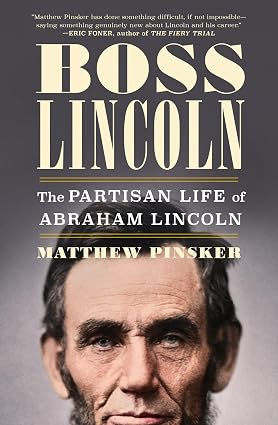
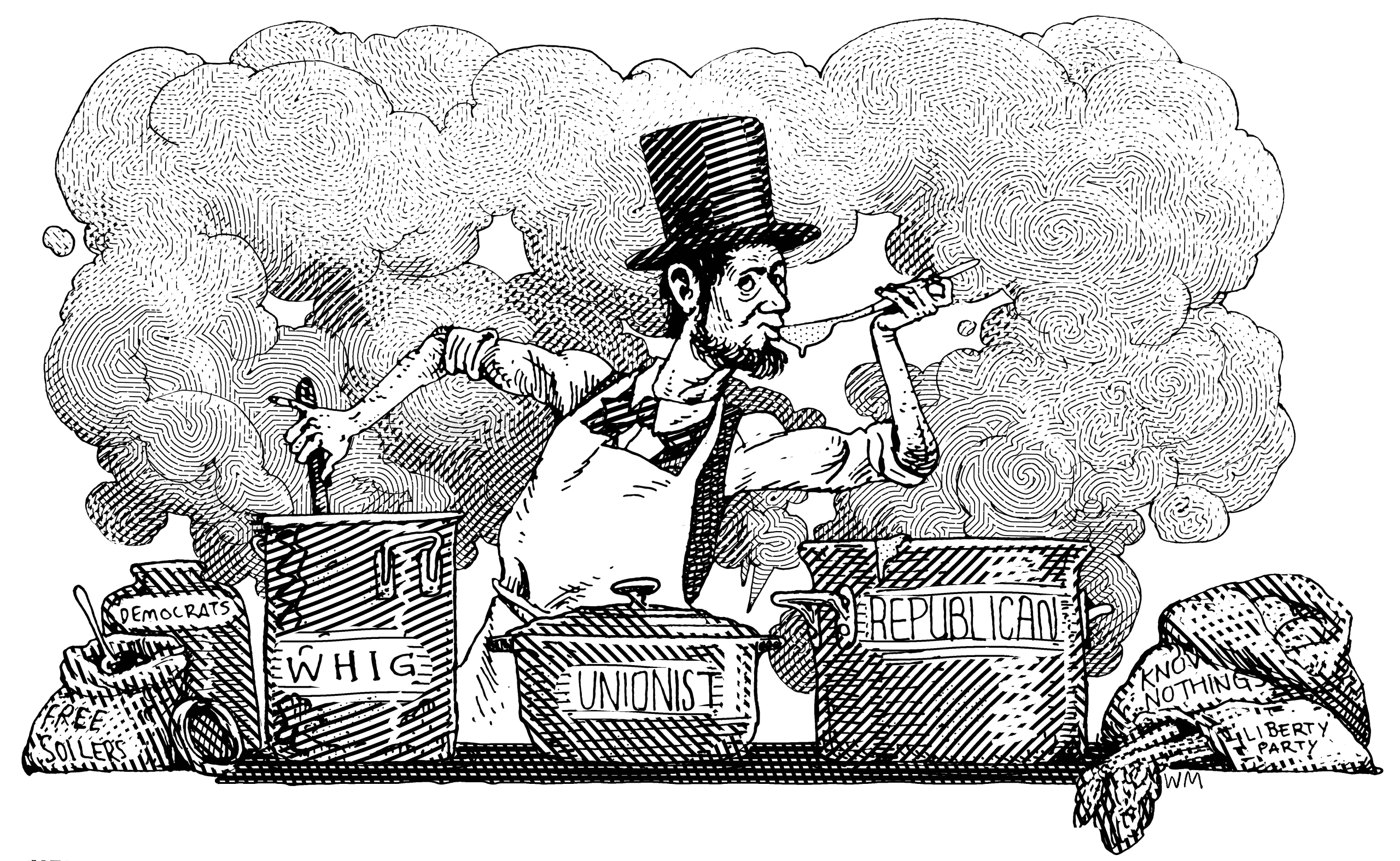
“It has always seemed an insult to call someone ‘partisan,’” writes Matthew Pinsker in the conclusion to Boss Lincoln: The Partisan Life of Abraham Lincoln. Quite so. Just reading the two-word title of his book, one reimagines the Lincoln Memorial: the “Boss” is still sitting there, but his long legs are crossed with louche insolence. He is in his rolled-up shirt sleeves with his collar open and his tie loose. The top few buttons of his soiled vest are unbuttoned. He’s got a well-chewed stogie in his right hand and a tumbler of hooch in his left. Eternally etched in the marble walls are boss sentiments: “Malice aforethought wins the day, boys! Don’t let your better angels get in the way!”
Between the challenging title and the beginning of his book Pinsker lets the reader know with an epigraph that he has something more edifying in mind:
A free people, in times of peace and quiet—when pressed by no common danger—naturally divide into parties. At such times, the man who is of neither party, is not, cannot be, of any consequence.
—Abraham Lincoln, age forty-three (July 6, 1852)
So, we know at the outset of the book that Pinsker means no insult to Lincoln. He regards Lincoln’s partisanship as natural and necessary. He does not mean to present some “midwestern Boss Tweed running a prairie-style
Next in the fall 2026 Issue

Cowboys and Carpetbaggers

Fresh Prince