Books Reviewed



When Clint Eastwood was born in Oakland in 1930, the nurses in the maternity ward nicknamed him Samson for his size. The Great Depression was on, so his father, who had worked in securities, was taking whatever jobs he could find. This meant moving frequently up and down the West Coast. Clint would speak of his father’s work ethic and ability to provide more than most for his family, but also of the childhood loneliness that resulted from all the moves. He took solace in playing the family piano, developing a lifelong love of jazz, and going to lots of movies. After graduating from high school, Clint moved to Seattle. He worked in logging and paper-milling before being drafted into the Army, where he crossed paths with novice actors Martin Milner and David Janssen and became interested in acting himself. Soon after being discharged in 1953, he moved to Los Angeles. Less than a year later, he was signed to a $75-a-week contract by Universal. Five years after that, he was off to the races.
Eastwood has appeared in 60 films, 47 of them in starring roles. He has directed 40 films, including last year’s Juror #2. Now 95, he seems finally to have called it a day. In 1998, film historian David Thomson called him “the last classic star.” Although he only starred in eleven Westerns, four of which he directed, he’ll also go down as the greatest Western star of his era. And Westerns are where he got his start. So why not begin with them?
Clint Would Shoot Him in the Back
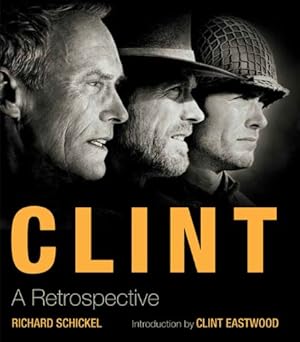
In 1959, 30 of 108 primetime TV shows, including seven of the ten most popular, were Westerns. Eastwood’s first break came when he landed a respectable-paying job playing cattle drive ramrod Rowdy Yates on Rawhide, which would run from 1959 to 1966. Richard Schickel—longtime film critic for Time magazine, a personal friend of Eastwood’s, and author of the biography Clint Eastwood (1996) as well as a study of his films, Clint: A Retrospective (2010)—recounts that Eastwood soon became unsatisfied on the series and would later refer back to his character as “Rowdy Yates, idiot of the plains.” This was ungrateful, given that Rawhide gave him his start and provided him the opportunity to hone his acting style—laconic (he developed a reputation for cutting lines from his scripts) and unhurried (he would later say that he drew in his acting on jazz trumpeter and vocalist Chet Baker’s “soft, unforced” style). It also got him noticed.
Christian Nyby, a TV and film director who directed 14 episodes of Rawhide, said of Eastwood: “No man ever looked more majestic upon a horse—that statuesque frame wending through the chaparral on a healthy stallion in the sun was practically mythic.” Italian filmmaker Sergio Leone, who chose Eastwood for the leading role in the three films that would make Eastwood a star—A Fistful of Dollars (1964), For a Few Dollars More (1965), and The Good, the Bad and the Ugly (1966)—recalled that when he was shown clips of Rawhide, he was taken by “the lazy, laid-back way [Eastwood] just came on and effortlessly stole every scene.”
Filmed mostly in Spain, these three “spaghetti Westerns” became known as the Man With No Name Trilogy, although Eastwood’s characters—a different character in each film, although he played them identically—were named. He personally assembled the costume he wore in the films, from the iconic poncho to the ever-present cheroots, and mastered the role of a squinting, snarling anti-hero from which he would never entirely break free. “I was one of the people who took the hero farther away from the white hat,” Eastwood said in an interview in the mid-1970s. “I like the way heroes are now…with strengths, weaknesses, lack of virtue.” Anti-heroism seemed fitting in Leone’s West, a precivilized state of nature. “The real West was a world of violence, fear, and instinct,” Leone said. “[T]he law belonged to the most hard, the most cruel, the most cynical.” The plot of the first film of the trilogy was typical: a stranger rides into a border town, plays two warring families against each other while turning a profit, outguns them all, and rides out leaving only a boy and a coffin maker alive. Writing in the Village Voice in 1968, film critic Andrew Sarris wrote of the “spaghetti Western” genre that it “ranks survival above honor and revenge above morality.”
Reviews were mostly negative. Renata Adler in The New York Times called The Good, the Bad and the Ugly “the most expensive, pious, and repellent movie in the history of its peculiar genre.” But the public disagreed. Eastwood made enough money from the Leone films to buy a house in Carmel-by-the-Sea, the northern California town in which he has resided ever since. He also formed a production company, Malpaso, which has played a hand in all his subsequent films.
Six of Eastwood’s next 16 films were Westerns. All but one drew heavily on the Leone style. The best of the six, which Eastwood also directed—and one of Eastwood’s best films overall—was The Outlaw Josey Wales (1976), the story of a Missouri farmer turned Confederate guerilla after Union troops kill his family, who is pursued as an outlaw after the war as he heads west in an effort to reclaim a private life. The worst and most controversial of the six, which Eastwood directed as well, was High Plains Drifter (1973), a modernized Leone-style version of the 1952 film High Noon.
The screenplay of High Noon had been written by Carl Foreman, a former Communist who was designated an “un-cooperative witness” by the House Un-American Activities Committee in 1952 and emigrated to Britain. In the film, a sheriff played by Gary Cooper faces down a gang of vengeful outlaws on his own, denied help by the cowardly townspeople he serves. High Noon was understood at the time as a statement on the Hollywood blacklist. It was also the first prominent Western to depict a Western town as bereft of virtue.
In Eastwood’s remake, we learn through flashbacks that the townspeople of Lago paid three outlaws to whip a U.S. marshal to death to protect their interest in a gold mine and then sent the outlaws off to prison. As the film begins, a stranger—he turns out to be the ghost of the murdered lawman—rides into Lago to take revenge. Whereas the sheriff in High Noon was a heroic family man, one of the first things the anti-heroic stranger does in High Plains Drifter—in a scene for which Eastwood would later express regret—is to commit a brutal rape. Over time, with the outlaws returning to take revenge on Lago, the stranger is made sheriff. Ruling the town by intimidation, he oversees the covering of the town in red paint. He rides out as the bad men ride in, the outlaws kill most of the townspeople, he rides back in to kill the outlaws and rides back out. Schickel praises the film as “an exercise in virtually unrelieved, sun-baked nihilism.”
Eastwood said of it that he was “trying to get away from what [John Wayne] and Gary Cooper and others had done,” and by that measure the film is a rousing success. Wayne noticed. A year or two later, Eastwood sent him a script and proposed they team up on a project—something Wayne, a supporter of Eastwood early in his career, once suggested they do. In declining the offer, Wayne took the opportunity to comment on High Plains Drifter. As recounted by Eastwood: “[Wayne] wasn’t very pleased about High Plains Drifter. He said, ‘That isn’t what the West was all about. That isn’t the American people who settled this country.’” Wayne had disliked High Noon for the same reason, calling it “detrimental to our way of life.” Indeed, Wayne and director Howard Hawks made Rio Bravo (1959)—a film in which townspeople back a sheriff’s play in confronting an outlaw gang—as a response to it.
Eastwood, who never mentioned Wayne when asked about the actors he most admired, would also recount a story told to him by Don Siegel, the director of Wayne’s final film, The Shootist (1976), in which Wayne plays an aging gunfighter dying of cancer. Siegel had directed Wayne to shoot a character in the back during a gunfight. “There’s a big silence,” as Eastwood told the story,
and then Wayne says, “I never shoot ’em in the back.” Then [Siegel]…says, “Clint would shoot him in the back.” Well, [Siegel] said Wayne didn’t talk to him for a few days after that. It was kind of like, “I don’t give a crap what Eastwood would do.”
“I was never John Wayne’s heir,” Eastwood told an interviewer in Premiere in 1993.
Demythifying the Westering Saga
After The Outlaw Josey Wales, Eastwood made only two more Westerns. In 1985 he directed and starred in Pale Rider, a remake of Shane (1953) in which Alan Ladd plays a gunfighter who takes up the cause of homesteaders being run off their land by cattlemen. In Eastwood’s remake he plays a ghost again, this time of a gunfighter who takes up the cause—as Shawn Levy, author of Clint: The Man and the Movies, describes it—of “hippie-ish mom-and-pop miners against industrial miners.” Not entirely altruistic, the ghost also, in the course of things, exacts vengeance on the sheriff who had killed him. As with High Plains Drifter, the film it was based on is better.
Eastwood’s final and most awesome Western, Unforgiven (1992), is the story of Will Munny, a vicious thief and murderer turned hog farmer after his wife, recently dead of smallpox, domesticated him. Hearing of a bounty offered by prostitutes in Big Whiskey, Wyoming—the bounty is for the killing of two men who are reported to have slashed a prostitute’s face—Munny gathers up a friend and former outlaw and rides out to collect it. Darkly funny at times, after his friend is tortured to death and his corpse displayed outside a saloon, Munny’s old nature reemerges and Unforgiven becomes dark simply.
Eastwood broke with his longstanding custom when he enlisted three major actors for supporting roles in Unforgiven. He also mapped out a production schedule twice as long as that of Pale Rider. He intended the film to be something special, and it was proclaimed a masterpiece. Kenneth Turan, film critic for the Los Angeles Times, called it “simultaneously heroic and nihilistic” and “a neat piece of revisionism,” comparing it to Sam Peckinpah’s The Wild Bunch (1969). Nearly all critics, not to mention Eastwood himself—Unforgiven was intended, he said, to “demythify the West…by appealing to other elements than the classical Western”—saw the film as a critique of the tradition represented by America’s most acclaimed director, John Ford, and the main star of his Westerns, John Wayne. Schickel expressed the consensus view: “Both Ford and [Wayne] must have known that the westering saga, as it has been told and retold through the movies, through all of our popular culture, is a gigantic lie. But that was always alright with them.” Unforgiven, by contrast, tells the truth.
On the surface, the basis for this claim is that Eastwood more honestly depicts the violence of the West. But Westerns have always been plenty violent. Granted, “revisionist” films like The Wild Bunch and Unforgiven portray violence more graphically. But classic Westerns at their best—see the Indian attack on the Edwards homestead in Ford’s The Searchers (1956)—portray violence in a way no less horrifying or moving.
If it isn’t the violence itself, maybe it’s the centrality of violence to the “westering saga.” Eastwood “believed [Unforgiven] said something about the cheapness with which life was held in America,” according to Schickel. He points out that a central scene in the film, a beating to the edge of death of an English gunfighter by Big Whiskey’s American sheriff, takes place on the Fourth of July, “tying violence and American nationhood together.” Levy similarly points out that after exacting vengeance at film’s end, a blood-soaked William Munny steps onto the street under an American flag, indicating that “in the vision of a director often mistakenly viewed as blindly patriotic…Munny isn’t the only one in this country for whom killing is second nature.”
More deeply, the argument for the superiority of revisionist Westerns is less about violence than about meaninglessness, which is why critics so often use the word “nihilism” in discussing them. In American Rebel: The Life of Clint Eastwood (2009), Marc Eliot concludes from Unforgiven that “justice may be evil but evil may be just.” Schickel marvels at how meaninglessness prevails in the film despite the fact that cause and effect operate reasonably throughout. Classic Westerns embodied ideas of manifest destiny or providence. Churches and schools often played a prominent role, as they did in Ford’s My Darling Clementine (1946), set in the famously violent town of Tombstone. Not so in the tragic world of Unforgiven, where the characters are lashed to an indifferent wheel of fate. “I don’t deserve to die like this,” Big Whiskey’s sheriff tells his executioner. “Deserve’s got nothing to do with it,” Munny replies.
The Academy of Motion Picture Arts and Sciences nonetheless thought Eastwood deserved Oscars for best director and best picture for Unforgiven, which Eastwood accepted without demurral.
From Fascist to Chevalier
The theme of pitiless fate carries over into some of Eastwood’s non-Westerns as well, but not into Dirty Harry (1971), the film that elevated Eastwood to superstardom. It is the fourth of five Eastwood films directed by Don Siegel, the other director along with Leone who had the greatest influence on Eastwood. Critic Joel Doerfler wrote in 1970 that Siegel’s films characteristically present a modern world in which “uniqueness and individual initiative” are under attack by “bureaucratic forces.” That is an apt enough description of Dirty Harry, the story of a San Francisco police inspector going all out to stop a serial killer while being constrained by a mayor inclined to meet the killer’s blackmail demands and a legal system more concerned with criminal rights than with justice.
Dirty Harry was released in the wake of a string of criminal rights decisions by the U.S. Supreme Court—chief among them the 1966 decision in Miranda v. Arizona, requiring suspects to be advised of their rights in specific language before being questioned—and of Richard Nixon’s pro-law-and-order presidential campaign in 1968. Paul Newman turned down the role of Dirty Harry, calling it “anti-liberal,” and the backlash after the film’s release was fierce. Pauline Kael, writing in The New Yorker, accused it of “fascist medievalism.” Newsweek called it a “right-wing fantasy.” Signs at the 1971 Academy Awards read, “Dirty Harry is a Rotten Pig.” On the other side, a year after the film’s release, President Nixon appointed Eastwood to the National Council on the Arts.
Eastwood would later claim that Dirty Harry’s political implications never entered his mind. He had considered it “a good detective story and not much else,” he told an interviewer in 2003. Not likely. Eastwood would also later claim that Harry was a prototype of the guilt-ridden William Munny of Unforgiven: “You know,” he told an interviewer in 2012, “Dirty Harry is a guy who really didn’t get any pleasure out of it. I played him for a certain sadness because I believe that if you really did kill all those people, there would be an effect on your soul or your psyche or whatever your beliefs are.” This would fool no one who ever saw the film, in which Harry displays determination, anger, and contempt, but nary a hint of sadness.
Quentin Tarantino called Dirty Harry “the most imitated action film of the next two decades.” This was partly because Eastwood starred in four Dirty Harry sequels over that period. But in 1984 he also directed and starred in Tightrope (though Richard Tuggle received credit for direction), which both Schickel and Levy describe as a critique of Dirty Harry. Eastwood’s character in Tightrope, Wes Block, is a divorced New Orleans police detective pursuing a serial killer who poses as a policeman himself. Block also indulges in kinky sex, including with prostitutes who are later murdered. Block dreams of being the murderer, with whom he begins to confuse himself. He also falls for a feminist rape counselor with whom he consults on the case.
In the Dirty Harry days, Siegel had compared Eastwood to an ancient Roman and took to calling him “Clintus.” Twelve years later, it was jarring for moviegoers to see him as a detective displaying more vulnerability than manliness. By this time, according to Schickel, many of Eastwood’s films had begun “consciously [questioning] most of the commonly held premises of American masculinity.” Film professor Tom Stempel wrote in the Los Angeles Times, the year Tightrope was released, that Eastwood “may not be only one of the best but the most important and influential (because of the size of his audience) feminist filmmaker working in America today.” Eastwood, still measuring himself against John Wayne five years after Wayne’s death, was quoted saying that Wayne—who had starred in two detective films himself late in life—“would never have done Tightrope.”
What gives? Schickel writes: “There are moviemakers who can live happily with their grosses alone. Then there are others who require the good opinion of serious people—the cultural arbiters, if you will—to achieve satisfaction…. Clint is one of this kind, and from the mid-seventies onward there has been on his part and on his studio’s part a quiet, conscious effort to respond to—and encourage—interest of this kind.” The desire for respect, of course, is human nature. The question is: respect from whom? Schickel attributes much of Eastwood’s increased concern for respectability to the sting of the virulent criticism of Dirty Harry.
The critical tide started to turn for Eastwood in 1980, when the Museum of Modern Art in New York City held an Eastwood retrospective. In 1985, The New York Times Magazine ran a cover story that chronicled what it called “The Clint Eastwood Magical Respectability and European Accolade and Adulation Tour.” Eastwood was decorated during this tour by France’s Ministry of Culture as a Chevalier of Arts and Letters, the first of many honors he’s received from the French government. Accepting his Academy Award for best director in 1992, he thanked “the French film critics who embraced some of my work very early in the game, the British Film Institute, the Museum of Modern Art, and some of the people who were there long before I ever became fashionable.”
Allegiance to the Flyover States
Yet Eastwood was never entirely captured by the “cultural arbiters,” or alienated from the Dirty Harry fans who considered him an American icon. This is evident in several of his later films and in the workmanlike way he went about making them. The latter reflects the influence of Siegel. Like Siegel, Eastwood was known for his frugality—crew members called him “SkinClint” and a Warner executive once said, “He’s more careful with our money than we are.” In 1978, against all advice, he directed and starred in Every Which Way But Loose, a blue-collar action-comedy—Levy calls it “a declaration of allegiance to the flyover states derided and ignored by the coastal elites”—featuring himself as a truck driver and bare-knuckles fighter, an orangutan named Clyde as his sidekick, and a country music soundtrack. The critics abhorred it—Variety accused him of “using it to find out…how bad a film he can associate himself with”—but it was the fourth highest grossing film of the year and would remain Eastwood’s highest grossing film (with dollars adjusted to inflation) into the next century. Eastwood was proud to compare it—and its $5 million budget—to Francis Ford Coppola’s Apocalypse Now, which, released in 1979 with a budget of $31.5 million, grossed half of what Every Which Way did. “With Francis Coppola’s budget,” Eastwood said, “I could have invaded some country.”
Eastwood is also known, as was Siegel, for making films quickly and delivering them on schedule. More often than not he insisted on shooting scenes only once. When directing A Perfect World (1993), his co-star Kevin Costner got in a snit and remained sulking in his cabin when called to shoot a scene. “Find his extra,” Eastwood said, “and put a shirt on him.” When Costner reappeared he was astonished that the scene had been shot without him. “I get paid to burn film,” Eastwood told him. Eastwood might not appreciate the comparison, but these stories are reminiscent of Donald Trump, who is equally proud of bringing construction projects in on time and on budget.
Politics have proved a burden to Eastwood, increasingly so as American life has become unnaturally politicized. He admits to voting mostly Republican, at least prior to Trump, but always qualifies that to say he’s more of a libertarian. Nixon’s fandom had been a bother to his career. But it was in the 1980s that he became more closely associated with a president when Ronald Reagan stole a line from the third Dirty Harry sequel, Sudden Impact (1983)—“Go ahead, make my day”—in threatening to veto a congressional tax increase. This was also the period in which Eastwood ran successfully for mayor of Carmel-by-the-Sea—serving from 1986 to 1988—on an anti-regulatory platform after zoning regs thwarted his plans for a restaurant and bar he owned. The next politician he would be closely associated with was Mitt Romney in 2012. “If you were casting a movie where you needed someone to play president,” he said, “you’d definitely pick [Romney].” He accepted an invitation to speak at the 2012 GOP convention, but rather than giving a speech he carried on a weird discussion with an empty chair meant to represent President Obama. “If someone’s dumb enough to ask me to go to a political convention and say something,” he said in the aftermath, “they’re going to have to take what they get.”
At the age of 78 Eastwood starred in and directed Gran Torino (2008), which Levy calls a “virtually homemade movie.” It is the story of a retired, widowed, beer-drinking Detroit auto worker who starts out contemptuous of the extended Hmong immigrant family living next door and ends up giving his life for two Hmong teenagers he has taken under his wing. Also, at a time when Americans were increasingly oppressed by political correctness, Gran Torino broke all the rules. Made quickly and on the cheap with few experienced actors, it became one of Eastwood’s most popular and financially successful films.
Ink Blot of Opposing Ideas
Since Eastwood turned 70, he has starred in seven films and directed 20. Two were acclaimed as masterpieces on the level of Unforgiven. Million Dollar Baby (2004)—which again earned Eastwood Oscars for best director and best picture—is the story of a boxing gym trainer who reluctantly takes on a female boxer from the Ozarks who has no other meaningful path in life, comes to love her as a daughter, and is caught in a moral quandary when she becomes a quadriplegic and asks him to help her die. The best of his three highest acclaimed films, Mystic River (2002), involves two crimes, 25 years apart, that result in tragedy for three boyhood friends from a working-class Boston neighborhood. “I’m not saying Clint Eastwood’s Sophocles,” Mark Steyn wrote of it in The Spectator, “but he does a passable impression.”
Of Eastwood’s last 16 films, eleven were based on real stories—“he had become more interested in the world as it was,” Levy writes. The most successful of these was American Sniper (2014), with Bradley Cooper as Chris Kyle, a Navy Seal who served four tours in the Iraq War and became the most lethal sniper in U.S. military history. Stephen Spielberg had been set to direct it but pulled out due to its restrictive budget. Eastwood directed it with his usual economy and it became the highest grossing film of his career. Among the least successful of the later movies, produced by Spielberg and directed by Eastwood, were Flags of Our Fathers and Letters from Iwo Jima, released within months of each other in 2006. The first considered the battle of Iwo Jima from the American side, the second from the Japanese side. The focus in the former is on commercialism—a bogus photo and soldiers depicted in it are used to sell war bonds—while in the latter it is on dying honorably in a lost cause. Ian Nathan, author of Clint Eastwood: The Iconic Filmmaker and His Work (2023), characterizes Flags of Our Fathers as “another demythification of a vainglorious genre,” contrasting its depiction of the battle with “the old glorification of John Wayne sashaying up the beach” in Sands of Iwo Jima (1949). Eastwood said that he was trying to get beyond the time when World War II films were “black and white” and were “selling America as great.” Letters from Iwo Jima, the better of the two films despite its much lower budget, was a hit in Japan. American audiences passed on both.
Critics assailed Eastwood for taking economy too far in The 15:17 to Paris (2018)—based on the true story of two American enlisted men and their boyhood friend who jump into action to stop a terrorist attack on a French train—when he cast the three heroes (not anti-heroes!) to play themselves instead of employing actors. “He almost seems to be testing the limits of minimalism,” wrote the reviewer in The New York Times, “seeing how much artifice he can strip away and still achieve…dramatic impact.” It is neither one of Eastwood’s better films nor as bad as critics claimed. His next film after that, Richard Jewell (2019)—based on the true story of the young security guard who was falsely accused by the FBI of planting a bomb at the 1996 summer Olympics in Atlanta—was criticized for being pro-MAGA and is the last of Eastwood’s better films.
Even many who know of Eastwood’s affinity for jazz are unaware that he is also credited for composing the scores of six of his films, including Mystic River and Million Dollar Baby, and themes for four others, including Unforgiven. He also recorded a country music duet with Merle Haggard, “Bar Room Buddies”—they performed it in Eastwood’s 1980 film Bronco Billy—that climbed to #1 on the Billboard country singles chart.
Bronco Billy is a good film on which to conclude. Levy calls it “a classic screwball romantic comedy,” which it almost is, and points out that it takes place in the same “middle American universe” as Every Which Way But Loose. It is the story of a financially struggling Wild West Show led by a trick shooter, “Bronco” Billy McCoy, who is living his dream life after escaping that of a New Jersey shoe salesman who served time for shooting his adulterous wife in the leg. Those who work for Billy in the show, all of them devoted to his madcap vision, have similar pasts. Eastwood calls it his “Capra film,” referring to director Frank Capra, maker of films like Mr. Smith Goes to Washington (1939) and It’s a Wonderful Life (1946). Indeed, the love story in Bronco Billy closely mirrors that in Capra’s first great film, It Happened One Night (1934), with a spoiled and snooty heiress finally falling for a working stiff. More importantly, the film embodies Capra’s moralism: Eastwood describes Billy’s dream as one of “making this group of losers…become an example for young people and teach values that a lot of people think have long been lost in America.” Also Capra’s patriotism: the Wild West Show appears to be futureless after a tent fire, but the film ends with a triumphant performance in a tent made of American flags sewn together by inmates of a mental institution at which Billy’s show has long been giving free performances. It reflects well on Eastwood that Bronco Billy is one of his personal favorites.
Levy writes of Eastwood: “No Hollywood figure has so complexly represented the cultural and political climates of contemporary America…. He is an ink blot in whom we see a variety of opposing ideas at once—or one whole idea at one moment from one angle and the converse notion at the next from another.” His films reflect his times over six-plus decades in which politics and culture were embroiled by contention. It’s a wonder he so often did so marvelously well.
Next in the fall 2025 Issue
Ancient and Modern

Mayor Mamdani’s New York